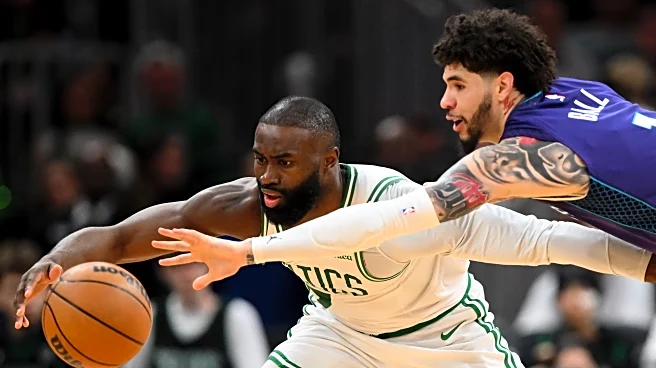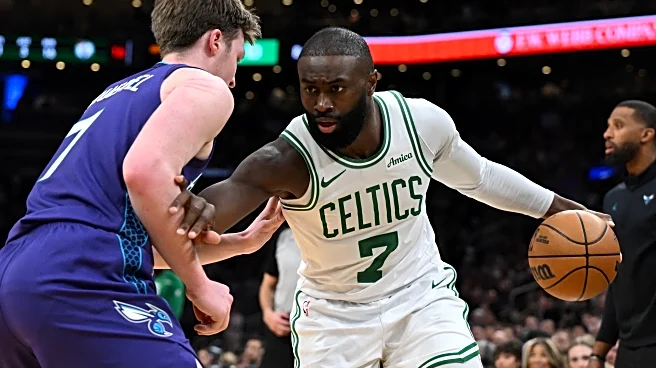

Jaylen Brown was far from the only reason for the Boston Celtics’ blowout 29-point loss to the Charlotte Hornets in front of the home crowd on Wednesday night.
The star shooting guard was one of only two Celtics to finish with a double-digit point total, with his 20 points finishing second only to Derrick White’s 29, as the team fell flat in Boston’s largest defeat of the 2025-26 NBA season.
Brown led the team in both rebounds (11) and assists (7) and had what may have been the play of the game when
he posterized Hornets’ center Moussa Diabaté halfway through the 2nd quarter.
Nevertheless, Brown’s performance was one of his worst of the year. He shot 36.8% from the field on 19 shots and 25% from three-point range, with 3 turnovers and a -20 plus-minus over almost 34 minutes of action — the team’s second-worst mark behind Sam Hauser’s -21.
Brown started the game with four straight misses and could not get the offense going against the red-hot Hornets, winners of six in a row. By the time he was subbed out with 3 minutes to go in the 1st quarter, Boston was down by 10.
At the half, Brown had 13 points on 5/13 shooting from the field in almost 20 minutes, and the Celtics were losing 43-64. Despite the deficit, the game was not yet out of Boston’s reach — one solid run could have put them in striking distance — but Brown did not make another field goal until it was.
He played the entirety of the 3rd quarter and racked up 7 rebounds and 4 assists over the period, but he missed all four field goal attempts and only contributed 3 points on 3 free throws. His first made field goal of the second half fell at the 7:02 mark in the 4th quarter, when the Celtics were down by 25 points and the game was all but over.
Brown has had a phenomenal season, but his 20-point night is not his only stinker. He has scored 20 or fewer points in seven of the 55 games he has played in, but Wednesday’s game was one of only two of them that resulted in Boston losses and a negative plus-minus for the shooting guard.
The other game was the Celtics’ 101-128 blowout loss to the Houston Rockets on Nov. 1, 2025, when Brown posted only 12 points and finished with a -20 plus-minus.
However, that game — and four of his other 20-points-or-less performances — came on the tail end of back-to-backs Brown played in, so it could be chalked up t0 fatigue from the night before.
The same cannot be said for Wednesday’s loss to the Hornets. Boston did not play on Tuesday night. The team did have back-to-back games on Sunday and Monday, but Brown did not play in Monday night’s win over the Bucks and had two days of rest heading into the game against Charlotte.
Regardless, Brown’s heavy workload so far this season could be wearing on him. His 35.6% usage rate is second only to Luka Dončić but, unlike the Slovenian, he does not take it easy on the other end of the court.
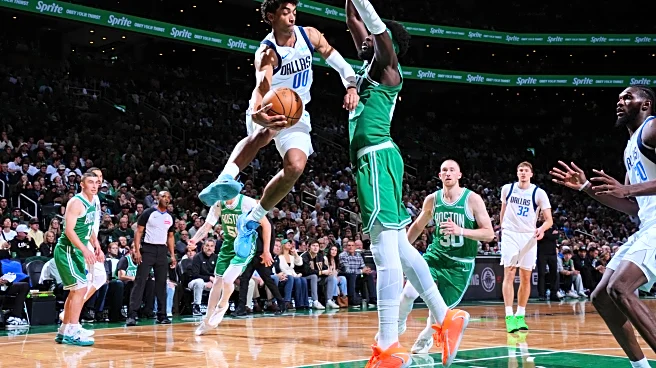
Carrying such a load for 54 games may have caught up to Brown, as he looked a step slow and sloppy in Wednesday’s game against the young, energetic Hornets, who looked spry despite whooping the Dallas Mavericks 117-90 the night before.
Additionally, Brown also has not looked quite the same since his MVP-caliber start of the season. Through the first 34 games, Brown was averaging 30.1 points per game on 21.7 field goal attempts, 6.3 rebounds per game and 5 assists per game on 51% shooting from the field and 37% shooting from three-point range. High volume with high efficiency and worthy of the MVP chatter.
Since his 50-point explosion against the Los Angeles Clippers on Jan. 3, the Celtics have remained successful, but Brown’s numbers have fallen off. Over his last 23 games, he has averaged 27.5 points per game on 23 field goal attempts, with 44.1% shooting from the field and 31.9% from three-point range. Higher volume on below-average efficiency. Still decent, but no longer MVP-level stats.
Part of the drop off may be due to built-up fatigue from shouldering such a workload this season. Another part may simply be regression to the mean.
Brown’s torrid run to start the season was fueled by elite midrange shooting. Through December, he shot 50.6% on 7.7 attempts per game launched between the three-point line and 10 feet from the rim — stellar efficiency for such a high volume and average shot difficulty.
Over the next two months, Brown shot 39.1% on 6.7 shots per game from the same range, including a season-low 38% in January. While his midrange efficiency slightly improved to 40.7% in February, his struggles with the shot over the previous month may have impacted his confidence in it: Brown’s 6 midrange shot attempts per game in February is his lowest mark since the season began in October.
Maybe his early midrange shooting was simply proven unsustainable, or maybe it is just a mid-season slump for a player tasked with one of the largest workloads in the league.
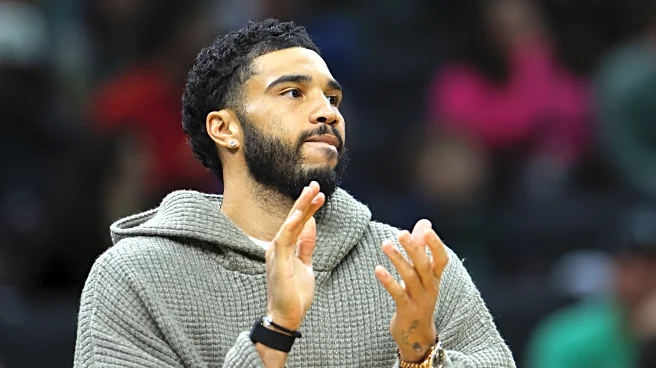
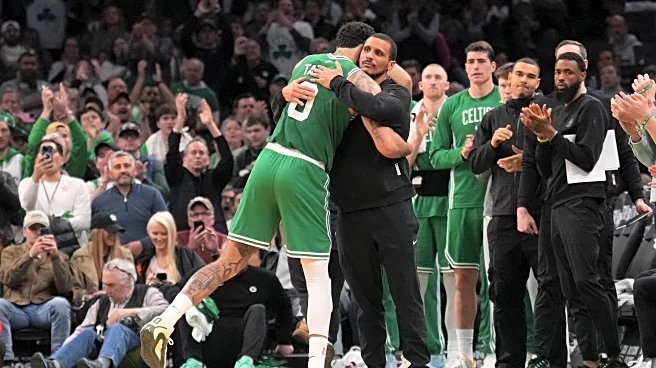
Either way, Jayson Tatum’s potential return from his Achilles injury seems closer than ever, so Celtics fans should keep their fingers crossed that Brown can return to form when he is relieved of some of the load he has had to shoulder in Tatum’s stead.