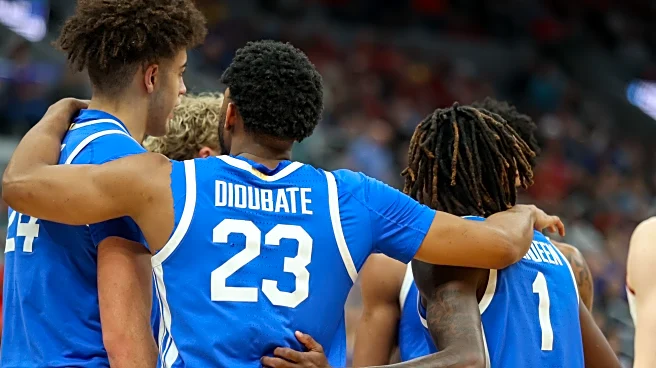

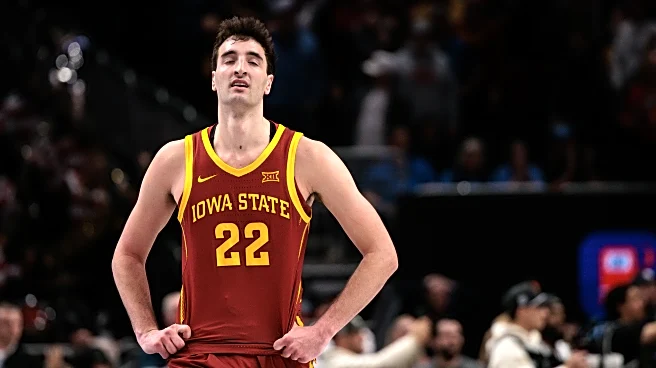

No. 7 Kentucky saw its season come to an end Sunday in St. Louis, falling to No. 2 Iowa State, 82-63 in the Round of 32 with a trip to the Sweet 16 on the line.
Kentucky came out firing, building an early 20-11 lead and controlling the pace of the game. However, Iowa State quickly responded with a 9-0 run to tie things up, shifting momentum midway through the first half.
Despite the run, Kentucky managed to hold the lead for most of the opening half, but the Cyclones continued to battle, and just before
the break, Iowa State knocked down a three-pointer to take a 31-30 lead into halftime.
From there, it was all Iowa State in the second half.
The Cyclones’ suffocating defense completely took over, overwhelming Kentucky and forcing 20 turnovers, the most under head coach Mark Pope. Iowa State capitalized on those mistakes, turning them into over 20 points and building separation as the half progressed.
Kentucky struggled to find any offensive rhythm, as Iowa State’s pressure disrupted passing lanes, forced rushed decisions, and limited scoring opportunities.
It was a dominant defensive showing by the Cyclones and a turning point that Kentucky could not overcome.
As the Wildcats’ season ends earlier than hoped, attention now turns to the offseason. Questions will surround roster decisions and how Pope responds heading into a critical third year at the helm.
Here are four things to know from Kentucky’s final game of the season.
1. Substitution patterns haunt Kentucky and Mark Pope
While the Wildcats showed flashes early, one of the biggest talking points once again centered around head coach Mark Pope and his substitution patterns, which have been an issue that has been a theme all season.
Kentucky came out strong, building a 12-point lead and controlling the tempo early. However, following a timeout, Pope made a key substitution, bringing in Jasper Johnson for Denzel Aberdeen. The momentum quickly shifted. Johnson turned the ball over shortly after entering and forced a quick three-pointer, allowing Iowa State to capitalize.
The Cyclones responded with a 9-0 run to tie the game, completely flipping the momentum. Kentucky was forced to call another timeout, and when Aberdeen returned to the floor, the Wildcats were able to stay in control for much of the first half.
Still, the damage had been done. That stretch proved to be a turning point in the game and highlighted ongoing concerns about lineup rotations at critical moments.
If Kentucky hopes to take the next step moving forward, adjustments in substitution patterns will be crucial. Unless the Wildcats develop a deeper, more reliable bench, those decisions could continue to impact outcomes.
In a win-or-go-home setting, those small moments made all the difference and ultimately contributed to Kentucky’s season coming to a close.
2. Cats could not handle Iowa State’s defense
The Cyclones began aggressively double-teaming Kentucky’s big men in the post, disrupting the Wildcats’ offensive rhythm. Kentucky struggled to adjust and failed to make the right passes out of the pressure, which led to turnovers and rushed possessions. Kentucky committed 12 turnovers in the first half alone, and those issues continued into the second half.
It didn’t stop there; Iowa State extended its pressure beyond the paint, frequently trapping Kentucky guards as soon as they crossed half-court. The Wildcats had difficulty handling the ball under pressure and couldn’t consistently find open teammates, even when opportunities were there.
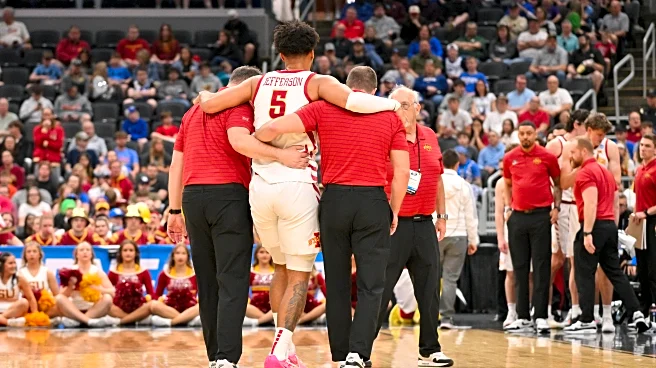
That defensive approach completely changed the game, and it shows, as Iowa State has allowed just 65.4 points per game, which ranks among the best in the country and proves why it has built its identity on that end of the floor. Even without star forward Joshua Jefferson, the Cyclones executed their defensive game plan to perfection.
In the end, Kentucky simply couldn’t solve the pressure, and Iowa State’s defense carried it to a decisive win and a spot in the Sweet 16.
3. Kentucky’s guards get into foul trouble early
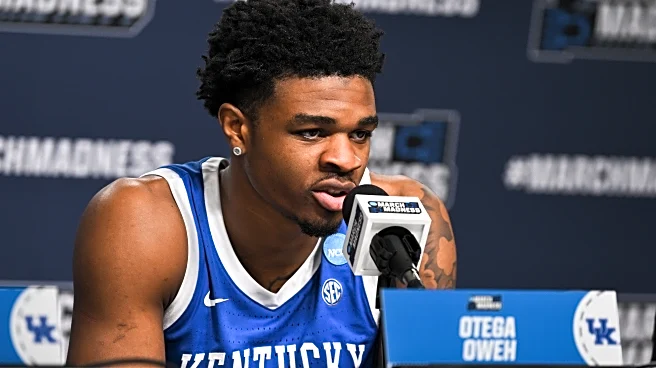
Denzel Aberdeen, Otega Oweh, and Collin Chandler all found themselves in foul trouble early in the second half, forcing Kentucky to adjust both its rotations and overall approach.
With multiple guards needing to play carefully to avoid fouling out, Kentucky lost a level of aggressiveness on both ends of the floor. Offensively, the guards were less willing to attack the basket or play downhill, often settling for tougher shots rather than initiating contact.
Defensively, the difference was just as noticeable. Kentucky’s guards couldn’t apply the same level of pressure, especially against an Iowa State team that thrives on physical play and attacking gaps. Instead of contesting aggressively or fighting through screens, the Wildcats were forced to play more conservatively, allowing the Cyclones to find rhythm.
Foul trouble not only disrupted Kentucky’s flow but also limited its ability to respond.
In a high-stakes NCAA Tournament matchup, those small shifts in aggression and confidence can make all the difference. For Kentucky, foul trouble proved to be a costly factor in its season-ending loss.
4. Defense was a no-show in the second half
In the first half, Kentucky held its own defensively, limiting Iowa State to just 31 points and keeping the game within reach. The Wildcats were active, contested shots, and did enough to stay competitive heading into the break.
It changed after the first half, as Kentucky’s defense was a no-show in the second half, allowing the Cyclones to score over 50 points and completely take control of the game. Iowa State found open looks, attacked the rim, and capitalized on nearly every opportunity as Kentucky struggled to get stops.
To be fair, part of Iowa State’s great offense was fueled by its own elite defense. The Cyclones forced turnovers, sped up Kentucky’s offense, and created transition chances that led to easy points. Still, Kentucky was unable to respond on the defensive end when it mattered most.
The Wildcats couldn’t slow the tempo, couldn’t limit clean looks, and couldn’t string together enough stops to shift momentum back in their favor.
As a result, Iowa State pulled away in the second half, and Kentucky’s season came to a close, leaving plenty of questions heading into the offseason.
Now, let’s talk about what just transpired in St. Louis and what’s ahead for the program.