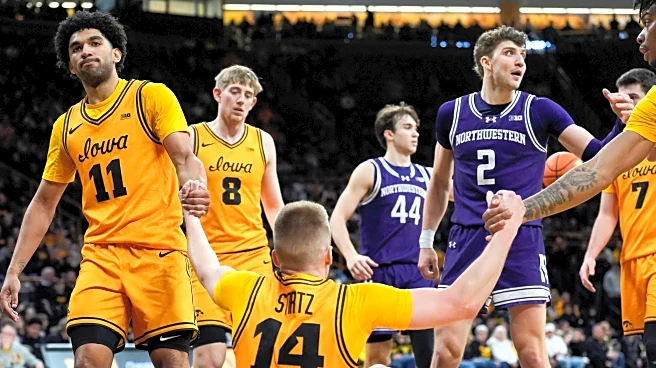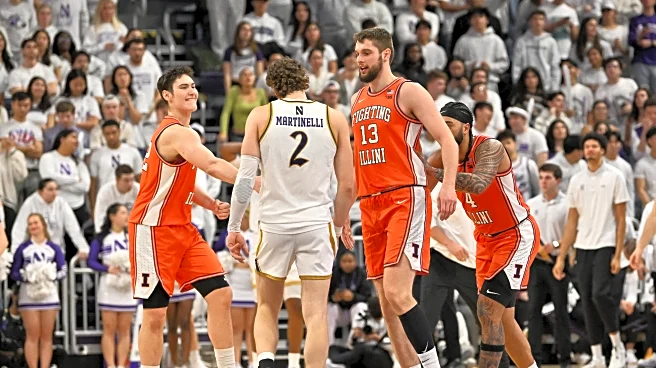

In a sold-out Welsh-Ryan Arena, the stakes of a historic rivalry were familiar for Northwestern.
Unfortunately for ‘Cats fans, it was also an all-too-familiar storyline down the stretch on Wednesday night,
as the Wildcats lost 79-68 to rival Illinois. With NU sitting at 0-6 to start Big Ten conference play, the frustration with Northwestern’s inability to secure a crunch-time victory has never been larger, as the ‘Cats let another close game slip away.
Here are three takeaways from Wednesday’s defeat.
The key to stopping the ‘Cats: squeeze the paint
Brad Underwood’s game plan for Northwestern’s Nick Martinelli-led offense was simple: collapse in the paint and stop Martinelli. And, it worked.
Northwestern’s two leading scorers — Martinelli, who averages 23.8 points per game, and Arrinten Page, who averages 13.6 points per game — both fundamentally operate in the paint as post players. Though Martinelli is a versatile scorer, even his 6.2 made free throws per game come primarily from shooting fouls opposing defenders commit when he’s working inside. On top of all of this, Northwestern is shooting 31.3% from beyond the arc this season, good for 17th in the Big Ten.
Considering Northwestern’s offensive identity, Illinois squeezed the paint, blocking almost all post entries to Martinelli and Page. At some points, the Illini even played a 2-3 zone, pretty much giving up anything from beyond the perimeter but not allowing the ‘Cats to penetrate inside. Martinelli and Page were held to 27 combined points, well below their season average of 37.4.
In addition, though they had good looks from downtown all game long, the ‘Cats shot just 36% from beyond the arc. Wednesday was certainly one of their better games of the year from deep, but it wasn’t good enough to win — especially with Illinois consistently handing out open three-point looks.
Illinois is the second Big Ten team to truly expose the ‘Cats’ weak perimeter offense. Against Michigan State, the ‘Cats shot 23% on 26 threes, their most attempted threes in a single Big Ten game this season.
Northwestern’s 66 points in that game was its second-lowest scoring total all season long. The key to stopping the ‘Cats is simple: take away the inside action, because their perimeter offense can’t beat you.
This team can’t consistently rebound
All game, it felt like Northwestern would get a major stop on the defensive end but would be unable to secure the subsequent defensive rebound. Illinois scored 15 second-chance points off of fourteen offensive rebounds, breaking down a tired ‘Cats defense which time and time again had to defend 45-second multi-shot possessions rather than 25-second single-shot possessions.
Now, by the end of the game, the rebound statistics actually ended up being somewhat even. Illinois finished with 33 rebounds to Northwestern’s 30 and 14 offensive rebounds to Northwestern’s 13. However, it felt like many of Illinois’ major rebounds came at crucial points in the game when Northwestern needed them most.
In the early going, the Illini’s second-chance points kept them in the game. With the ‘Cats up by three at the 11-minute mark in the first half, three Illini offensive rebounds and put-back layups fueled a 9-3 Illinois scoring run which halted the ‘Cats’ first half momentum and put the Illini out in front.
In the second half, after the 10-0 ‘Cats run led by Reid’s heater, Northwestern surrendered two massive rebounds to the Illini, giving Illinois two extra possessions. Off of the second offensive rebound, Tomislav Ivisic made a put-back layup, squashing NU’s scoring run.
Unfortunately for Northwestern, poor rebounding has been a trait of this team all year long, and Wednesday’s performance still featured many missed opportunities on the glass. Northwestern ranks 15th in the Big Ten in rebounds per game (33.4) and 16th in the Big Ten in rebounds allowed per game (35.4). Though the ‘Cats oftentimes get out rebounded by a margin of just 3-5, not securing those loose balls definitely is a leading reason why this team always seems to come up short after fighting hard for 40 minutes.
Jayden Reid takeover?
The one bright spot from this game was Reid’s second-half explosion, which kept the ‘Cats in the game all the way until the end. Reid scored 20 of Northwestern’s 35 second-half points, finishing the game with 28 — a career high. Outside of Reid, the ‘Cats shot 5-for-19 on threes, but Reid was able to capitalize on perimeter opportunities, shooting 4-for-6 from deep.
Though Reid is averaging just 11.9 points per game, this game shows he can be the guy when given the opportunity. Unlike Northwestern’s other guards, Reid does have the ability to win in most one-on-one matchups off the dribble and is decent as an off-the-dribble shooter.
While Reid’s 39.3% field goal percentage this season is quite low, it is somewhat reflective of the high amount of bad shots he ends up taking against more traditional help-side defenses. While Reid’s 60% shooting against the Illini was in large part due to a hot shooting stroke, Reid was able to get better shots in more isolated perimeter opportunities, something that no other Wildcat guard could do consistently.
Still, considering Reid’s heater in the second half, Collins may have been able to do more to get Martinelli and Page involved in two-man action with Reid. When the defense completely commits to taking away post entries and Reid is clearly hot from the outside, Northwestern might want to look to get Reid engaged in a high pick and roll so that him and Martinelli can get downhill or Reid can get more open looks from three.
Ultimately, Reid finished the game with just three assists. If his passing skills are utilized more effectively alongside his shooting ability, the Wildcats’ offense will likely see even more success as a result.