
It’s Wednesday night here at BCB After Dark: the swinging-est afterparty for night owls, early risers, new parents and Cubs fans abroad. We’re so glad you decided to stop by. Come in out of the cold. We’ve
got a fire going in here. There is no cover charge. We still have a couple of tables available. Bring your own beverage.
BCB After Dark is the place for you to talk baseball, music, movies, or anything else you need to get off your chest, as long as it is within the rules of the site. The late-nighters are encouraged to get the party started, but everyone else is invited to join in as you wake up the next morning and into the afternoon.
Yesterday I asked you if the Cubs should bring back Brad Keller on a two-year, $23 million deal. Fully 67 percent of you thought that wa a deal that the Cubs and Keller should make. Another 18 percent of you want him back, but only for less money.
Here’s the part where we talk movies and listen to jazz. We are finishing up the “Star Wars” bracket (1977 to 1982) tonight and Star Wars isn’t even the number-one seed. But you’re free to skip this part if you want.
If you’re into Wicked like my daughter is (not me), then you’re a fan of Cynthia Erivo. Here she is with keyboardist Robert Glasper performing “God Rest Ye Merry Gentlemen” and the “Carol of the Bells.” This performance was in London from last Christmas.
You voted in the BCB Winter Science Fiction Classic and to no one’s surprise, Star Wars topped Invasion of the Body Snatchers (1978). I was glad to see Body Snatchers get as many votes as it did, but in the end it wasn’t close.
Tonight we have the final matchup in the 1977 to 1982 category and arguably, they should be the one- and two-seed in this bracket. Instead, they’re one and eight. But it’s still a great matchup as Blade Runner (1982) faces off against the Soviet film Stalker (1979).
- Blade Runner (1982). Directed by Ridley Scott. Starring Harrison Ford, Rutger Hauer and Sean Young.
Based on the Philip K. Dick novel “Do Androids Dream of Electric Sheep?” Blade Runner is one of the most influential films of the genre. A gorgeous blend of science fiction and hardboiled noir, Blade Runner is philosophical and dark—both literally and figuratively in this case. There’s an action/adventure story there to be sure, but mostly it’s about what it means to be human and can we ever really be sure that we are?
Blade Runner takes place in a post-apocalyptic Los Angeles in the far-flung future of 2019. (War left future Los Angeles looking a lot like you’d imagine Tokyo would look.) The Tyrell Corporation has made a slave army of replicants. These are robots that look exactly like humans, except they are created for a specific purpose and are much stronger and more agile. They also don’t have emotions like humans, except if they live too long they might develop them and then be undetectable from humans. So they are given just a four-year lifespan. Some, like Rachael (Young), have false memories implanted in them so they don’t even know they are replicants.
The replicants are used for labor and other distasteful tasks only in outer space and other colonies. If a replicant escapes and heads to Earth, a blade runner like Deckard (Ford) is supposed to “retire” them, which is a euphemism for extermination.
So Deckard is the protagonist and because he’s played by the same guy who was Han Solo and Indiana Jones, the audience is naturally inclined to sympathize with him. (I wonder how we would have reacted to Deckard had Scott gotten his first choice for Deckard, Robert Mitchum.) But he’s basically a slave hunter, tracking down and killing slaves who are just fighting for their freedom. Yes, the film makes Deckard a reluctant slave hunter and the escaped slaves are killing lots of people, but they are slaves fighting for a better life. So our sympathies should be torn. I imagine that for most people watching the film, they aren’t. That’s somewhat disturbing and probably intentionally so.
The basic theme of the film is what makes us human and how do we know if we are? The ambiguity is at the heart of the film. There have been debates for decades over whether or not Deckard himself is a replicant. The film cleverly drops hints both ways.
Like Close Encounters of the Third Kind and Star Wars, Blade Runner has been extensively re-made over the years. Unlike those other two films, however, the original version is still readily available for watching. And unlike Star Wars, Scott has left the original special effects intact. While there are officially seven different versions of Blade Runner, there are three main ones to worry about: the original theatrical release, the 1992 “Director’s Cut” and the 2007 “The Final Cut.”
Scott didn’t have final cut rights for the original theatrical release. This is the one with the voice-over narration by Ford that was added because Warner Brothers didn’t think audiences would understand the film otherwise. (Again, the ambiguity is the point which is lost on executives.) The narration gives the film a more oldtime noir character, but it was also slapped on at the last minute so it doesn’t really work like it should. The original theatrical version also has a happier ending than the original, more ambiguous ending. The “Director’s Cut” removes the narration, adds an additional scene and alters the happy ending for the ambiguous one. The “Final Cut” is the only one that Scott had full control over. The “Final Cut” restores and cleans up the “Director’s Cut,” lets a few scenes run longer and adds back in some of the violence that was removed from the earlier versions. It’s the version that Scott considers definitive.
The look of Blade Runner was stunning back then and is only the more so with the restorations today. The dark, rainy city of Los Angeles certainly owes a lot to Metropolis, but it also has been copied in films ever since. It’s basically the look of every “cyberpunk” film of the past 40 years. The special effects were done by Douglas Trumbull, who here perfects much of what he had developed in Close Encounters and 2001: A Space Odyssey. Scott has also resisted the temptation to use CGI to improve the effects in the other versions. Good, because what Trumbull did was darn near perfect.
Blade Runner got good but not great box office and reviews when it came out in 1982. Its reputation has only grown since then, and most critics think both the Director’s Cut and Final Cut improve the film’s quality. In 1993, it was added to the National Film Registry of the Library of Congress for being “culturally, historically or aesthetically significant.” In the most recent BFI Sight and Sound rankings of the greatest films of all time, it was ranked as the 54th-best film of all time. It was third in that critic’s poll among science fiction films, trailing only 2001 and one other film that we’ll get to in a minute.
Blade Runner is pretty much everything we ask for out of good science fiction. Strong plot, strong acting, good action, good look/special effects and a theme that makes us look at our world from a different perspective.
Here’s the trailer for the original theatrical version of Blade Runner with the narration.
8. Stalker (1979) Directed by Andrei Tarkovsky. Starring Alexander Kaidanovsky, Anatoly Solonitsyn, Alisa Freindlich and Nikolai Grinko.
Stalker is ranked too low. I initially included it in my list of films for the tournament, even though I’d never seen it, because it is ranked so highly on several lists of the greatest science fiction films ever made. But my opinion of Tarkovsky’s other film in the tournament, the more widely-known Solaris, is that it’s good but overrated. Or maybe “overhyped” is a better term. I expected a similar reaction to Stalker.
Having now seen Solaris, I can tell you that I actually loved it. I think it’s much better than Solaris and not “overhyped” at all. Like all Tarkovsky films, it’s a slow burn, but it’s one that had me enraptured the entire time. Stalker is a strong character-driven story that can tell a compelling science fiction story with zero special effects.
At the heart of Stalker is “the Zone,” a large area on Earth where something extraterrestrial landed. Nobody’s quite sure what. This left an area where the normal laws of physics don’t apply. At the heart of the zone is “the Room,” a place where anyone’s deepest desires are granted.
There are a few catches to the Room. The first is that because the laws of physics don’t apply in the Zone, you can’t just walk straight to the Room. It’s a roundabout route that takes nonsensical turns and can only be navigated with a guide or a “Stalker.” The authorities have completely banned all travel inside the zone, so all of this is done illegally. The second catch is that the Room doesn’t just let you make a wish. It’s a mirror to the soul and it gives you what you really subconsciously desire, not what you think you want. I won’t spoil the third catch, but it involves a place in the Zone called “The Meat Grinder.”
None of the main characters are given a name. The Stalker (Kaidanovsky) has just gotten out of prison for going into the Zone. Much to the anger of his wife (Freindlich), the Stalker has been hired to lead two more people into the Zone—the Writer (Solonitsyn) and the Professor (Grinko). She wants him to think of his family and not risk another trip to prison, but the Zone has a kind of religious significance for him. His entire sense of purpose is wrapped up in the Zone. The Stalker also has reverence for his mentor, who taught him the ropes of the Zone, made it all the way to the Room, got his wish and promptly committed suicide afterwards. The Stalker intends to honor his mentor by making the trip again.
The Writer and the Professor have much more practical reasons for wanting to go into the Zone. The Writer says that he wants to regain his inspiration and the Professor want to win a Nobel Prize. But all three of these men have very different outlooks towards life and the Zone and are constantly butting heads on the trip. However, they soon learn that they have little choice but to follow the Stalker, at least up until a certain point.
It’s impossible to not see the Zone as something that Tarkovsky didn’t and couldn’t intend it to be. The abandoned, polluted and run-down Zone evokes the Chernobyl Exclusion Zone at every turn. (In fact, it’s often just called “the Zone” in reference to Stalker.) Of course, the Chernobyl disaster was still seven years in the future when Stalker was made. However, it was shot downstream of an Estonian factory that was dumping all kinds of toxic chemicals into the river that they were shooting in and around. Although we’ll never know for sure, most feel that the cancer that would kill Tarkovsky seven years later was a result of him spending too much time in this toxic stew.
We talk about the dystopias of the future in science fiction, but Tarkovsky managed to find one right in the heart of the Soviet Union. He didn’t even have to dress up the bleak landscape—it came pre-destroyed.
As mentioned earlier, Stalker is slow. Events take a long time to unfurl. Some will claim it’s boring. I won’t argue with your experience, but I found the way that Tarkovsky lets things linger and takes his time to get from one point to the other to be almost hypnotic, much more so in Stalker than in Solaris.
Soviet critics, unsurprisingly, condemned Stalker when it first came out. The Soviet film office hated it too. Tarkovsky was forced to leave the USSR for Italy after Stalker, although he was careful to say he wasn’t defecting. He just said that if he were still living in Russia, he’d be unemployed because they wouldn’t let him make the movies he wanted to make anymore.
Recent critics have been far more enthusiastic. In the most recent BFI Sight and Sound Critics poll of the greatest films ever made, Stalker was ranked as the 43rd-best film ever made, trailing only 2001: A Space Odyssey in the science fiction genre.
Stalker is unlike any other science fiction film you’ll ever see. There are essentially no special effects and the focus is on the three characters with different worldviews who are stuck together in this hellscape. The relationships take as many turns as this Zone that doesn’t follow the laws of physics does. But it’s a compelling story that had me glued the entire time.
Here’s the trailer for a re-release of Stalker.
Now it’s time to vote.
You have until Monday to vote. Blade Runner is available for rent in different versions. Stalker is on HBO Max and Criterion Channel, as well as the WatchTCM app for those who get Turner Classic Movies.
Next up we move onto our fourth and final bracket, the “modern (1983 to 1999)” bracket. The first matchup there is the number four film 12 Monkeys (1995). It faces off against the blockbuster favorite Back to the Future (1985). 12 Monkeys is on the WatchTCM app and can be rented. Back to the Future is available for rent.
Welcome back to everyone who skips the music and movies.
The Winter Meetings were a bust, not just for the Cubs but for pretty much everyone. There were no real trades of any importance and there were just three free agent signings. In the old days, the Winter Meetings were the only place where team executives could sit down with each other and make deals. Now, almost all deals are done by text and phone, so there’s little need to make a deal now, much to the chagrin to all of us who were hoping to have something to talk about in the middle of winter.
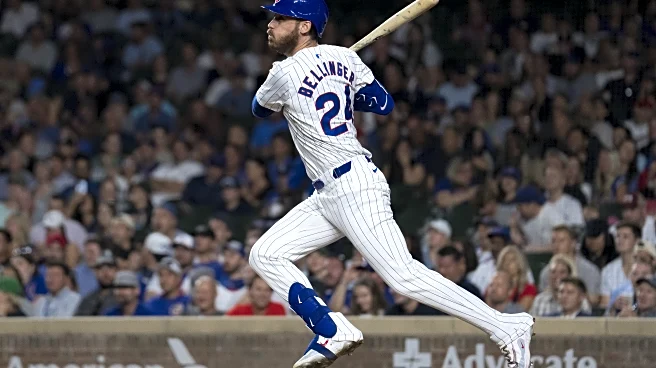
It certainly sounds like the Cubs are looking for another bat for 2026 and it doesn’t look like they want to pay Kyle Tucker what he’ll command in the free agent market. But what if I told you that there is a similar hitter who had just as good a season as Tucker did last year, is only one year older than Tucker and will likely cost less than half as much? Are you interested?
Of course, you’ve read the headline by now and you know I’m talking about Cody Bellinger. The Cubs dumped Bellinger’s salary last year after acquiring Tucker and with the Yankees, he had the second-best season of his career. That meant that he opted out of his deal (something he didn’t do after a mediocre 2024 with the Cubs) and now he’s back on the free agent market, free for the Cubs to sign him.
I don’t think I have to tell you much about Bellinger. He would be a great fit in the 2026 Cubs lineup because he could play right field against right-handers and, because he doesn’t have much a platoon split over the course of his career, play some first base against tough left-handers while Michael Busch sits.
With the Yankees last season, Bellinger hit .272/.334/.480 with 29 home runs. Compare that to Tucker’s .266/.377/.464 with 22 home runs and you can see how Bellinger would be an attractive replacement for Bellinger. The metrics all like Bellinger’s defense better than Tucker’s and combined with the fact that Tucker was hurt for part of 2025, Bellinger comes out on top in that WAR category that everyone fixates on these days.
Of course, you know some of the downsides of Bellinger. For one, he tends to alternate good and bad years. He was terrific in 2023 in his first season in Chicago. He even finished tenth in MVP voting that year. But then in 2024, he regressed to something that wasn’t bad, but wasn’t really much more than the level of a “solid regular.”
Bellinger also put the short right-field porch at Yankee Stadium to good use in 2025. He hit 18 of his 29 home runs at Yankee Stadium and had a .909 OPS at home with “just” a .715 OPS on the road. Far from having a short porch down the right field line, Wrigley Field has the deepest dimensions down the line of any major league park. So there is reason to doubt that Bellinger would repeat his 2025 with the Yankees with the Cubs in 2026.
But whereas Tucker is looking at a deal with total compensation somewhere between 300 and 400 million, Bellinger will be much cheaper. ESPN estimates that Bellinger will get a deal around six years and $165 million. Fangraphs and MLB Trade Rumors estimates five years and $14o million. The Athletic puts the number at seven years and $182 million.
I don’t know about you, but that five year, $140 million deal sounds enticing and that seven years and $182 million sounds ridiculous. I’m going to put an estimate of six years and $160 million on Bellinger, or just slightly below what ESPN estimates. Would you make that offer to bring back Bellinger?
To be clear, I don’t think the Cubs are seriously considering bringing back Bellinger. But maybe they should be and we do need something to talk about.
So would you give Cody Bellinger six years and $160 million?
Thank you for stopping by this week. We’ve enjoyed hosting you. Please get home safely. Stay warm. Recycle any cans and bottles. Tip your waitstaff. And join us again next week for more BCB After Dark.