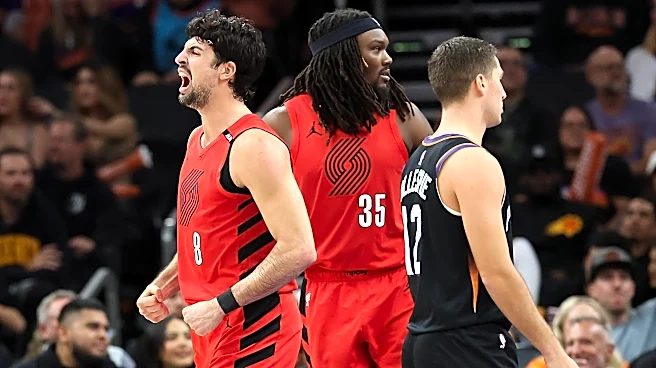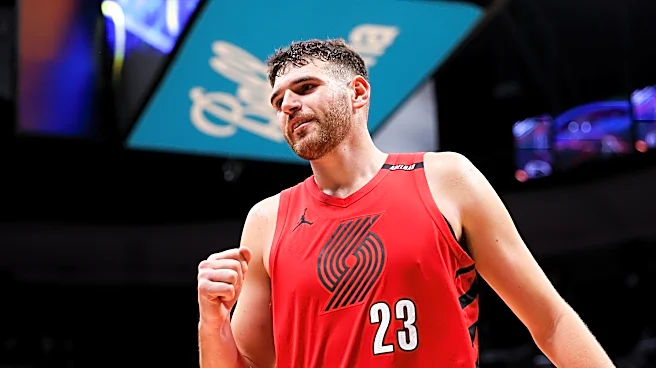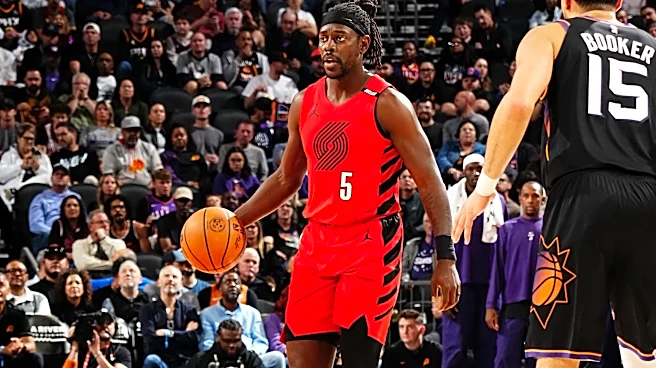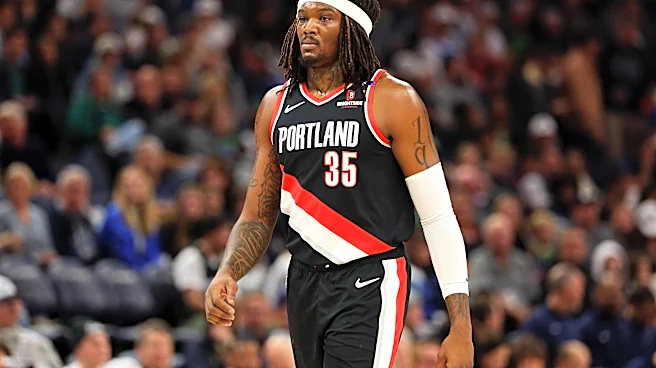


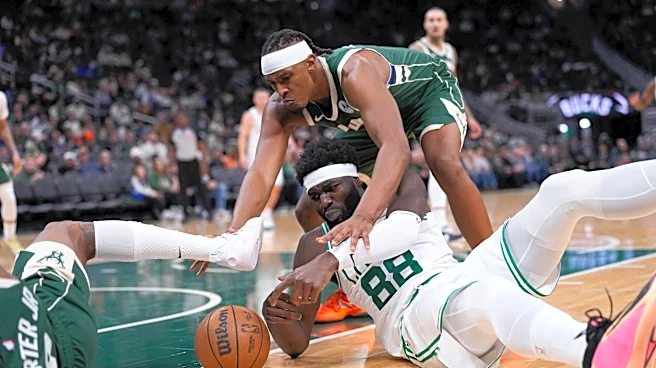

The Portland Trail Blazers have pleasantly surprised through the first two and a half weeks of the NBA season, beating a couple of good teams and competently dispensing of rosters they’re supposed to. Most of the Blazers’ key rotations pieces are performing at or above expectation in a system enhancing its player’s strengths.
One of those parts is ninth-year big Robert Williams III. The center initially joined the Blazers as part of the second leg of the 2023 Damian Lillard trade. Snake-bitten by
injury through the majority of his career, the 29-year-old managed to find consistency last season, playing 59 games while sitting out the second half of back-to-backs. He averaged 6.7 points on 70.8 percent from the field, 7.0 boards, 1.0 assists, 1.5 blocks and 0.6 steals.
Williams also played an enhanced role during the franchise’s return to the NBA Playoffs, often subbed in to compensate for the less-experienced Donovan Clingan. He put up 9.6 points, 62.9 percent from the field. 7.4 boards, 2.6 assists and 1.2 blocks in five games.
His value to this roster is as clear as the Blazers are to Portland: veteran instincts, an innate ability to be in the right spot on both sides of the ball. On offense, he’s a genuine roller and a heck of a lob threat, not to mention his ability to generate second-chance points. On the other side, he’s a Defensive Player of the Year type of threat when he’s healthy. Williams is a leaper who’s agile enough to guard under the rim and on the perimeter, someone who doesn’t leave much leeway for opposing offenses to score.
Though Clingan is the up-and-coming, potential-laden big, Williams has shown he can start in the UConn standout’s place when required. Williams might not have Clingan’s size, but he has the smarts, a 7’6 wingspan, and the hops to match up with any of the NBA’s elite bigs.
Re-signing Williams
On the eve of free agency, Williams penned a three-year, $43.5 million deal to remain a Blazer after some reports suggested he was looking to move on from Portland. The deal was a massive coup for the Blazers. It showed that unrestricted free agents wanted to play in Portland, even if it was via Bird Rights. It also protected the franchise against any further injury with a partial guaranteed and non-guarantee on the respective second or third years, pending Williams’ ability to play 50 games the previous campaign.
The center rotation now appears stocked with Clingan, Williams, the developing Chinese big Yang Hansen, and veteran-minimum players in Branden Carlson and Micah Potter. But appearance of depth may not reflect reality. The Blazers desperately needed Williams to return to back up Clingan. Why? Because playing any of Hansen, Carlson or Potter as the full-time back up would see quality fall off drastically as soon as Clingan sat or suffered injury.
Fortunately, Clingan has continued to grow in his role and could be poised to established himself as one of the league’s five-to-ten best big men. But with Williams, the pair has shown it can be a dominant force on the floor for 48-plus minutes a game.
Through seven of the Blazers eight games, Williams’ return has been noticeable. Williams is averaging 16.1 minutes, 7.4 points on 61.3 percent from the field, 6.9 boards, 1.1 assists, 1.3 blocks and 1.0 steal. More that that, he ranks first in defensive rebound rate among bigs, pulling down 32.4 percent and third in offensive rebounds rate at 17.0 percent.
You also don’t have to be in the huddle to notice his impact on his younger teammates, not just Clingan. Perhaps it’s the time he’s spent watching from the sidelines but, to me, he exudes the kind of wisdom and compassion a young man needs to make a contribution on and off the court.
Other Candidates for “Best Back-Up”
I’ve picked three other back up bigs who might contend with Williams, namely Luke Kornet (San Antonio Spurs), Isaiah Stewart (Memphis Grizzlies), and Steven Adams (Houston Rockets). I considered Paul Reed of the Detroit Pistons but chose not to include him given his noticeable contributions have been relatively recent.
Kornet serves as back up to the most talented player in the league Victor Wembanyama, proving his worth during last season’s NBA Playoffs, also playing a key role in the Blazers’ 1-4 defeat in the first round series. The 31-year-old is a no frills, day-in, day-out big who could easily serve as a starting center in this league.
His numbers aren’t anything to crow about (3.0 points on 52.9 percent from the field, 4.0 boards) but his contributions ensure the Spurs’ position doesn’t suffer when Wembanyama rests.
Stewart can play both the four or the five but will be largely positioned at the the five with the Grizzlies, supporting Zach Edey and playing minutes alongside Cam Boozer. Stewart’s combination of physicality and ability to step out and shoot from three makes him a veratile threat after being dealt by the Pistons.
In 18.3 minutes this season, Stewart is averaging 11.9 points on 66.7 percent from the field, more than 50 percent from three and 3.4 boards through seven games and has been crucial to the Grizzlies’ early season success.
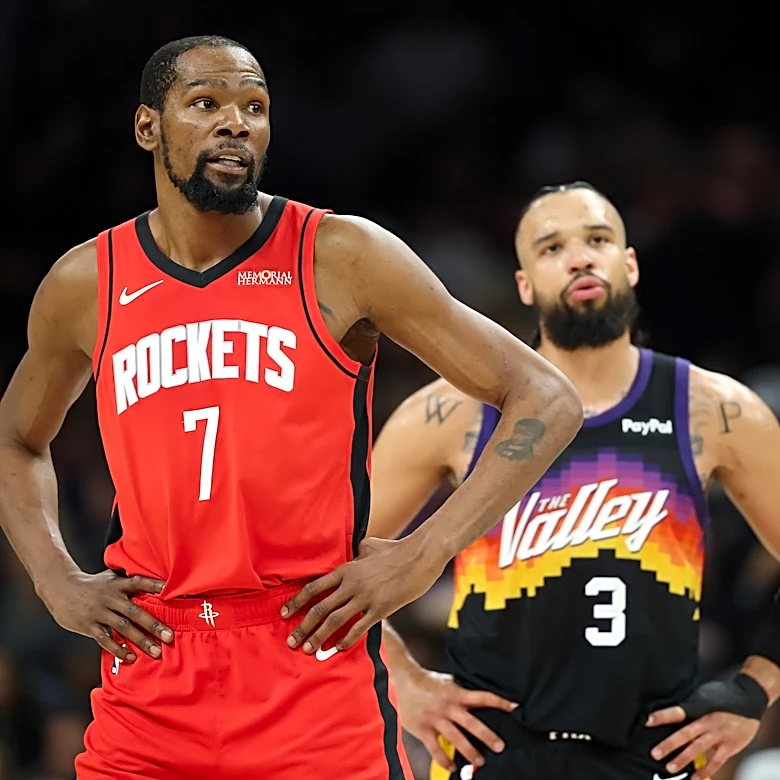
Adams is still one of the more effective big man in the NBA even if he’s currently working through another injury. Serving as Alperen Sengun’s primary back up, the massive Kiwi is still an elite offensive rebounder. Like Williams, injuries will always be a concern but Adams will be a force for the Rockets come the NBA Playoffs.
At 33, Adams is still an essential piece who can start alongside Sengun in certain situations but will largely work as a gigantic presense enhancing the performance of the four much smaller players around him.
I’ve purposefully not focused on comparing numbers because the impact of a back up big doesn’t necessarily need to be measured in the boxscore.
Conclusion
A healthy Williams has the edge over the above names, able to start on any team, offering versatile, athletic two-way play when he takes the court. If he’s able to increase the number of games played on last year, it’s hard to see a better back up big in the league.
His physical gifts combined with elite defensive instincts, make him one of the league’s most effective bigs with his return also being one of this franchise’s biggest wins in recent memory.
Unfortunately, injuries have changed the trajectory of his career. But fortunately for the Blazers, both the player and the team have a found a situation that helps each thrive.