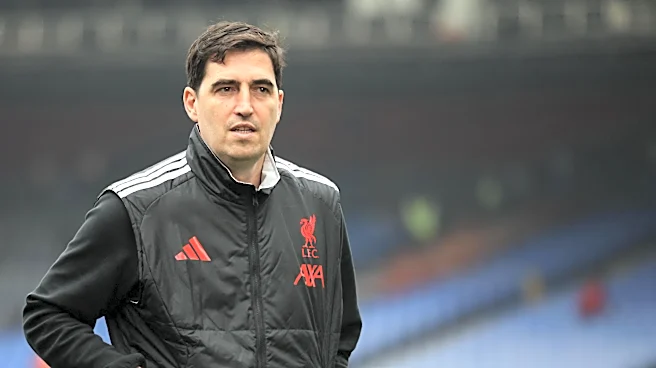


When Andoni Iraola took charge of Liverpool in the summer, there was plenty of curiosity about how his high-intensity philosophy would translate to a club with greater expectations and a very different squad from the one he managed at Bournemouth.
Known for his aggressive pressing, direct attacking football and willingness to take risks, Iraola arrived at Anfield with a clear tactical identity. But implementing those ideas at Liverpool was never going to be straightforward.
The Reds had spent two seasons
under Arne Slot developing a more possession-oriented approach, while several players had grown accustomed to a system that prioritised control over constant intensity.
A few months into Iraola’s reign, Liverpool remain a work in progress. There have been encouraging performances, but also frustrating results, particularly against opponents who defend deep.
Nevertheless, three tactical developments have stood out: the return of aggressive pressing, the unexpected importance of Ronald Araújo at right-back, and the evolving role of Florian Wirtz.
1. The Return of Aggressive Pressing
For years, aggressive pressing was synonymous with Liverpool under Jürgen Klopp. The Reds built much of their success around winning possession high up the pitch, forcing opponents into mistakes and creating chances before defensive structures could recover.
Under Arne Slot, Liverpool adopted a more controlled approach, placing greater emphasis on possession, positional discipline and managing the tempo of matches.
Iraola’s arrival has brought a noticeable shift back towards intensity.
His approach is not simply about chasing the ball. Liverpool attempt to press collectively, with forwards closing down defenders, midfielders aggressively tracking passing options and full-backs stepping forward to prevent opponents from escaping through wide areas.
The objective is to make the opposition uncomfortable from the moment they begin building an attack.
Liverpool’s victory over Brighton in October provided one of the clearest examples of this approach. Rather than allowing Brighton to establish their passing rhythm, Liverpool committed players forward to disrupt their build-up.
Both Ronald Araújo and Milos Kerkez were willing to push high, while the midfield and attacking players worked together to restrict passing options. Bradley Barcola’s ball recovery, which led to Alexander Isak’s goal, illustrated how quickly an aggressive press can turn into an attacking opportunity.
This is the type of football Iraola wants Liverpool to produce consistently.
However, pressing aggressively comes with consequences.
When multiple players commit forward, Liverpool can leave considerable space between their midfield and defensive lines. If opponents manage to bypass the initial pressure, the centre-backs can find themselves defending large spaces with limited protection.
It is a delicate balance between aggression and defensive organisation.
Another challenge is that Liverpool now face opponents who are often happy to sit deep and concede possession. Unlike at Bournemouth, where Iraola’s side frequently had opportunities to press teams attempting to dominate the ball, Liverpool must find ways to maintain their intensity even when opponents refuse to play through them.
The pressing philosophy is becoming clearer, but turning it into a consistent advantage remains one of Iraola’s biggest challenges.
2. The Right-Back Position: Why Ronald Araújo Has Become So Important
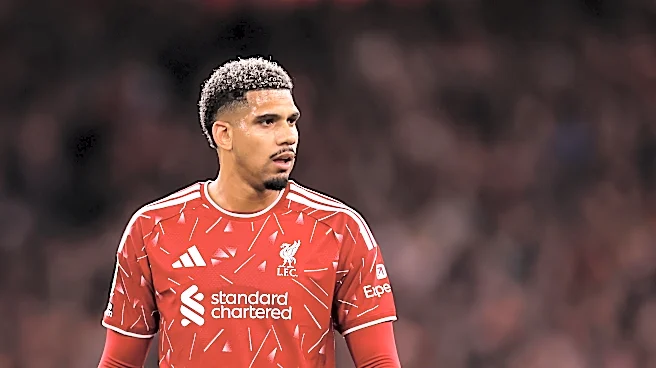
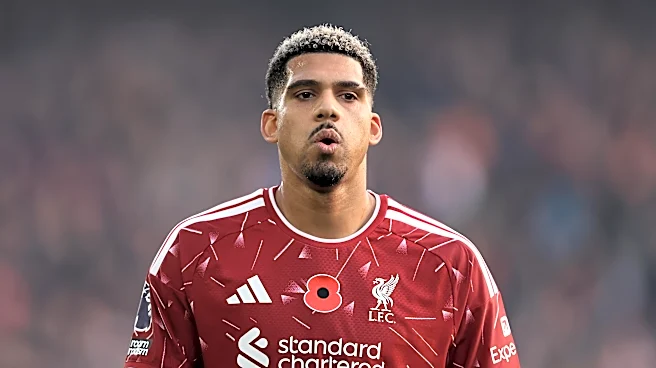
Perhaps the most unexpected tactical development under Iraola has been the importance of Ronald Araújo at right-back.
When Liverpool signed the Uruguayan on loan from Barcelona, he was primarily viewed as a centre-back who could provide additional defensive depth. Few would have expected him to become such an important figure on the right side of the defence.
Yet circumstances have created an opportunity.
Conor Bradley’s injury problems and Jeremie Frimpong’s struggles to provide defensive consistency forced Iraola to reconsider his options. Rather than relying on a conventional attacking full-back, he turned to Araújo.
The decision has significantly changed Liverpool’s defensive balance.
Under Klopp, Liverpool’s full-backs were among their most important attacking weapons. Trent Alexander-Arnold provided creativity and progressive passing from the right, while Andy Robertson supplied width and overlapping runs on the left.
Frimpong offers a similarly attack-minded profile, relying on explosive pace and forward movement to stretch opponents.
Araújo is a completely different type of player.
As a natural centre-back, his greatest strengths are physicality, defensive awareness, aerial ability and one-on-one defending. These qualities have become particularly valuable in Iraola’s system.
With Liverpool pressing aggressively and committing players forward, the right-back must be capable of defending large spaces when opponents break through the press.
Araújo’s defensive qualities allow him to handle these situations more effectively, providing Liverpool with additional protection against counter-attacks.
His positioning also offers greater flexibility.
When Liverpool attack, Araújo can remain deeper to provide defensive cover, allowing the left-back and midfielders to advance with greater confidence. In certain situations, his presence effectively gives Liverpool an additional centre-back within their defensive structure.
However, describing Araújo as purely a defensive full-back would overlook another important aspect of his contribution.
His physical strength and willingness to engage opponents make him effective when stepping forward to press. Against Brighton, for example, he was prepared to advance aggressively from right-back to challenge opponents and help Liverpool recover possession higher up the pitch.
This ability to combine defensive security with front-foot aggression makes him particularly suited to Iraola’s philosophy.
There is also the added benefit of set-piece defending.
Liverpool struggled with defending dead-ball situations last season, and having another physically imposing centre-back on the pitch provides greater aerial presence inside the penalty area.
Iraola has openly acknowledged the advantages of using Araújo at right-back, particularly his contribution to defensive stability and set pieces.
Nevertheless, there is a trade-off.
Araújo cannot consistently provide the attacking width, overlapping runs or final-third creativity that Frimpong offers. Against opponents who defend deep, this can become a limitation, especially when Liverpool need additional attacking options to break down compact defensive lines.
The challenge for Iraola is therefore to compensate for Araújo’s reduced attacking output through adjustments elsewhere on the pitch.
But his emergence highlights an important principle of Iraola’s Liverpool: playing aggressive football does not necessarily mean selecting the most attacking players in every position.
Sometimes, having a more defensively reliable player is precisely what allows the rest of the team to attack with greater freedom.
Araújo may not be the most glamorous solution at right-back, but he has become one of the most important pieces in Liverpool’s tactical structure.
3. Florian Wirtz: More Than Just Goals and Assists
Few Liverpool players have attracted as much attention as Florian Wirtz.
Arriving from Bayer Leverkusen with a reputation as one of Europe’s most talented attacking midfielders, the German was expected to bring creativity, technical quality and greater unpredictability to Liverpool’s attack.
However, his adaptation to life under Iraola has been more complicated than many anticipated.
At Leverkusen, Wirtz thrived in a system that allowed him to receive possession between the lines, combine with teammates and influence attacks in dangerous central areas.
At Liverpool, he has been asked to operate within a more physically demanding and aggressive tactical structure.
One of the most interesting aspects of Wirtz’s role is his contribution without the ball.
While much of the attention remains focused on his goals, assists and chance creation, his pressing intelligence and work rate have become increasingly important to Iraola’s system.
Wirtz is not simply a creative player waiting for the ball to arrive at his feet.
His movement helps Liverpool close passing lanes, pressure opposition midfielders and maintain intensity in advanced areas.
This makes him particularly valuable in a system where attacking players are expected to contribute significantly to the defensive phase.
With the ball, Wirtz offers something equally important.
His ability to operate between the lines, receive possession in tight spaces and connect midfield with attack provides Liverpool with a different dimension.
Rather than relying exclusively on pace or direct runs behind the defence, Liverpool can use Wirtz to create opportunities through intelligent movement, quick combinations and precise passing.
However, the biggest question remains whether Liverpool are consistently getting the best out of his creative abilities.
Against opponents who defend deep, Wirtz has sometimes struggled to influence matches in the areas where he is most dangerous.
Liverpool have frequently dominated possession without creating enough clear-cut chances, and Wirtz’s tendency to circulate possession rather than attempt decisive passes has contributed to the debate surrounding his performances.
This does not necessarily mean he is playing poorly.
His ability to retain possession, connect attacks and contribute to pressing remains valuable. But Liverpool invested heavily in Wirtz because of his ability to make the difference in the final third.
Ultimately, he will be judged not only by how well he fits into Iraola’s system, but also by how effectively that system allows him to express his attacking qualities.
Finding the right balance is crucial.
If Wirtz is asked to spend too much energy pressing and covering defensive spaces, Liverpool risk reducing his influence in attacking positions.
On the other hand, allowing him complete freedom without defensive responsibility could weaken the collective intensity Iraola is trying to establish.
The solution lies in building a structure that maximises both sides of his game.
Interestingly, the emergence of Araújo at right-back could play a part in that process.
With greater defensive security behind the attacking players, Liverpool may have more flexibility to allow Wirtz to occupy advanced positions and take creative risks.
If Iraola can successfully combine Wirtz’s technical intelligence with the team’s aggressive pressing philosophy, the German could become the central figure in Liverpool’s attacking evolution.
- READ MORE: How Mauricio Pochettino could line up Man Utd against Liverpool