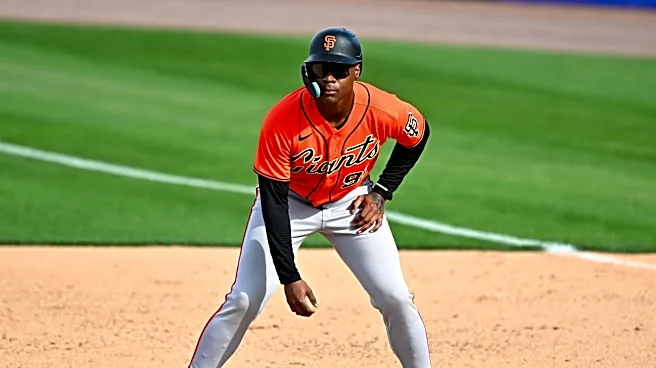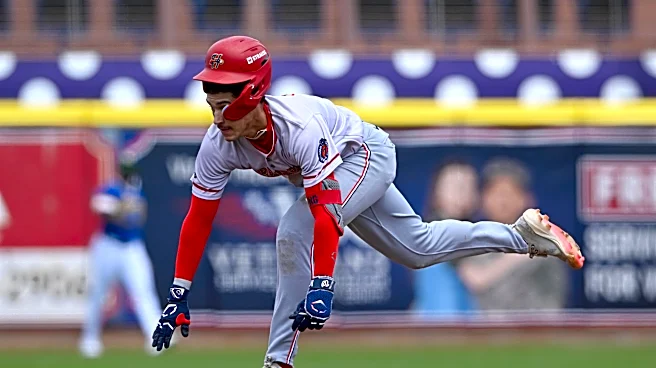



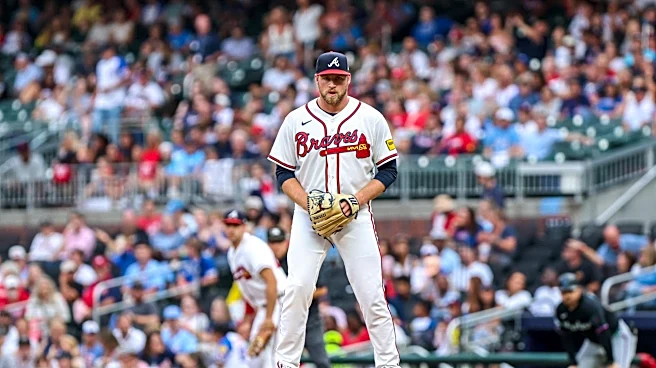
In the 4th inning of Sunday’s contest between the Rochester Red Wings and Charlotte Knights, Seaver King fired a 90 mph rocket to first base to finish off an inning ending double play. After the play, the Nats star shortstop prospect was fired up, flexing on his way back to the dugout. This combination of athleticism and energy personifies Seaver King’s play style.
The first thing that came out of manager Matt Lecroy’s mouth when I asked him about King was “Seaver is a sparkplug man”. He is one of those players that is easy to pick out as a casual observer because of his loud tools. King just plays the game faster and more aggressively than most players, which should endear him to fans.
However, that has not always been the case for the 23 year old. Last season was a disastrous campaign for the former 10th overall pick. He hit just .244 with a .631 OPS across two levels, particularly struggling in Double-A where he posted a .600 OPS. The chase rates were out of control and he was hitting the ball on the ground too much to tap into his power.
King admitted that his 2025 season was tough, but added that he “would not be here without last season”. It was a reality check for a player whose career had been a steady uphill climb to that point. King went from Division II Wingate University to Wake Forest, where he became a top 10 pick. However, baseball has a way of humbling players quickly.
It is not as if the success had gotten to King’s head. Rather, as he put it, he needed to learn what he can and cannot do. Following a successful stint in the Arizona Fall League and an offseason focused on building consistency, King once again looks like the player the Nats made a top 10 selection.
Right now King is knocking on the door of the big leagues. When I saw him this weekend, the bat sure looked big league ready. He was hammering balls to the opposite field and got on base five times in the two games. King’s biggest moment was a solo home run which he crushed to right field.
Using the whole field has always been a big emphasis for King and that remains the case even with a new hitting braintrust that emphasizes pulling the ball in the air. “Owning the right side of the field” is a motto that King has lived by for most of his baseball life. He wants to add more of a pullside element, but it is clear that he believes that he is at his best when he is using the opposite field.
While pulling the ball might not be King’s game, he clearly wants to hit the ball in the air more. He told me that every swing he takes in the cage is with the intent of putting the ball in the air. Elevating the baseball is at the core of the Nats new hitting philosophy, and King is a success story for this ideology.
Last season, he put the ball on the ground 52.4% of the time. This year that number is down to 44.5% and it has led to a massive surge in power. After hitting 6 homers in 125 games last season, King has 14 in 82 games this year, including 4 in his last 8 games. The explosive shortstop has always hit the ball hard, but now he is putting the ball in the air and doing damage.
That idea of doing damage is at the core of King’s offensive approach. His approach to hitting is both simple and effective, “hit strikes as hard as I can”. In an organization where data has become king, Seaver admits that he is not a guy who dives into the numbers too much.
Ideally, he wants his instincts and explosiveness to do the talking. However, when he does look at numbers, he said he tends to look at things such as chase percentage. That makes a lot of sense, as minimizing chase has been a big priority for the 23 year old.
In Double-A, he was swinging dramatically less at the beginning of the season. King had a lot of success with that approach. However, following his promotion to AAA, his swing happy nature re-emerged. Before his IL stint, King was chasing at 38.9% of pitches at the AAA level. Since he has come back, that number has dropped to the low 30’s but it is still something that gives the Nats some pause, which was mentioned in Spencer Nusbaum’s most recent article.
This weekend, King’s plate discipline was a mixed bag. There were some at bats where he came up with a great plan and forced pitchers into the zone. He did walk in both games I saw. However, there were other AB’s where he was clearly in swing mode. One at bat he swung at a pitch so wild that it got past the catcher and he got on base due to the dropped third strike.
What is different about this year though, is that King is not letting those at bats linger. One thing King told me he has gotten a lot better at is “Not letting bad days dwell into three in a row”. He will have the occasional bad at bat, but King learns from it and locks back in.
Those changes in his mental game are just as important as the physical ones. In fact, those are the changes that make me believe the 23 year old is big league ready. It is unclear if he will be called up this season, but I think he would help the team if given the opportunity.
His bat will be helpful, but I also think the way he plays would breathe life into a Nats team that looks out of gas. As Matt Lecroy put it, King is “an old timey player who gives everything he’s got every day”. The Nats need a guy who will puff his chest after turning a double play and play with reckless abandon. According to Lecroy, King is a guy who takes losses hard even at the AAA level.
In the dog days of summer, this Nats team is in need of a sparkplug. Seaver King’s aggressive and up tempo playstyle would be the perfect solution. If it were up to me, Seaver King would get a shot, but let’s see what the Nats decide to do next.