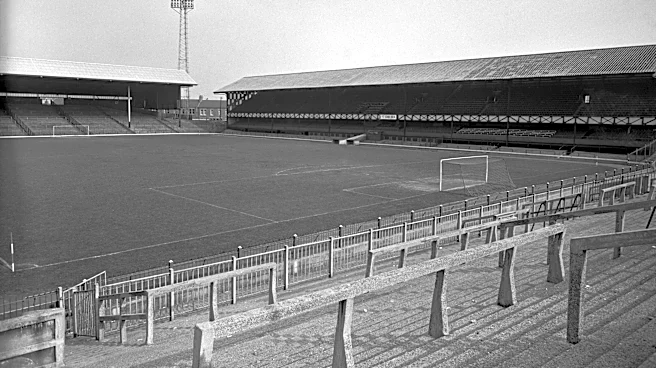



It still amazes me, five decades and more later, and with all the relegation battles that have come and gone since, that we gave ourselves a chance going into the final game of this dreadful campaign.
The start of the 1969/1970 season had been bad by any definition — we’d had failed to score a goal in our first four games and did not win a game until September 20, eleven league games into the season!
A 2-1 win against Nottingham Forest was quickly followed by our first away victory of the season (one
of only two that campaign) courtesy of an own goal by Mike England just before half-time at Spurs. It should’ve signalled take-off, but it would be another twelve league games before we would taste victory again.
Despite taking honourable draws off the top three at Roker Park, our season was littered with drawn games that we could’ve won, and games we lost that we should’ve drawn. Apart from a very brief two-week period in January, Alan Brown’s team spent the whole of this season from August 23 in the relegation zone!

As the season entered its final phase, Crystal Palace and Sheffield Wednesday were battling it out to avoid being the team that accompanied us down to the Second Division (as far as the football world was concerned, we were certainties for the drop).
A hard-fought 2-1 victory against Wolves at Roker Park in March suggested our team hadn’t given up the fight and even though we lost our next game against Ipswich at Portman Road, we went five games undefeated after the Wolves game, with draws against champions Everton and second-placed Leeds, as well as Newcastle and fourth-placed Derby County.
We also beat Manchester City and drew at Coventry away from home over this period to give ourselves a chance of escaping what had seemed an inevitable relegation — all we had to do was beat Liverpool at Roker Park!
If we could manufacture a victory we would leapfrog Crystal Palace, whose season had already finished, a point ahead of ourselves. With Sheffield Wednesday propping up the rest of the table and hopefully not picking up enough points in their remaining two games, we would be safe; if we could get a victory over the Merseysiders, the Owls couldn’t catch us.
Liverpool were a team in transition as Bill Shankly moved on the old guard — their fifth-place finish in the league and nothing much to show off in the knockout tournaments evidenced this change.
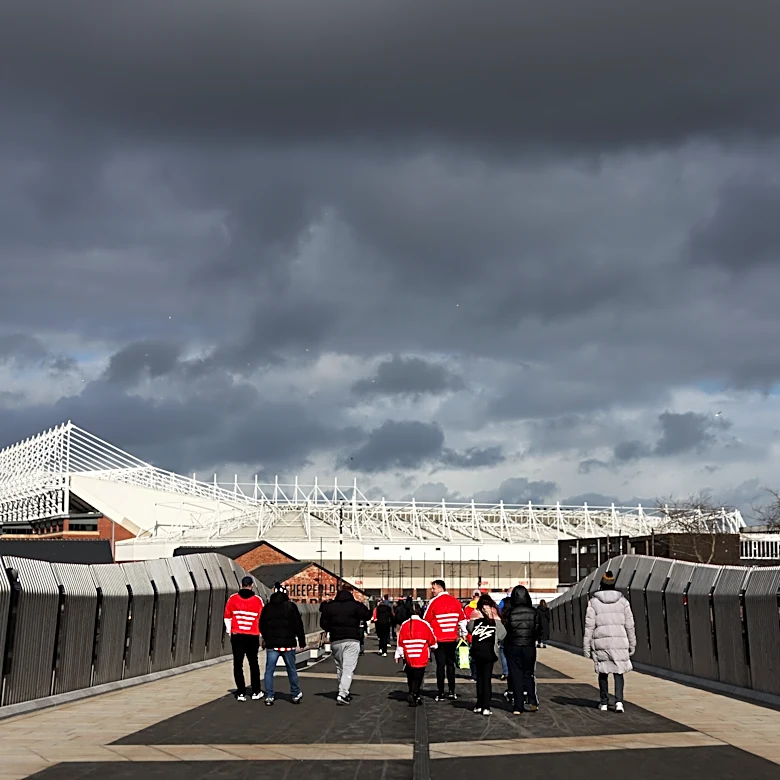
28,774 fans had turned up for the Everton draw at Roker Park the week before, and the gate looked to have topped that as kick off approached (in fact, 33,005 was Sunderland’s third biggest gate of the season). Sunderland were the league’s lowest scorers at home and away — and if an opponent scored first, it more often than not lead to a defeat.
In terms of our lineup, five of this team would feature in Sunderland’s 1973 FA Cup campaign and another three might’ve done if Colin Todd hadn’t been sold to Derby and Bobby Park and Martin Harvey not sustained career-ending injuries the following season.
I’d gone from feeling resigned to our relegation by mid-February to being convinced we were going to save ourselves. It’s an old adage in football: “It’s the hope that’ll kill you”.
One thing I can say about our team on this night is that nobody could accuse them of not trying or putting a shift in.
To a man they ran, harried and fought. The difficulty was Liverpool had these qualities too — and had the extra ingredients of skill and class which put this game beyond us, the Merseysiders delivering a show of pace, power and sharp passing that was just too good for us on this day.
What they also did was miss a number of very good chances and the longer this went on, the more I hoped we could nick a result.
It’s a bit harsh to say Liverpool missed all the chances they created.
Jimmy Montgomery made at least five cracking saves, including an almost unbelievable stop from an Emlyn Hughes piledriver. Colin Todd also threw himself in front of a blockbusting shot from Doug Livermore; Chris Lawler and Hughes put shots just past the woodwork and Ian Callaghan bounced a lob off the bar with Monty stranded just before half time.

Todd in defence and Mick McGiven and Park in midfield in particular delivered a first-half of grit and effort. All we had to show from the first half in an attacking sense was a snap-shot from the lively Billy Hughes and a Dennis Tueart rocket that unfortunately hit Hughes and deflected to safety.
The period after half-time saw the scales tip slightly in our direction.
Ray Clemence made a great save from Park and Hughes saw his thunderbolt deflect off a defender to safety before McGiven struck a superb lob that Clemence just got fingertips to — a magnificent save from the as-yet uncapped goalkeeper.
Liverpool wrested back control and proceeded to dominate for the rest of the game. Our need to score was driving us forward whenever we did regain possession, yet our effort and strong running lacked guile and creativity.
Former Sunderland star Ivor Broadis reported on the game the next day and described our efforts going forward as “reminiscent of the Keystone Cops”. It was a harsh comment, but difficult to argue against!
The gaps we were leaving as we charged forward were constantly exploited by Liverpool — they had enough chances to end the tension and the hopes of the home fans long before they did.
In fact, we were into the closing five minutes of the game when blonde-haired Alun Evans swung a dangerous cross into the box that was half-cleared by Richie Pitt and Todd.
The ball landed back at the feet of Evans and he fired into the box again, with the ball deflecting off Pitt’s foot and right into the path of the onrushing full back Lawler, who smashed home from fourteen yards out, giving Monty no chance.

There was an element of luck about the goal, but there was nothing lucky about the actual strike from Lawler, a full back that loved to get forward and scored an almost astounding forty one goals for Liverpool in his four hundred-plus appearances.
We came into this game with only one defeat in eight and had given ourselves an unlikely chance of survival, with some credible performances in the closing stages of the season. As I walked out of the ground having applauded the team off the pitch, the disappointment hit me like a two-tonne truck.
Maybe it would’ve been better had we not rallied and given ourselves that glimmer of hope, but it was my first acrid taste of relegation and it was going to take some swallowing!
I recall an attitude from the adults around me that was almost relief — “It had to come, thank goodness it’s all over!”
Manager Brown had now overseen two Sunderland relegations and he would also find himself unfairly being held responsible for his former team Sheffield Wednesday’s relegation as they were unable to get the points they needed (despite their fighting draw at Old Trafford) in their last game against Manchester City to haul themselves past Crystal Palace.
I’ve never forgotten the crushing disappointment I felt and have used it to embolden my sensibilities in the hard times that have come our way since then.
Elsewhere, it was an interesting night for players with a Sunderland connection.
John “Yogi” Hughes (Billy’s brother) scored one of the goals that took Celtic past Leeds and into the European Cup final versus Feyenoord, while Colin Suggett scored for West Bromwich Albion and Vic Halom scored for Fulham.
As if relegation wasn’t bad enough, a crowd of approximately two hundred and fifty youths wrecked havoc after the game, going on a disgruntled rampage and smashing windows in Church and Dundas Street as well as the bus windows of supporter coaches heading for Horden.
They also smashed a number of windows in the Monkwearmouth Community Centre, traumatising a small group of pensioners that had been tidying up after an event. Shame, to add to the disappointment!
My journey home took place in abject misery and I was only partially distracted by the news that Apollo 13 was in trouble somewhere out there in space. I searched the night skies for signs of Jim Lovell, Jack Swigert and Fred Haise, and considered that maybe there was something worse than relegation after all.
15 April 1970
Division One
Roker Park
Attendance: 33,005
Sunderland 0
Liverpool 1 (Lawler 86’)
Sunderland: Montgomery, Irwin, Harvey; Todd, Pitt, Kerr; Park, McGiven, B.Hughes; Harris, Tueart
Sub: Symm
Liverpool: Clemence, Lawler, Smith; Yeats, Lloyd, Callaghan; Livermore, E.Hughes, Graham; Evans, Thompson
Sub: Ross