



Back in October when the Brooklyn Nets and Phoenix Suns traveled to Macao for the NBA China Games, there was a lot of attention paid to the return of the league to China and, for Brooklyn fans, the debut of the Flatbush 5.
Then, near the end of the celebrations, somewhat out of the spotlight, NBA China and Alibaba, the giant e-commerce and AI/Cloud software provider headed by Nets owner Joe Tsai, announced an artificial intelligence/ Cloud deal that could ultimately change the way NBA fans everywhere
watch their favorite teams, perhaps the whole fan experience.
The press release was filled with a lot of corporate and tech talk but the bottom line was that China will be a proving ground for AI and Cloud technology … which, if it works in China, may find its way to screens from Brooklyn to Beijing. (Simple description of AI and Cloud: AI focuses on creating smart systems that can think, learn, and solve problems; Cloud computing lets people store and access data over the internet, offering flexibility, easy scaling, and cost savings.)
NBA China will utilize Alibaba Cloud’s AI and cloud computing services to support a wide range of digital fan engagement initiatives, including the development of a proprietary AI model for NBA China based on Alibaba’s Qwen series of foundational models. The proprietary AI model, fine-tuned with the league’s range of digital assets, will provide NBA App users in China with engaging content including real-time game highlights, historical basketball data, player insights and interactive discussions on trending basketball topics.
Call it “immersive,” sure. But a better description of the Alibaba’s 360 Real Time Replay System might be hyper-personalized. Fans — and players — got a taste of it at the NBA House in Macao, set up by the league and featuring a very specific Nets experience…
There was also taste of what fans could see on whatever screen they prefer once the NBA games are broadcast in China next season…
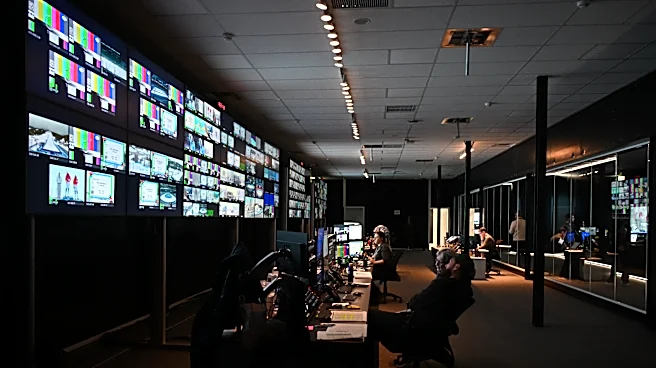
Fans might ask isn’t this a bit of old hat? Haven’t we seen this on national TV games or even on YES Network?Things like 360 degree views, etc. have been a staple of sports programming for more than decade. BUT the difference now is that the technology was exclusively the realm of directors sitting in front of banks of monitors in TV studios or high-tech production trucks. Now the average fan will have it all right in front of them. Welcome to the age of hyper-personalized sports viewing.
Fans will be able to create alternate endings, rejigger game flows, take events that occur and compare them to the opposite outcome and move on. Player impact and coaching decisions will get new scrutiny What if Nic Claxton nails a put back, Egor Demin is behind the line on a three, Nolan Traore’s alley oop doesn’t go astray or A.J. Dybantsa or Cam Boozer or Kingston Flemings had more experience? And all of it won’t be in some dry static recitation, but in a highly produced video.
That’s why the league’s enthusiasm level for the technology is so high: more fan engagement. In February at the All-Star Game in Los Angeles, Adam Silver spoke about it at his annual press conference. Although the Q and A that day was dominated by tanking questions, the commissioner suggested that the media was missing something about AI and fan experience.
“One area in particular that I think is worth addressing is the impact on the fan experience. And one of the things that we’re beginning to see already is how we’re going to be able to, more than personalize, almost hyper-personalize our telecasts, allowing people to experience the game in any way they want.
“Many of you have probably experimented with this already, but in essence, you’ll be able to hear the game in any dialect, any language, you’ll be able to hear a hardcore X’s and O’s commentary, maybe one that’s more comedic if that’s what you’re interested, or somebody for a novice explaining each foul and the rules as it goes along.”
“To me, we’re about to witness probably the most significant change, certainly in my lifetime, in how sports are presented,” Silver proclaimed. “Beyond that, the hyper-personalization, if people want to shop during a game, if they want to be on social media and having an ongoing discussion about some aspect about the game, I think it’s a really exciting moment and transformation.”
So, the NBA China deal with Alibaba has become, as Silver noted, part of an under appreciated movement in the fan experience, one of several innovative programs dealing not just with video but new way to view statistics and game flow. In other deals, prominently with Amazon, the NBA is developing similar technology that will change the fan experience. But in the video arena, Alibaba has the most experience, most success … and it’s been driven by Tsai.
For the past four Olympiads, summer and winter, Alibaba’s Qwen technology has been the official AI/Cloud provider to the International Olympic Committee, developing new tools along the way that can be used in their NBA experience.
“The Olympics is the greatest sporting stage in the world,” Tsai told NetsDaily recently. “We help the Olympic Broadcasting System build a fan experience never seen before. Whether it’s a skier’s aerial rotation or a basketball player’s contested shot, when you see an instant replay in 3D from 360 view, the fan becomes a participant in the game.
“We also brought this replay technology to the NBA China Games last October to transform the fan viewing experience, and the NBA loved it.”
“It’s been an amazing enabler,” said Sotiris Salamouris, Chief Technology Officer of the Olympic Broadcasting Services of Alibaba’s technology at the Milan/Cortina Olympics said in February. “We’re so happy to be working with Alibaba because a could provider of that size and sophistication would be able to continue scaling up.
“Cloud is about efficiency, explained Salamouris who noted that Alibaba was able to deal with some unique challenges of the 2026 Winter Games. The Olympic Broadcast System produced nearly 1,000 hours of live sports coverage and another 5,000 of interviews, features. Moreover, the 2026 Games were also the most far flung with many venues in remote locations…
“It is an exciting time at the intersection of sports and technology,” Tsai said in October. “AI and cloud technologies are enablers of connection—between player and fan, brand and consumer, global vision and local culture. By collaborating with NBA China and introducing Alibaba’s latest innovations, we are here to excite NBA fans through the enablement of exceptional experiences that they’ve never seen before.”
In addition to the NBA and Olympics, Alibaba has also signed deals with the international federations governing squash and aquatics to improve their offerings. It’s become a priority.
Alibaba also is working its other technologies into the sports mix. One of them is the company’s Qwen Glasses, their challenger to Meta’s Ray-Ban model. They’ll be marketed China next year as well. While not specifically designed or marketed for sports, both technologies share an underlying idea: using AI to layer real-time information into a live experience. The 360 replay does this at the broadcast level; the glasses bring that same concept to the individual user.

The NBA has other innovative deals, particularly with AWS, Amazon’s AI/Cloud operation and indeed AWS is Official Cloud and Cloud AI Partner of the NBA and its affiliate leagues, including the WNBA, NBA G League, Basketball Africa League but the press release announcing that deal suggests its “basketball intelligence platform” is going to focused on data rather than video. According to the NBA, it “turns billions of data points into compelling insights and interactive experiences for fans.”
There will be new AI-powered stats that capture aspects of basketball performance that have not been measured previously – Defensive Box Score, Shot Difficulty and Gravity.
Leverage, the newest metric from NBA, aims to quantify the moments and players that have the highest impact on the game’s outcome. “While the final minutes of a close game are undeniably high-leverage situations, a player’s back-to-back 3-pointers in the early 3rd quarter may have more impact on the game’s outcome than one might think.” the league said in announcing it earlier this year.
How will it filter down to the Net fans. National TV rights holders — like Amazon — will be incorporating more and more of AI/Cloud into its coverage, and over the long-term, it’s easy to imagine fans, particularly younger fans with video game experience, will embrace the technology. As Tsai said just this past week, AI/Cloud technology is different, explaining that real time usage of the technology generates new data which in turn feeds back into the model which derives even more usage.
Moreover, the technology will not be limited to fans. It will become part the coaching, scouting and other NBA front office decisions.
AI/Cloud technology is, of course, the most controversial technology this century as worries rise about unemployment, AI data centers’ need for huge amounts of water and electricity and the possibility that it could someday, somehow challenge human intelligence. For example, NBC Sports which used to send 6,000 people to the Olympics now sends a third of that because of Alibaba’s efficiencies. There are other geopolitical concerns. Alibaba also China’s AI/Cloud drive with its Qwen model, leading to geopolitical concerns.
xxxxxx