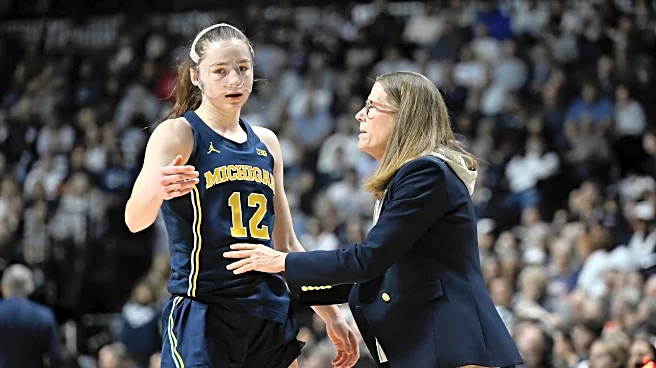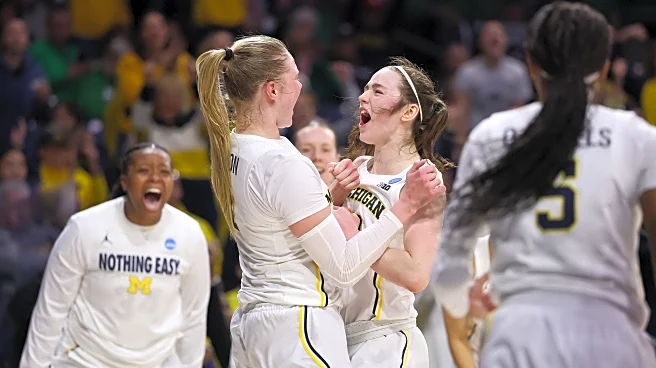


The No. 2 seed Michigan women’s basketball team, boasting the best NCAA Tournament seed in program history, is in the Fort Worth 3 Regional of March Madness. While teams and head coach Kim Barnes Arico preach taking the tournament one game at a time, here’s a look at the Wolverines’ potential path to the Final Four:
First round
Michigan opens its tournament with No. 15 seed Holy Cross (23-9 overall, 14-3 Patriot League). As 41.5 point favorites, the Wolverines are projected to dominate end-to-end.
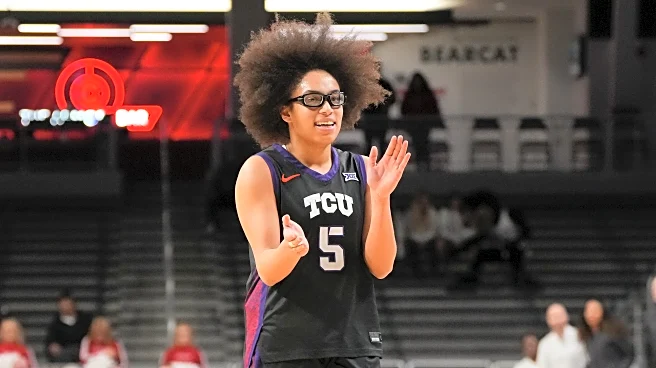
Michigan outmatches the Crusaders in scoring, pace, size and physicality. While Holy Cross’ veteran core carried them to a nine-game win streak entering the tournament, the Wolverines’ sophomore stars of guards Olivia Olson, Mila Holloway, Syla Swords should conquer the Crusaders for an opening-round win.
Second round
Following a win against the 15th-seeded Crusaders, the Wolverines will face the winner of No. 7 North Carolina State (20-10, 13-5 ACC) and No. 10 Tennessee (16-13, 8-8 SEC). Back on Nov. 4, the Wolfpack defeated the Volunteers, 80-77, and the first round marks the programs’ 18th meeting. While the official line of the game is NC State favored by 1.5 points, it’s a relative toss-up between the ACC’s fourth-best and the SEC’s sixth.
The Wolfpack’s best win is the November victory over Tennessee, with losses to USC, Oklahoma, and all in-conference ranked teams. The Volunteers’ resume is marked by a mid-January 60-58 victory over Kentucky, but they are on a seven-game losing streak, with their last win over a month ago on Feb. 12.
Tennessee’s full-court press is chaos-inducing when it’s firing on all cylinders, but without that defensive aggression generating a surplus of offensive opportunities, the Volunteers struggle with foul trouble and interior defense. The Wolfpack have an efficient offense, ranking seventh nationally in turnover rate and 35th in points per play. With Khamil Pierre (16.8 points per game), Zoe Brooks (16.3), and Zamareya Jones (14.3) leading the offensive onslaught, NC State is a versatile offense and if the Wolfpack can break Tennessee’s press, they’re more likely to face Michigan in the second round.
However, the Wolverines’ press — more consistent than that of the Volunteers — will pose problems for the Wolfpack. With multiple consistent scoring threats who can explode for 20+ points on a given night, all able to line up at multiple positions across the court, Michigan’s versatility is a puzzling conundrum for opposing coaches. By focusing on AP All-American guard Olivia Olson, that could leave All-Big Ten first-teamer Syla Swords on the perimeter to cash in. By tackling both Olson and Swords, All-Big Ten honorable mention point guard Mila Holloway can score on all three levels. Even if all three are guarded, that still leaves post threats Ashley Sofilkanich and Kendall Dudley, with complementary guard Te’Yala Delfosse, Macy Brown and Brooke Quarles Daniels as available options. The Wolverines crash the boards aggressively, leading to frequent second-chance opportunities to separate. Overall, Michigan should handle NC State to make the Tournament’s second weekend for the third time in program history.
Sweet Sixteen
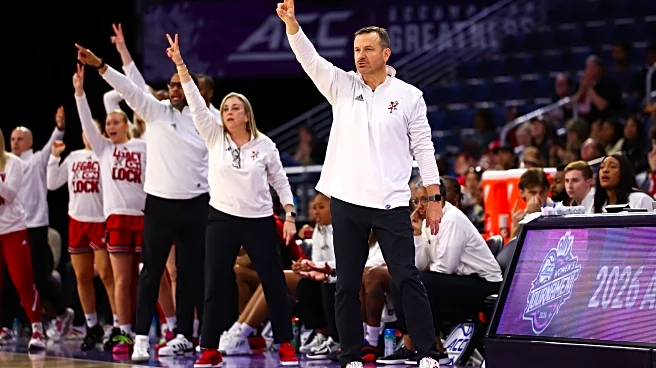
Coming out of the Ann Arbor host site, Michigan would face the winner of the Louisville host site in the Sweet Sixteen. While No. 6 seed Alabama (23-10, 7-9 SEC) also beat Kentucky in SEC play, the No. 3 seed Cardinals (27-7, 15-3 ACC) finished second in the ACC and narrowly lost in overtime to Duke in the ACC Tournament championship. With the home court advantage, I predict Louisville to face Michigan in the Sweet Sixteen as a rematch of the 2022 Elite Eight game which ended the Wolverines’ historic season. The Cardinals are 4-5 against top-25 teams, ranked 11th in the NET with an 8-6 Quad 1 record and 6-1 Quad 2 record. Compared to the Crimson Tide’s No. 27 NET ranking and Quad 1 and 2 records (5-8, 6-1, respectively), Louisville’s offensive pace of 79.9 points per game will outpace Alabama. Further, the Cardinals defeated common opponent Tennessee 89-65, while the Crimson Tide fell, 70-59.
In the Sweet Sixteen itself, the Wolverines are better positioned to advance to the Elite Eight. Despite the historic parity between No. 2 and No. 3 seeds (33-31 all-time in favor of the No. 2s), Michigan’s Big Ten experience has prepared it for the moment. Facing one of the nation’s toughest schedules, the Wolverines have been tested against multiple top-5 opponents, finishing with a NET of 6th and all six losses part of their fifth-best 9-6 Quad 1 record. Big Ten All-Defensive team guard Brooke Quarles Daniels leads Michigan’s press and aggressive defensive front, making up for the Wolverines’ post defense by preventing opposing forwards from even acquiring the ball. With a balanced scoring offense, the Cardinals will be an interesting defensive matchup in terms of who Michigan unleashes Quarles Daniels upon as the primary guard threat, given that just 0.2 points per game separate Tajianna Roberts and Imari Berry, Louisville’s leading scorers. The Cardinals also are second in the nation in bench points per game (34.2), proving they have a wealth of reliable options. So for the Wolverines to advance to the program’s second-ever Elite Eight, it would likely require limiting Louisville below their average scoring output and more in the 60-point range, consistent with Michigan’s 15-points-per-quarter maximum target.
Elite Eight
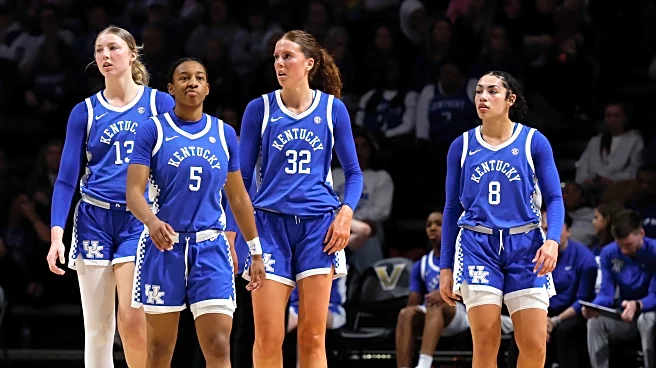
In the Elite Eight, the Wolverines will likely face one of two teams from the SEC: No. 1 seed Texas (31-3, 13-3 SEC) or No. 5 seed Kentucky (23-10, 8-8). No. 4 seed West Virginia (27-6, 14-4 Big 12) deploys a defensive scheme that has earned the Mountaineers the nickname “Press Virginia,” but All-SEC first team and All-Defensive team forward Clara Strack of the Wildcats could pose significant challenges if Kentucky is able to break through full-court.
Strack, a junior 6-foot-5 center, averages a double-double of 17.1 points and 10 rebounds per game, while shooting an efficient 48.4 percent. Strack leads the Wildcats in points, rebounds, steals (1.2) and blocks (2.6), a forceful player who is game-altering in the paint on both ends of the floor. Her scoring is complemented by guard Tonie Morgan, a Georgia Tech transfer guard averaging 13.8 points per game on the All-SEC second team, who also distributes effectively with 8.2 assists per game. The Wildcats have five players averaging double figures in scoring, with Strack, Morgan and forward Amelia Hassett serving the bulk of Kentucky’s minutes. Defensively, Kentucky ranks 22nd in total rebound rate and second nationally in blocks for game while averaging 75.6 points per game. The Wildcats rank No. 16 in the NET, boasting key wins at No. 2 seed Louisiana State and against No. 4 seed Oklahoma.
However, No. 1 Texas, playing in the Longhorns’ home state in Fort Worth, will be a formidable opponent. Two-time AP All-American first teamer and former SEC player of the year, forward Madison Booker is averaging 18.9 points, 6.5 rebounds, 3.8 assists and 2.3 steals per game while shooting 51.6 percent from the field, 85.9 percent from the free-throw line, and 29.4 percent from three. Booker leads the Longhorns in points and rebounds, while guard Rori Harmon — Texas’ program leader in assists and steals — leads the Longhorns in those categories with 6.2 and 2.7 per game, respectively. Harmon facilitates one of the nation’s most efficient offenses, ranking third nationally in turnover margin, fourth in scoring margin, fifth in assist-to-turnover ratio and fifth in field goal percentage. Texas is intentional offensively, experienced in March, and has key wins against fellow No. 1 seeds UCLA (the Bruins’ lone loss) and South Carolina (twice, 66-64 on Nov. 27 as part of a regular-season split and more recently, 78-61 in the SEC Tournament championship). Beating the Wildcats Feb. 9, 64-53, it’d be a tall task for Kentucky to flip the script.
For Michigan, No. 1 seed Texas in Fort Worth is difficult as well, yet the Longhorns have been vulnerable in the past with losses to the Tigers and the Gamecocks in SEC play, along with No. 2 seed Vanderbilt. With common opponents in UCLA and the Commodores, the Wolverines can draw from those experiences, both three-point losses. Vanderbilt exploded for a 12-point first-quarter lead and limited Texas’ offense beyond Booker (20 points), Breya Cunningham (14) and Jordan Lee (11), forcing the Longhorns into a lower-dimensionality workflow to find success. LSU secured a five-point halftime lead that proved to be the final margin, unable to stop Booker (24 points), Lee (12) or Kyla Oldacre (16). By limiting Texas to fewer options, both teams found a template for success. While South Carolina and the Tigers have split their matchups throughout the season, Michigan will only get one shot. The Wolverines will have to force turnovers, limit Longhorns three-pointers, and trade threes for twos. Michigan’s three-point shooting will need to spread the floor offensively while the Wolverines run in transition, giving them a chance to pull off a historic upset to deliver the program’s first Final Four appearance.