






Peter Reid came into this world on the 20 June 1956, in Huyton, Mersyside (although it was Lancashire in those days) — a tough, working-class area.
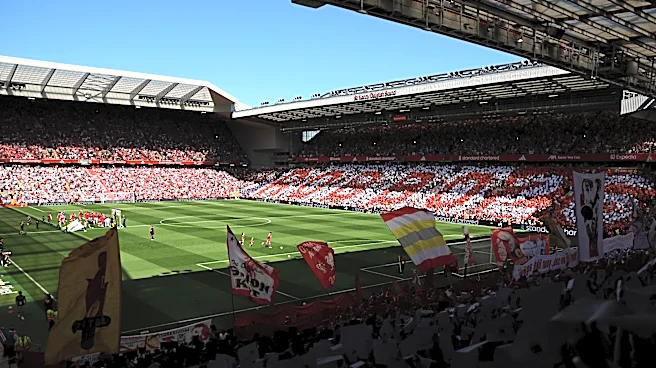
His family was of a mixed Reds and Blues persuasion and it was the red side that the young Reid had an allegiance with after his dad took him to a match at Anfield — always a good way to get a child to follow in a parent’s footsteps!
Apart from club historians and more elderly or studious types, many younger fans will mention him as one of the best managers
our club has ever had.
The recent seasons under Kyril Louis-Dreyfus and with Régis Le Bris as head coach have started to push those turn of the century ‘glory years’ of Reid’s teams into the shadow of history a little. It’s slightly damning for such a great club that we had to wait a quarter of a century to match the seventh-place finishes that Reidy’s teams achieved twice, yet it’s also an indicator of how well the current regime is doing.

But of course, there was much more to the man than the Cheer Up Peter Reid era.
In my youth, I remember him as a tough-tackling Everton midfielder in the engine room alongside Paul Bracewell, Trevor Steven and Kevin Sheedy, under manager Howard Kendall. He signed his first professional forms for Bolton Wanderers in 1974, and would go on to represent the Trotters 225 times. He was transferred to boyhood rivals Everton in 1982 and spent a very successful seven years with the Toffees, making 159 appearances between 1982 and 1989.
This period saw him win the FA Cup in 1984, two top flight medals in 1985 and 1987, and the European Cup Winners’ Cup in 1985.
In that very successful 1985 season, he was awarded the PFA Footballer of the Year Award and such was his form that season that he came fourth in the World Footballer of the Year rankings, behind such greats as Platini, Elkjaer and Maradona. He also won the first of his thirteen England caps that year but he may be remembered as one of the players that was left in Maradona’s wake in the 1986 World Cup match against Argentina in the quarter-finals in Mexico.

He then moved to QPR for a short period before Kendall took him to Manchester City in 1989, where he stayed for four years, playing 103 times.
After Kendall left to return to Goodison Park, Reid took over as player/manager, achieving two fifth-place finishes with City before being sacked the following year. After his City tenure, his footballing career started to wane, with short spells with Southampton, Notts County and Bury, before retiring in 1995.
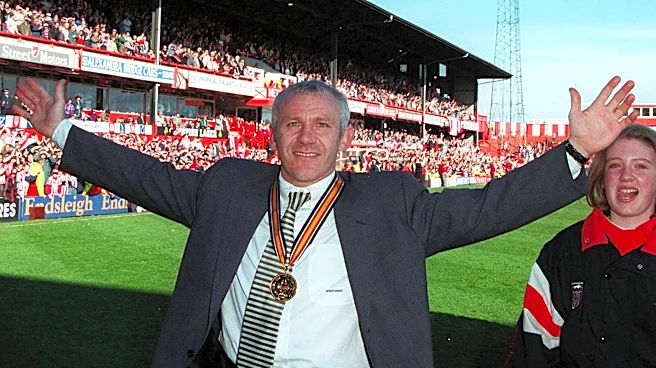
It was Sunderland who had the foresight to give Reid his first full manager’s job in 1995, and we could conclude that the rest is both well-documented in both Sunderland AFC folklore and history.
His two seventh-place finishes would certainly have meant European football in today’s formats and he won the ‘manager of the year’ award in 1996 — a time when you didn’t have to win the league to receive such an accolade! The flowing and exciting football of those early years was both exhilarating and memorable for a generation of fans.

The names of the players trip off the tongue just like the team of 1973 — Phillips, Quinn, Rae, Schwarz, Gray, Craddock, Arca, Sorensen etc, and although (as is always the way for most managers) there was a downturn in performances and success after his seven years in charge, he’ll always be remembered with great fondness and adulation on Wearside.
The exact circumstances surrounding the team’s downfall may well vary depending on whose autobiography you read, but Reid became an honorary Mackem. He can still be seen at the Stadium of Light and at our big games of late, and he gets a huge cheer when he appears on the large screens.
Sunderland remains a big part of his life and during after-dinner speeches.
He’s recently been honoured as one of our stars on Legends’ Way, and his song by Simply Red and White famously peaked at number forty one in the singles chart. Whilst he went on to manage at Leeds, Coventry, Thailand, Plymouth and Mumbai, he never replicated the success of his Sunderland days, and neither did we until this season!
So, it’s a very happy seventieth birthday, gaffer — and a “thank you” for all you did for Sunderland AFC. I’m sure we’ll see you in these parts many more times.