


We’ve entered the top echelon of the mid-season 2026 Purple Row Prospects (PuRPs) list. Previously we had PuRPs 30-26, 25-21, 20-16, 15-11, and 10-7. As a reminder, in this edition of the PuRPs poll, 29 qualifying ballots were cast, with 30 points granted for a first place vote, 29 for second, etc.
For each player on the PuRPs list, I’ll include a link to individual stats and contract status (via Baseball-Reference), PuRPs voting stats, a note on the 2026 season to date, and a scouting report from
a national prospect writer where possible. I’ll also include where I put each player on my personal ballot. All ages are as of the date the article is posted.
6. Zac Veen (685 points, 29 ballots) — Preseason Ranking: 9 — High Ballot 3; Mode Ballot 5
How did he enter the organization?
2020 First Round, Port Orange HS (FL)
Why did he make the PuRPs list?
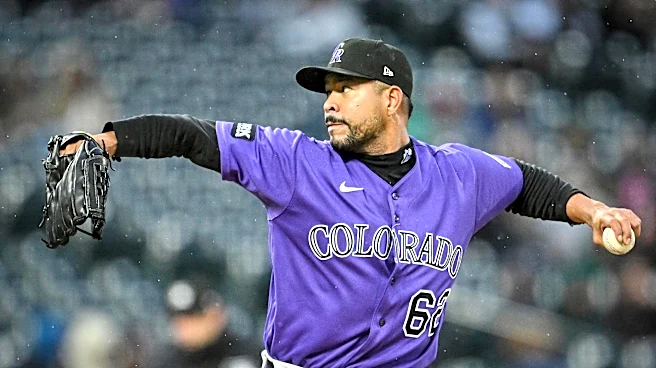
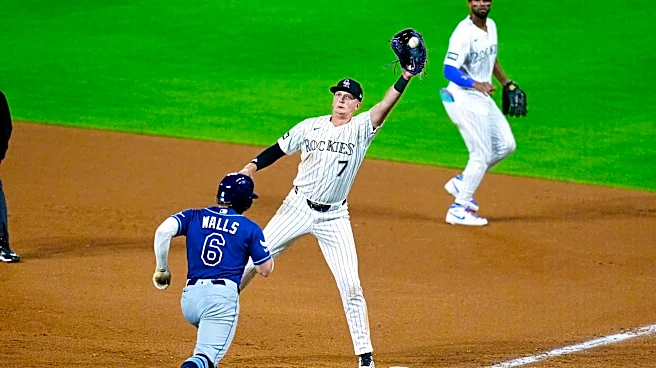
A star ceiling was promised when Veen was made the ninth-overall pick in the 2020 draft and signed for a slightly above-slot value $5 million. The 24-year-old lefty-swinging, righty-throwing outfielder certainly has been a Triple-A star this year and has performed well so far at the Major League level since his promotion last week.
The big story this spring, courtesy of Thomas Harding at MLB.com, was the stunning off-season transformation of Veen. Veen explained that his last few years had been affected by substance abuse issues and that he had recommitted himself to the game, packing on 40 pounds vs. last year. It wasn’t just purported substance abuse that kept Veen in upper minors purgatory for the last five seasons (he’s been at Double-A or above since 2022). Veen has suffered a number of injuries, primarily to his left wrist but also to his back, thumb and ankle, which have sapped him of some of the explosiveness at the plate that was his calling card as an amateur.
Veen fought through injuries in Double-A Hartford between 2022 and 2024, but he finally ascended to Triple-A Albuquerque in late 2024. Veen played in 21 games for Albuquerque down the stretch, hitting a slugging-heavy .220/.281/.476 with six homers and three doubles in 92 plate appearances. That was good enough for Veen to be considered a strong candidate for the Opening Day roster in 2025. While that didn’t quite happen (despite a strong spring training), Veen was up with the Rockies on April 8th after a 5-for-5 game with Albuquerque that included a homer and two doubles.
With the Rockies, Veen played consistently in a two week stint but just didn’t hit very well. In 37 plate appearances across 12 games, Veen had only four hits, though one of them was a homer, en route to a .118/.189/.235 line (4 wRC+, -0.3 rWAR) — a humbling experience in his first taste of the big leagues. Veen returned to Albuquerque in late April for a month, until in late May it was revealed that Veen had been nursing a spring training ankle injury that had hampered his performance (he had hit for just a .481 OPS in May).
That led to a three week absence and a stint on the ACL team to rehab the injury and refine his hitting mechanics to improve his ability to hit high fastballs. Upon his return from that assignment, Veen promptly had a 14-game hitting streak that included eight multi-hit and two four-hit games. In total for 2025, including the ankle-impacted beginning of the season, Veen recovered to hit .289/.354/.468 with 11 homers, five triples, and 23 doubles with 15 steals for Albuquerque in 412 plate appearances — a slightly below average 94 wRC+. He cut his strikeouts five points to 20% of plate appearances while walking 9% of the time. On defense, Veen played all three outfield positions, with the plurality of playing time coming in left field.
This year, Veen was back in Triple-A. After a relatively quiet April (.746 OPS), Veen turned into a menace in Albuquerque with 1.117 OPS in May (.358/.500/.617) then an even bigger June, hitting .366/.385/.782 with seven homers among an absurd 24 extra-base-hits in 104 plate appearances in the month (his 79 total bases led the entire minor leagues for the month). That performance earned Veen the Pacific Coast League Player of the Month honors for June. After Veen cooled down to only a .908 OPS in July, He went supernova again in August, earning back-to-back PCL Player of the Week awards for performances like his game on August 8th, in which Veen was 5-for-5 with three homers, a triple, a double, and seven RBI.
In total, Veen hit a scalding .327/.402/.635 with 24 homers among his 65 extra-base hits, plus 18/20 steals in 445 plate appearances for Albuquerque, good for a 142 wRC+. Veen’s eight triples and 33 doubles on the season both rank in the top ten of all the minor leagues, while his 249 total bases lead the minors. For as long as he’s been in our prospect consciousness, it’s also important to remember that Veen only faced a younger pitcher than him in 13% of plate appearances. On defense, Veen played all three outfield positions with a slight preference going to the corner outfield, committing three errors while recording nine outfield assists on the year.
The Rockies brought Veen up last week and he hit a homer in his first two games of the year. Veen has now played seven games and has produced a .278/.316/.667 line in his first 19 plate appearances, producing 0.2 rWAR and fWAR. One trend to walk is Veen’s walk to strikeout ratio. In the big leagues this year, Veen is whiffing over a third of the time, but in Triple-A he only struck out in 20% of plate appearances while walking nearly 11% of the time. Veen has murdered the ball against right-handers this year, hitting for a 1.129 OPS against them vs. an .835 OPS left-on-left.
Here are some of Veen’s 2026 highlights, which show off all-fields power:
What do the scouts say?
Veen is ranked as a 45 Future Value player by MLB Pipeline, 11th in the system, including a 60 grade on his arm and a 55 grade on running and fielding:
Now playing at age 24, this is a big year for Veen, who needed to mature as a player and a person. The good news is he showed up for Spring Training with a ton of added strength to his 6-foot-3 frame and what seemed to be more intent in going about his business. There’s still offensive upside in his left-handed swing, and 2023 wrist surgery and a 2024 thumb injury certainly did not help him find consistency. There has been some focus in getting him back to the contact-oriented hitter he was early on, with the hope that he’ll get to his raw power more organically without selling out for it with more loft and the elevated strikeout rates that came with that at the upper levels.
Veen has worked with the Rockies on improving his ability to pick up and track balls defensively, with a chance to be a solid corner outfielder. If he can keep on the muscle, something he’s had trouble doing in the past, and maintains his intent, he could finally live up to the promise of being a former top 10 pick.
FanGraphs ranks Veen 14th in the system as a 40+ FV player, highlighting his plus speed and raw power:
Veen had a tough 2025 season. Though he made his major league debut and smacked his first homer, big league pitchers ate him alive and he was just okay at Triple-A. Moreover, he drew attention to himself in a variety of less than flattering ways, from his marijuana-inspired double celebration to a running joke in the scout section about whether or not he could ready himself for the first pitch of an at-bat without needing to burn his timeout. Veen’s feel for contact had regressed in the upper minors, and long-awaited strength and power development hadn’t materialized. A once-promising career appeared on the skids.
Veen was almost unrecognizable in spring training this year. Per Thomas Harding’s story on MLB.com, over the winter, he made a variety of positive lifestyle changes, including getting sober, gained 40 pounds (he played 2025 at an “unhealthy” 202 pounds), and ditched his colorful hair (the blond and purple look didn’t bother me, though one could argue there was a Nuke-Laloosh-shower-shoes dynamic at play). There’s a lot to digest there, and it remains to be seen how his size in particular changes the equation. He somewhat famously mauled a ball nearly 470 feet this spring, so it seems that there’s a real uptick in his power. His swing remains long, though, and that extra pop won’t suffice to address the 41% whiff rate he posted on spin last year, which is arguably the biggest red flag in his game right now. It’s also unclear at this point whether he’s retained his 70-grade speed, which has been an important part of his game both offensively — he didn’t run as much last year as in previous seasons, but still swiped about a bag per week — and defensively, where quick wheels and reckless abandon compensate for his below-average ball tracking skills. My gut tells me that physically and mentally, Veen is broadly in a better place now. On the field, I’m concerned enough about the bat path and pitch recognition to keep Eric’s topline grade from last cycle intact, though the high-end outcomes are perhaps both a little louder and more within reach than before.
Veen was slotted 16th in the system by Keith Law of the Athletic in February:
Veen was Colorado’s first pick in the 2020 draft and was the last player I saw live before everything shut down. In that game, he hit a massive home run, aligning with reports I’d heard for months before about his plus power, but that has not been a part of his game at all in pro ball. He hit 15 homers in Low A in 2021, and that remains his career high. He’s the king of medium-quality contact, and that might work if he were a more disciplined player in the box or on the bases. He chases way too many pitches — nobody in Albuquerque should be swinging at 33 percent of pitches out of the zone — and he tends to swing too uphill, hitting for power he doesn’t have. I thought Veen would have a very different career than this when the Rockies took him, and maybe the new front office can try to get him to be more of a contact-first hitter and give up on the power, but for now, he’s maybe a backup corner outfielder.
When’s he going to get to the Rockies and how good will he be once he’s there?
Veen has seen his prospect stock rise and fall over the last six years, but right now it’s an arrow up profile just in time for his rookie status to likely to be exhausted. Veen is a good corner outfielder and offers a nice power/speed combo on offense. He has All-Star potential and yet has been relegated by some prospect watchers to a reserve outfielder at times due to the shortcomings to his approach and swing. For me, the profile adds up to a 45 FV player who I ranked ninth on my ballot. The good news for Rockies fans is that right now he looks more like a future star than he does a reserve outfielder and that he is finally showing what he can do at the big league level.
5. Cristian Arguelles (729 points, 29 ballots) — Preseason Ranking: HM — High Ballot 1 (1); Mode Ballot 4
How did he enter the organization?
2024 International Free Agent, Venezuela
Why did he make the PuRPs list?
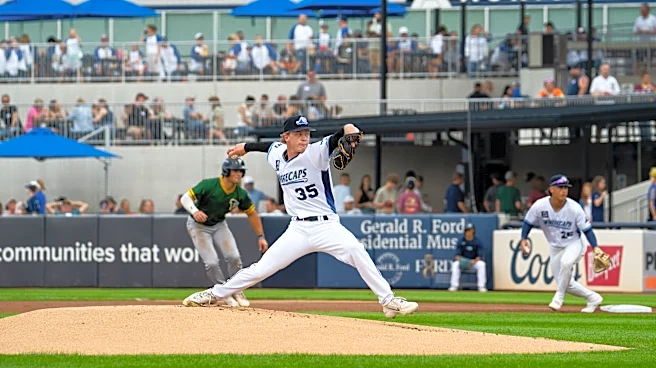
Arguelles, a 19-year-old Venezuelan outfielder, is the biggest riser in the system in 2026. He was one of the Rockies’ top international signees in 2024, receiving a $700k bonus, but hadn’t gotten scouting love until this season when he rose onto some mid-season top 100 lists. The 6’0” lefty has a strong hit tool with decent plate discipline and power while he also plays a good center field. Arguelles held his own in the Dominican Summer League after signing (84 wRC+) and was impressive in fall instructs, then proved to be an absolute unit in 2025 while repeating in the DSL.
In 236 plate appearances, Arguelles murdered the ball, hitting .422/.528/.652 with five homers, six triples, and 16 doubles — which is a 201 wRC+! Arguelles was first in the DSL in hits, slugging, OPS, total bases, and doubles. He was second in average, runs, RBI, doubles, and triples, plus he was third in OBP. Arguelles walked in 14% of his PA and struck out in just 11%. He also manned center field, contributing six outfield assists with just two errors in 51 games. That all added up to a DSL MVP award for Arguelles.
This year, Arguelles came stateside and helped lead the Rockies’ ACL team to a championship. He hit over .400 for the second season in a row, producing a .402/.478/.671 line that included nine homers, nine triples, and 14 doubles with ten steals in just 255 plate appearances, which is worth 174 wRC+. Among players with at least 150 plate appearances, Arguelles led the ACL in batting average, total bases, runs, RBI, hits, and triples while placing in the top ten in doubles, homers, OBP, and slugging.
After the ACL season concluded, Arguelles was sent to Low-A Fresno, where he is two years younger than league average. In 96 plate appearances so far, Arguelles has fit right in, hitting .293/.385/.439 with two homers and six doubles with five steals while walking more (12% of PA) than he is striking out (10% of PA), equating to a 110 wRC+ against older pitching. On defense this season, Arguelles has mostly manned center field, committing six errors while recording five outfield assists.
Here’s some video of Arguelles last season in the DSL:
What do the scouts say?
Arguelles began the season as a player of note but outside most Rockies top prospect lists and ended it around the top 100 in MLB.
Arguelles wasn’t on Keith Law’s pre-season top 20 list for the Athletic, but he’s now number 55 overall in his mid-season top 70, third in the system:
Arguelles turned 19 a few weeks ago and is among the Arizona Complex League’s leaders in average, OBP and slugging, with his eight homers also ranking in the top 10. He’s a left-handed hitter with a very rotational swing that is already producing power even though he’s going to get stronger from here, and he shows good instincts on both sides of the ball, including in his pitch selection. He’s not a runner at all and will probably end up bumped from center field by a plus defender. I think he is a really advanced bat and he should get a cup of coffee in the Low-A California League before the season is out.
Arguelles moved from a 35+ FV player for FanGraphs before the season to #87 overall and 5th in the system as a 50 FV player with a 55 future hit tool:
After a rough debut season in the DSL, Arguelles did what big-bonus guys are supposed to do down there in his second spin, hitting .422/.528/.652 with five homers and more walks than strikeouts. He was young when he signed and is still just 18, so while he isn’t young for the complexes, he’s not a man playing against boys either.
Arguelles puts the ball in play. A short swing facilitates near-elite contact (84% last year), and he adjusts off the fastball as well as any young hitter you’ll find. He’s aggressive and will expand when behind in the count, but he has the hand-eye coordination to project as a hit collector. How much power is coming? Arguelles is projectable but has 30 power right now, and his swing isn’t geared to drive the ball. His speed gives him a shot to develop into a fourth outfielder, with a chance for more if he finds a way to hit the ball harder than I’m projecting.
Arguelles was fourth in the system for Baseball America before the season, who ranked him as a 50 FV player with a 55 hit tool:
Arguelles is a pure hitter with a sound lefthanded swing. He produced excellent contact rates in the DSL in 2025, making contact in the zone at a 91.6% rate and missing just 16.5% of the time. While he repeated the level, his 14.4% walk rate also suggests a solid feel for the strike zone. Arguelles can get a bit aggressive chasing pitches and also hasn’t hit for much power, though his impact could tick up if he can pack on more muscle. He’s an average runner with a fringy arm who might end up fitting best in a corner outfield spot.
MLB Pipline ranks Arguelles fifth in the system as a 45 FV player with a 55 hit tool:
Arguelles hit so well [in 2025] the Rockies considered flying him stateside last summer, but they’re excited to have him in country now. He already has a very strong feel for hitting, using the whole field. He grinds out at-bats, takes walks and shows excellent balance at the plate. The left-handed hitter is going to keep getting stronger and has mistake-type power with a hard rate of contact, but it’s more gap than over-the-fence kind of pop.
While he’s not a runner, he has solid instincts defensively and his average arm can play up a little when he attacks the ball. He’s played mostly center field thus far, and the Rockies will still give him reps there to maximize his athleticism, but he’ll start getting time at all three spots, with a corner the most likely home for him long term if he develops into a regular.
When’s he going to get to the Rockies and how good will he be once he’s there?
Arguelles doesn’t have big tools in the way that some others in the top ten do, but he seems to have the most important hit tool and has produced very well over the last two years. I ranked Arguelles fifth on my ballot as a 50 FV player on the strength of the hit tool. Arguelles retains some defensive utility and his offensive approach seems refined enough that he won’t suffer the fate of twitchier athletes who have dominated short season ball while wilting against upper minors pitching. Arguelles will get the chance to prove it next year, likely back in Low-A initially but I can foresee a bump to High-A before the season is out.
4. Tyler Bell (759 points, 28 ballots) — Preseason Ranking: NR — High Ballot 1 (2); Mode Ballot 3
How did he enter the organization?
2026 First Round, University of Kentucky
Why did he make the PuRPs list?
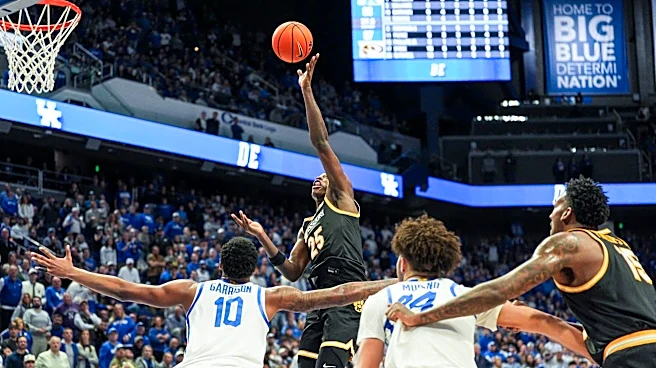
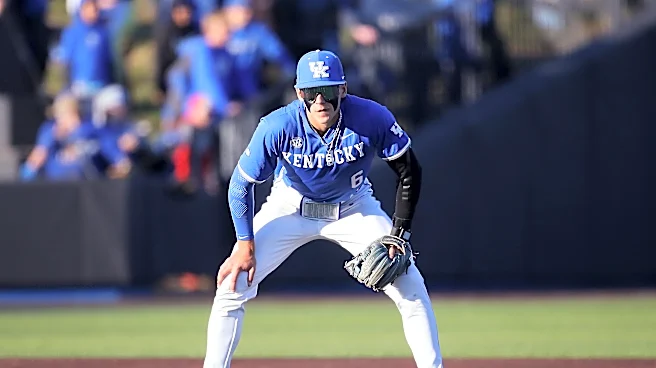
Bell was the 10th-overall pick in this season’s draft out of Kentucky as a draft-eligible sophomore, signing for a slightly under-slot bonus of just under $6 million. The 21-year-old switch-hitting shortstop moved straight onto overall top 100 status because of his well-rounded offensive profile and up the middle defense. Bell stayed in the draft’s top ten despite suffering a torn labrum in his non-throwing left shoulder this season that shortened his year by a month and will likely need offseason surgery to repair.
Bell was drafted by the Rays in the second round in 2024 (66th overall) but didn’t sign, so he represented the highest drafted player from that class who was available in the 2026 draft. As a freshman at Kentucky, Bell’s pedigree shone through as he hit .297/.385/.522 with ten homers among his 29 extra-base-hits with 11 steals in 265 plate appearances, good for a 101 wRC+.
This year, Bell’s shoulder injury meant less reps, but he produced at a higher level despite the injury. In 194 plate appearances, Bell hit .343/.510/.608 with nine homers (19 extra-base-hits) while walking in over 15% of PA and striking out in 19% of them, which equates to a 152 wRC+ in the SEC. In his two collegiate seasons, Bell was hit by an astonishing 31 pitches, including 20 this year.
Likely due to the shoulder injury, Bell hasn’t made his professional debut yet. Here’s some highlights from this year at Kentucky, showing off power from both sides of the plate and some good defensive plays:
What do the scouts say?
Bell was fourth on Keith Law’s draft board at the Athletic and that translates to a number 24 overall prospect rating in his midseason top 70:
[Bell is] a very disciplined hitter, with a chase rate of 13.5 percent during the regular season, and still shows above-average power with plenty of hard contact, including a 90th percentile EV of 105.5 mph that puts him in the top 20 percent of batters. He is a true switch-hitter with simple swings from both sides of the plate, taking a small stride and getting a lot of juice from his hip rotation, with slightly better bat speed from the left side. He projects to high OBPs with 15-20 homer upside at his peak. Given that he’s likely to stay at shortstop, he’s a potential All-Star.
Bell was tenth on the draft board for MLB Pipeline and he now settles in at number 64 overall as a 55 FV player, fourth in the system, with 50 or 55 tools across the board:
A switch-hitter, Bell is proficient from both sides of the plate. He has the bat speed and strength to generate 20 homers per season once he learns to lift balls in the air more consistently. He has a decent approach at the plate but can get too passive at times and has trouble staying back on changeups.
Bell has all of the ingredients to play a solid shortstop. He has average speed but a quick first step, smooth actions, reliable hands and a strong arm capable of making throws from any angle necessary. His defensive instincts and athleticism would allow him to play almost anywhere on the diamond if he ends up in a utility role. He gritted through the shoulder injury to play for the Wildcats, but it was known he would require surgery to repair it before beginning his pro career.
FanGraphs ranked Bell fifth in the draft and now rank him fourth in the system and number 74 overall as a 50 FV player with 60 speed to go with average grades on power and defense:
Bell is a competent and dangerous hitter from both sides of the dish, and his pretty left-handed swing is evocative of Jackson Merrill. It almost looks like a golf swing because his barrel takes such a naturally vertical path through the hitting zone and results in a ton of airborne contact. He is a dangerous pull hitter against elevated fastballs and tends to hit softer stuff back through the middle of the field. Though Bell shows some ability to adjust his posture to dip and hit low pitches, too often he is very upright and ends up swinging over the top of a lot of soft stuff, including plenty that finishes in the strike zone. His strikeouts improved (22.3% as a frosh, 18.6% this year), but they’re still higher than you want from a top pick. Some teams might be inclined to project on Bell’s contact skill based on the fact that he is just a sophomore who was dealing with the fallout of a major injury this season, while others might be scared that his strikeouts are going to be a persistent issue.
Though his throwing stroke is a bit atypical and Bell sometimes takes an extra step or two before he gets rid of the baseball, he easily has the range, athleticism and arm strength to man a big league shortstop and just needs technical polish. He has a little more injury and hit tool-related bust risk than the other top-of-the-draft college hitters, but he otherwise projects to be a power-over-hit everyday shortstop.
When’s he going to get to the Rockies and how good will he be once he’s there?
Bell’s injury means Rockies fans will need to wait until 2027 to see how the shortstop takes to pro ball in either Low-A or High-A depending on how shortstop reps will be allocated. The switch-hitter offers excellent defensive utility as a likely shortstop, power from both sides of the plate, and a good hit tool to boot. That’s why I ranked Bell second on my ballot as a 50 FV player who could be a quick mover through the system once he’s healthy.
Check back on Monday to see how the top three shook out!
Join the conversation!
Sign up for a user account and get:
- Fewer ads
- Create community posts
- Comment on articles, community posts
- Rec comments, community posts
- New, improved notifications system!
Please keep in mind ourPurple Row Community Guidelines when you’re commenting. Thanks!