

There was a point this summer when keeping track of the Celtics roster started to require an unreasonable amount of concentration.
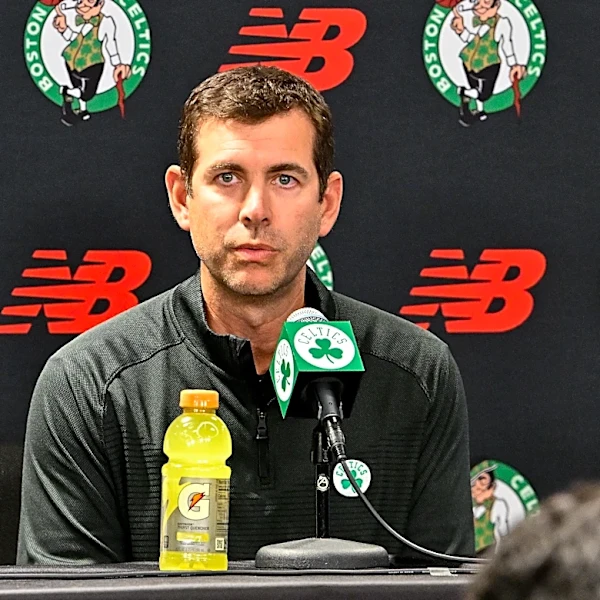
Jaylen Brown is in Philadelphia. Paul George and Mitchell Robinson are in Boston. Mike Conley is somehow beginning Year 20 in a Celtics uniform. Chris Cenac Jr. and Dillon Mitchell joined through the draft, while Brad Stevens spent part of July locking up several young players already in the system.
Boston will also enter camp with one standard roster spot and one two-way
spot unclaimed. For the five guys coming in on Exhibit 10 deals, there are actual chairs left when the music stops.
So, before Media Day sends us all scrambling to remember when exactly Mike Conley became a Celtic, let’s sort through who’s here and what any of them are actually competing for.
The sure things
- Jayson Tatum
- Derrick White
- Paul George
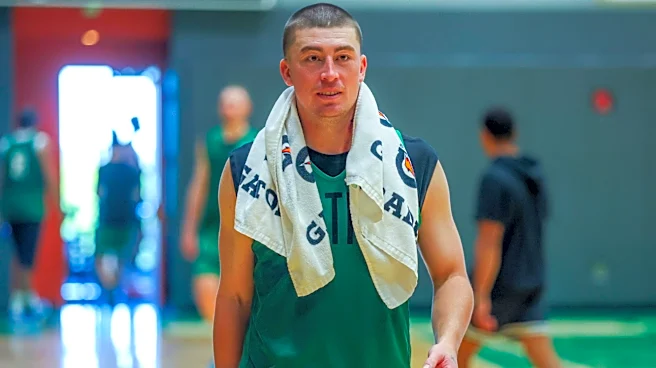
- Payton Pritchard
- Sam Hauser
- Neemias Queta
- Mitchell Robinson
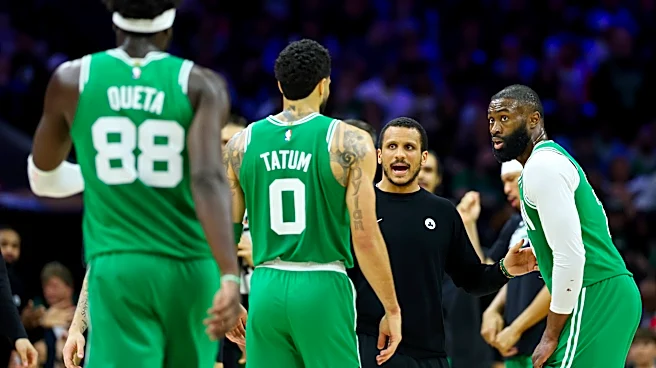
Joe Mazzulla can probably write these seven names in pen.
On nights when they’re healthy, Tatum, White and George are locks to start. Queta should have the inside track at center after earning a new deal this summer. Robinson gives Boston a second real center and, more importantly, an offensive rebounder who can turn a missed shot into another possession by himself.
The fifth starter is less obvious.
Pritchard started plenty last season, but his scoring and sparkplugability (am I the first to use this word?) also make him valuable as a sixth man. Hauser has started alongside Boston’s core plenty of times before, and several younger wings will have a chance to make their case too.
To me, it feels like Hauser probably has the most fragile grip on “sure thing” status here. The shooting will keep him around, but if González or Walsh gives Boston enough offense alongside better defensive versatility, or Scheierman starts bringing comparable shooting with more creation, his minutes could get squeezed pretty quickly.
George is the sure thing with the biggest asterisk. He won’t be expected to replicate Brown’s game despite being the return in the trade for him (plus picks), and at 36 Boston probably doesn’t want him trying. What the Celtics need is a healthy secondary creator who can shoot, defend and take some pressure off Tatum.
The center rotation should be deeper too. Queta brings continuity, rebounding and steadily improving offensive skill. Robinson adds elite offensive rebounding, rim protection and a level of interior physicality Boston hasn’t consistently had in years.
The first seven names are easy. Figuring out who gets minutes eight through ten? Not so easy.
The young guys ready to fly
- Hugo González
- Baylor Scheierman
- Jordan Walsh
- Ron Harper Jr.
- Chris Cenac Jr.
There probably aren’t five rotation spots available here. There might only be two come playoff time. Which makes this less about whether Boston’s young players are ready and more about which of them makes it hardest for Mazzulla to keep him on the bench.
González has an obvious path to minutes. His defense, size, physicality and motor already made him useful as a rookie. The question is whether his offense improves enough to keep him on the floor for longer stretches.
Scheierman probably enters camp with the clearest offensive case. His shooting is already an NBA skill, and he showed more last season as a rebounder and quick decision-maker.
Walsh remains one of the more intriguing players on the roster. The tools have always made sense: long, athletic, switchable and capable of guarding several positions. Boston’s decision to extend him suggests the organization still believes there’s another level there.
Harper also turned his opportunity into a multi-year deal after working his way up from Maine.
Then there’s Cenac, who probably has the widest range of possible outcomes this season. He’s 19, 6-foot-11 and loaded with developmental upside. He may spend plenty of time in Maine, but if he develops faster than expected, Mazzulla suddenly has a long, mobile big who can do things Queta, Robinson and Garza simply aren’t built to do.
Boston doesn’t need all five of these guys to break through. If even two become dependable rotation players, the roster starts to look significantly deeper.
The break-glass-in-case-of-emergency crew
- Mike Conley
- Luka Garza
Conley probably isn’t here to play 20 minutes a night.
At 38, a lot of Conley’s value may come from everything that happens before he ever checks into a game. Boston lost a lot of veteran presence over the last two offseasons, and Conley gives Mazzulla someone he can trust to organize an offense when injuries, rest nights or foul trouble create a need.
Garza fills a similar role up front.
Queta and Robinson should absorb most of the center minutes, but Garza gives Boston a proven third option who can screen, move the ball and stretch the floor in ways the other two don’t.
If Conley and Garza spend most nights watching from the sideline, Boston will probably consider that good news.
The development group
- Amari Williams, two-way
- Dillon Mitchell, two-way
If you’re wondering how much Williams and Mitchell will play in Boston this year, you may be asking the wrong question. Their more important minutes are probably going to come about two hours north in Portland, Maine.
Williams returns on a two-way deal after spending his rookie year bouncing between Boston and the G League.
Mitchell arrives as the No. 40 pick, bringing explosive athleticism and defensive potential at 6-foot-8. His immediate challenge is developing enough offensively to turn those tools into a long-term NBA role.
A quiet year in Boston wouldn’t necessarily be a bad year for either of them. This season will likely involve substantial time in Maine with occasional NBA opportunities mixed in.
Boston knows this path can work. Queta originally arrived on a two-way, and Harper played his way from Maine into a multi-year NBA contract. Williams and Mitchell get the next crack at it.
The guys fighting to stay
- Devin Carter
- Milos Uzan
- Tucker DeVries
- Hayden Gray
- Gabe McGlothan
Boston has two open seats and five guys trying not to be the ones standing when camp ends.
Carter is the biggest name. The former No. 13 pick and Big East Player of the Year hasn’t yet found his footing in the NBA, but Boston gives him a fresh opportunity to compete for either opening. A former lottery pick fighting an undrafted rookie for the same two-way contract is exactly the kind of weird little subplot we love during preseason basketball.
Uzan and DeVries both arrived on Exhibit 10 deals after going undrafted, while Gray and McGlothan round out the camp group.
McGlothan is particularly notable because Maine already acquired his G League rights, making the potential path easy to see: compete for a spot in Boston, then continue developing in Maine if one doesn’t materialize.
For the sure things, preseason basketball is mostly an elaborate way to get sweaty. For this group, it can determine where they live come November.
What’s actually left to figure out?
Most of Boston’s roster questions aren’t really roster questions anymore. They’re pecking-order questions.
Nobody is walking into camp wondering whether Tatum, White or George has a job. The uncertainty lives farther down the depth chart.
Paul George is extension-eligible, while Payton Pritchard becomes eligible on Oct. 1. Boston also still has the $27.7 million trade exception created in the Anfernee Simons deal. Keith Smith has the Celtics sitting $1.7 million below the luxury tax and $10.3 million below the first-apron hard cap.
Brad Stevens has spent two summers getting Boston out of second-apron hell and back into something resembling financial flexibility. The books finally look calmer. Joe’s problem now is figuring out which version of this roster actually works.
We know who the Celtics are bringing to camp. Now we get to find out which of them Joe actually trusts.