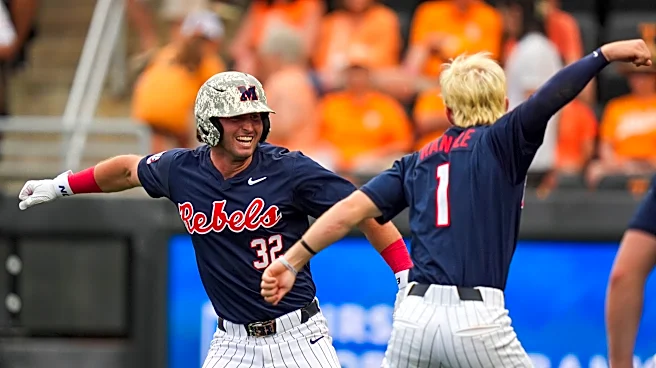






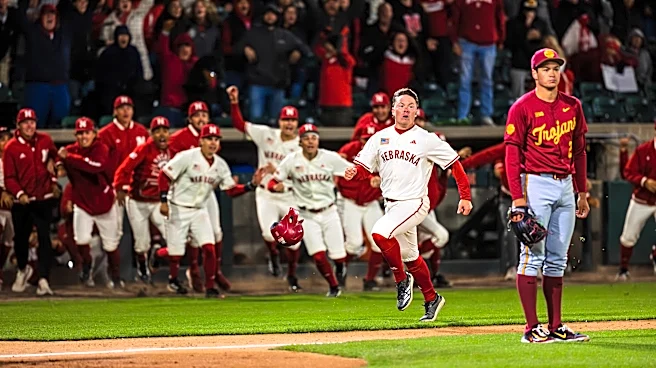
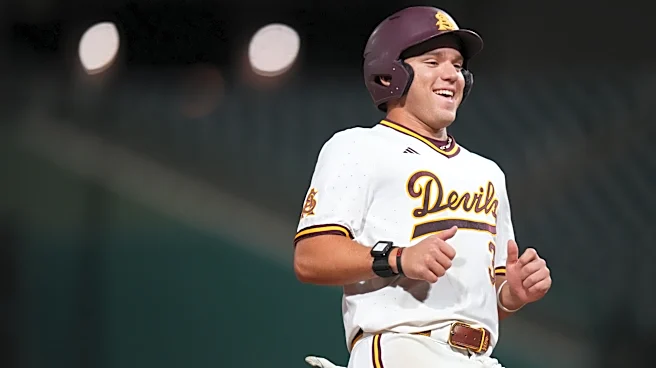
After three days in Lincoln, Nebraska, none of which were without anxiety hopped up on amphetamines, Ole Miss swept through Arizona State, Nebraska, and Arizona State 2 Fast 2 Furious to advance to this weekend’s Super Regional against Auburn.
We at Red Cup Rebellion will have more on the season’s first meeting between the Rebels and Tigers, but for now, let’s focus on the heated regional action. If you watched every inning of all three games, the main takeaways were:
- Nebraska’s stadium and atmosphere were great*
- Ole Miss’ pitching was sensational
- Ole Miss’ hitting was timely with a lot of butt dot com between said timeliness
*Areas beyond left and center
field looked great with the trees and vibrant grass. Crowd was ready to roll on Saturday night, and the weather (not including the late storms Saturday) made it look like a bad day to be an icy cold domestic in Haymarket Park.
Pitching Numbers
Let’s start with the pitching performances that won Ole Miss the regional. In three games, Ole Miss used:
- Hunter Elliott (Friday starter)
- Walker Hooks (Friday relief)
- Hudson Calhoun (Friday/Sunday early PM relief)
- Taylor Rabe (Saturday starter)
- JP Robertson (Saturday/late Sunday relief)
- Landon Waters (very brief Sunday early PM relief)
- Cade Townsend (Sunday starter)
- Wil Libbert (Sunday relief)
And that’s it. Eight guys across three games, which is the result of the starters getting through at least five innings and Mike Bianco’s Bullpen Circle of Trust being less like a circle and more like a dot.
In 33 total innings pitched, Jake Mangrum’s crew allowed the following:
- 12 earned runs (ERA of 3.27)
- 25 hits/16 walks (WHIP of 1.24)
- 6 home runs and no other extra-base hits
Not ideal to give up 6 home runs, but not allowing a double or triple all weekend is wild. They also struck out 35 batters for a solid staff strikeout-to-walk ratio of 2.2 to 1.
We knew the pitching quality was good, but overall depth was shaky at best. That meant, unless one (or more) of the starters threw complete games, a reliever outside the circle of trust was going to have to pitch and do it well.
Enter Wil Libbert in the 6th inning of a 4-3 game against a dynamic Arizona State offense with Ole Miss trailing. Libbert, as you may recall, transferred from Missouri and was expected to be a starter in the SEC weekend rotation.
That plan fell apart in March, as Libbert struggled with all things pitching and was relegated to a bullpen role. And things didn’t get much better in that role.
When Cade Townsend ran out of gas* Sunday night, Libbert was the first bullpen name called out of necessity. He delivered three shutout innings and gave the Ole Miss offense a chance to stumble into tying the game.
*Townsend didn’t have his even B+ stuff, but him getting through five innings was MASSIVE. He turned a potential full non-circle of trust bullpen game into a three-total pitcher game.
Libbert got help from a pair of great defensive plays from Owen Paino and Dom Decker, but it was a staggeringly good performance. To put it in Andy Kennedy terms, Libbert justified his existence.
Hitting Numbers
Look, Ole Miss went 3-0, but SWEET MERCY what a frustrating group.
On Sunday night, I can’t remember if it was when Arizona State’s pitcher with an ERA over 9 or the one with an ERA north of 11 was on the mound, but Ole Miss looked like a team that was simultaneously capable of going to a Super Regional and not being able to win the Mississippi Junior College league.
In 120 official at bats, the Ole Miss offense struck out 46 times. That’s a strikeout every 2.6 official at bats, or what some like to call PEAK GRINDING MY GEARS.
They also left 34 runners on base and had 30 hits in 33 innings. Again, gears grinding and things of that nature.
Now, you may say, Gray, none of this is a departure from who they were all season. And I would say, you are correct, but astutely pointing out these facts does not reduce how maddening it all is.
If this were an average offensive team, they’d be a nightmare to play. Instead, they are a home-run dependent team that strikes out like a home-run dependent team but doesn’t hit home runs with great frequency (3 the entire weekend). ALAS.
However, let us do more than wail and gnash teeth. The positives are they drew 26 walks (56 hits/walks in 33 innings) and got enough traffic on base to give themselves multiple opportunities to cash in and score, which they did eventually.
They did enough to win, but their margin for error or being on the other side of fortunate breaks is zero. If they’re not getting hits or dingers against Auburn, can they count on 26 walks in three games? Probably not!
To take two of three from Auburn, they’ll need a repeat pitching performance and an offense that can get hits and dingers while being less reliant on gifts from the opposing pitching staff. The first part of the equation is possible, but the second part may be outside the boundaries of what this team is.