



Hindsight in 20/20 and hindsight analysis is 20 times as annoying as my Uncle Perv trying to play the bagpipes. What is the art of sitting back as a fan and judging the difficult decisions a manager, a base coach, or a player have to make long before the metrics tell you what his odds were?
Process vs. Outcome
Judging process, rather than just leaning on outcomes, can be extremely counter-intuitive. To drive this point home let me offer a scenario in which presumably all fans will agree on the proper
strategy.
In a tie game, 9th inning, the Yankees have runners at 2B and 3B with 2 outs and Trent Grisham due up against your RH reliever. Looming on deck is the legendary Aaron Judge. Do you pitch to Grisham or do you walk him intentionally to load the bases and face Judge instead?
I will go out on a limb and say you would do what 30 out of 30 managers would do and that is to go after Grisham. Here’s the catch. If you IBB Grisham and foolishly choose to pitch to Judge instead, with nowhere to put him, odds are you will wind up looking good. Because if you run that 100 times Judge, whose career OBP is an elite .412, will bail out your terrible idea about 59 times.
Never mind that Grisham gets out 2/3 of the time if you just go after him, with another 12 of those 100 outcomes being just the walk you were considering anyway. Or that if he doesn’t get out he’s far less likely to HR or double.
Despite making an absurdly poor choice, a manager will get bailed out nearly 60% of the time even pitching to Judge with the bases loaded. So it’s not fair to wait for Judge to make an out and then decry, “See? Smart manager!”
Base running – Jacob Wilson
In Sunday’s game Wilson made a gamble on Lawrence Butler’s slicing drive to left-center field. He took off from 1B, rounded 2B, and was easily doubled off when Joey Loperfido made a sliding catch in the alley. I thought Wilson made an excellent decision that just didn’t work out.
Keep in mind that when a ball is hit, the runner does not have access to the “expected batting average” or any other data designed to put odds to the outcome. When Butler hit that drive, all Wilson could see is that he smoked it and he had historical info of how many times Butler’s drives to LF and left-center carried to the wall when they were hit that hard — especially in Sacramento where balls tend to carry well.
Off the bat it looked a lot like a tweener, but Wilson had 3 choices. He could have stayed close to 1B as if it was going to be caught, which could have resulted in a disastrous result where a one-hopper off the wall was relayed quickly forcing Wilson to hold at 2B, which would have stalled Butler at 1B. He could have gone to 2B and waited, an “in between” move that might still have risked a DP but also would not have allowed him to score had the ball one hopped the wall. Or he could gamble, as he did, ensuring either a run scored or a DP.
He gambled and lost, but given the info he had off the crack of the bat I would argue it was the right gamble and Loperfido just made a great play.
Base coaching – Bobby Crosby
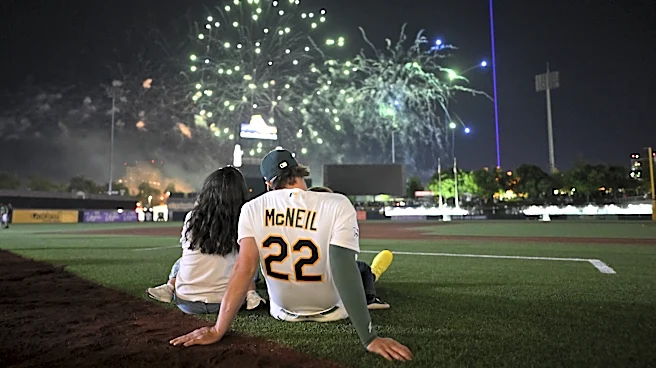
Similarly, if Bobby Crosby had influence in Jeff McNeil’s decision to try to score from second on Shea Langeliers’ big for a game winning hit, it’s important to recognize when decisions had to be made. As Jose Altuve sprawled to his right, McNeil was hitting 3B and the only way he maximizes his ability to score is if he never stops.
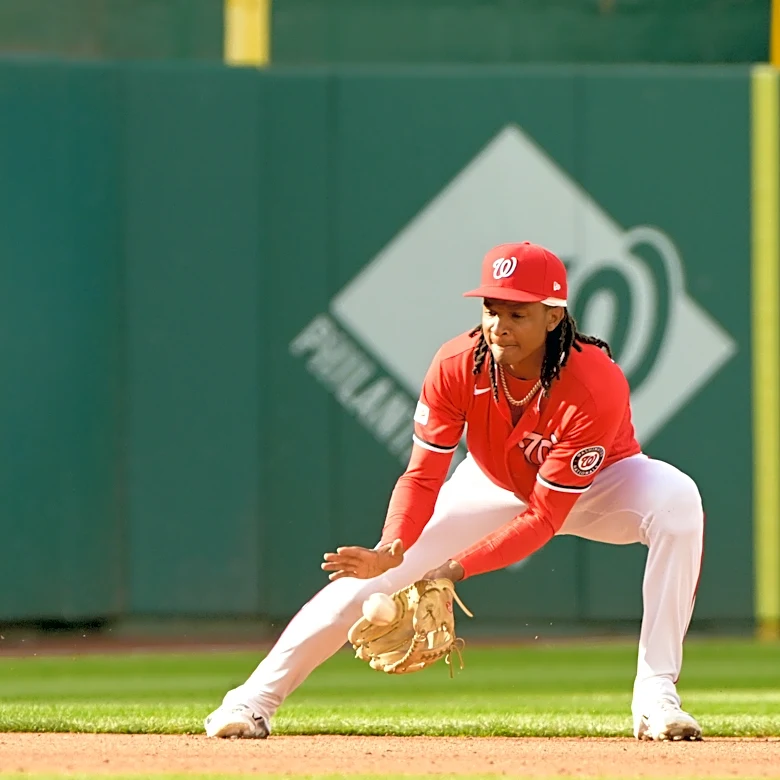
At that point it was unclear whether Altuve could field it cleanly or just smother it, whether the ball would stay firmly in the glove or roll away. Only a clean pickup gave Altuve any shot at the play at home. And then he had to bounce up immediately and make a throw good enough to get McNeil.
Granted, he made a poorish throw and still got McNeil easily, which is probably the best argument against the decision, but consider how easy it is, under that pressure, to sail it 40 feet up the line or to airmail the catcher or to give the catcher a short-hop he can’t handle cleanly.
Part of it is “making them make the play” and Altuve is, at this stage of his career, a poor defensive 2Bman with very limited range and a weak arm. Whether McNeil ran on his own — which you almost have to do in that situation rather than waiting to hear from your base coach — or whether Crosby was screaming, “Keep going! Go!” whoever made that in-the-moment call did what I want the A’s to do: don’t sit around waiting for a clutch hit with 2 outs, make the other team’s shaky defenders come up big executing several parts of a tough play well.
Pitcher decisions – Mark Kotsay
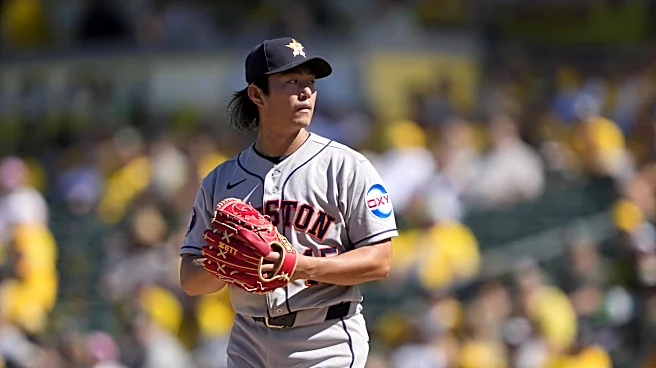
Mark Kotsay also had some key choices to make this weekend and in this writer’s view he botched them at least twice — once with poor results and once with great results.
Where Kotsay paid a price was his puzzling choice of JT Ginn to enter a game the A’s were leading by 9 runs. Ginn has had his problems but he was coming off a sterling relief appearance and looked like one of the A’s better candidates for high leverage innings over the weekend.
Keep in mind the A’s lead was so secure that had Scott Barlow (who would have been my choice) gotten the call instead, and had Barlow started the inning giving up a HR, two 4-pitch walks, and a double, the A’s would have still led 9-4 and could have bailed Barlow out with a win still nearly assured.
Meanwhile, after throwing 32 garbage time pitches Friday Ginn was called upon again Sunday and predictably, after getting out of the 6th he started the 7th without his best stuff going, hung a slider to Christian Walker and gave up a two-run HR.
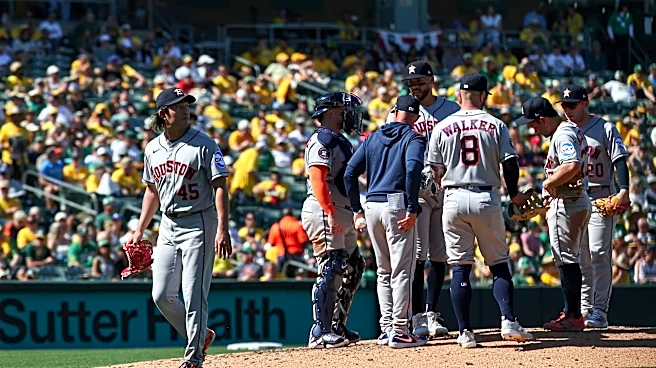
Later on Sunday Kotsay was rewarded for what I thought was an inexcusably bad decision. With Hogan Harris in the game, Houston leading 10-9 in the 10th with runners at 2B and 3B with one out, Walker was due, Cam Smith on deck.
If you want to go after Walker on your terms, corner and chase pitching, you can choose from Harris or Elvis Alvarado, who was warming up. Or if you feel the need to IBB Walker to load the bases, you stick with Harris who, on a career basis, still fares better against RH batters than LH batters regardless of the hand he throws with.
The one thing you don’t do is to load the bases and then summon your wild reliever, Alvarado, giving him no margin for error. Even though everything worked out in the end, the reasoning was hammered home when Alvarado fell behind Smith 3-1 with pitches that were all over the place. Luckily he settled down just at the right time and fired two quality strikes, the last of which Smith swung through, and then to his credit Alvarado retired Yainer Diaz to escape the jam.
Going to back to the Grisham/Judge example, in any showdown the pitcher is going to succeed more than half the time. So you can make the wrong move and be handsomely rewarded. But I wouldn’t suggest making a habit of it.
Anyway, the weekend offered many chances for fans, armchair, real-timers, and everything in between, to weigh in on several difficult decisions that had to be made in the heat of the moment. How do you think these guys did?