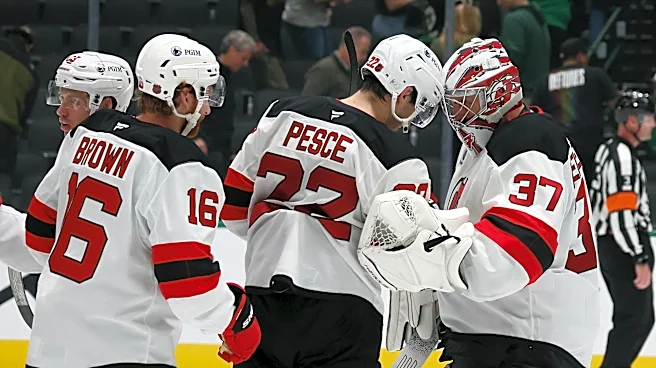


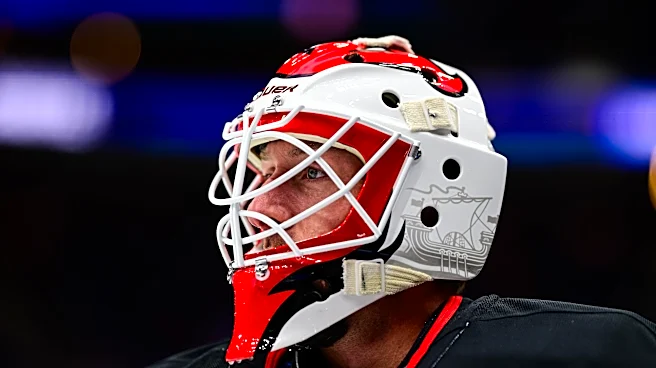

The Devils have had issues on the penalty kill in the first quarter of the 2026-27 season.
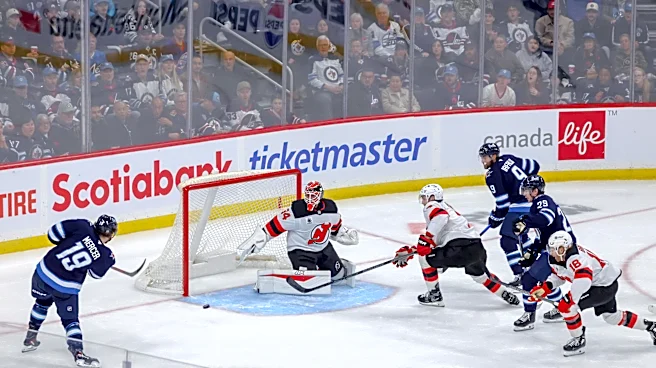
Entering Thursday’s game vs. Washington, the Devils have been a bottom five team in the NHL in terms of successfully killing penalties. Despite that, it really hasn’t had much of an impact on their win-loss record to this point. At least, it didn’t until Tuesday’s game in Winnipeg where they gave up two more goals on the penalty kill and it was ultimately one of the primary reasons they lost said game.
It’s one
of those things that has sort of festered in the background, but hasn’t been a big talking point with this Devils team to this point in part because they’ve been winning games. But that doesn’t mean it’s not a problem, or that it’s not becoming a problem.
This week, I wanted to take a look at everything surrounding the penalty kill to try to gauge what the issue actually is. Considering the personnel on the unit, I tend to think the issue is probably more of the coaching/systemic variety, but that’s simply a theory going into me presenting the data.
The Importance of Having a Reliable Penalty Kill
One of my core, fundamental beliefs as a hockey fan is that you can get by if you have a power play that is deemed somewhere between mediocre and bad. As annoying as it is to not score with the man advantage, it’s not necessarily a deathblow if you fail to do so.
The same can not be said for the penalty kill.
Since the 2005 lockout, there has been six teams that has reached a Stanley Cup Final with a penalty kill ranking in the bottom ten over the course of the regular season. The 2022-23 Florida Panthers, the 2020-21 Montreal Canadiens, the 2016-17 Pittsburgh Penguins, the 2015-16 San Jose Sharks, the 2008-09 Detroit Red Wings, and the 2007-08 Pittsburgh Penguins.
Of that group, only the 2016-17 Penguins were good enough to win the Stanley Cup. And if I further narrow the criteria for teams with a bottom five penalty kill over the course of the season, that number of six teams to reach a Cup Final is trimmed to one….the 2008-09 Red Wings. That team was loaded with Hockey Hall of Famers that nearly pulled off a repeat anyways before falling in seven games to the first Sidney Crosby-led Penguins Stanley Cup winning team.
That’s not to say you can’t make the playoffs with a bad penalty kill. Los Angeles and Ottawa managed to do so last season, although neither one was in the tournament for very long as Colorado and Carolina, respectively, made quick work of them. For the most part though, the teams with bad penalty kills are your bottom feeders of the league that can’t get out of their own way. Teams that defend poorly, can’t get a save, or both. They’re teams that hemorrhage goals left and right, which in turn only makes things more difficult at 5v5 and on the power play, as it builds pressure to get that goal back to make up for the penalty kill’s shortcomings.
If you have a bad penalty kill, you damn well better be elite or special in some other area or areas to make up for it. Granted, the Devils MIGHT be…..they are one of the best 5v5 teams in the league and they have an elite goaltender in Connor Hellebuyck. But why also make things harder for yourselves?
The Devils futility in this department this year hasn’t exactly reached the levels of the 2020-21 “East Division” Devils (another team with a dreadful penalty kill). That team only faced their closest rivals thanks to the challenges of playing while coming back from COVID-19, most of whom were significantly better than them. That team was also bad for a variety of reasons. This Devils team is legitimately good. So what’s the deal?
The Personnel Has Mostly Been The Same As Last Year
Last season, the Devils penalty kill finished 17th at 79.3% efficiency. A perfectly cromulent number.
In terms of blueliners, Brenden Dillon led the way with 188 minutes and a second of ice time on the kill, with Jonas Siegenthaler (141:33), Dougie Hamilton (111:22), Brett Pesce (92:30), Luke Hughes (85:31), and Johnathan Kovacevic (54:55) rounding out the group.
As for forwards, Nico Hischier (149:13) led the way, followed closely by Connor Brown (139:03) and Dawson Mercer (135:34). Luke Glendening (79:34), Jesper Bratt (64:12), Cody Glass (49:36), and Jack Hughes (25:03) were the next most commonly used forwards.
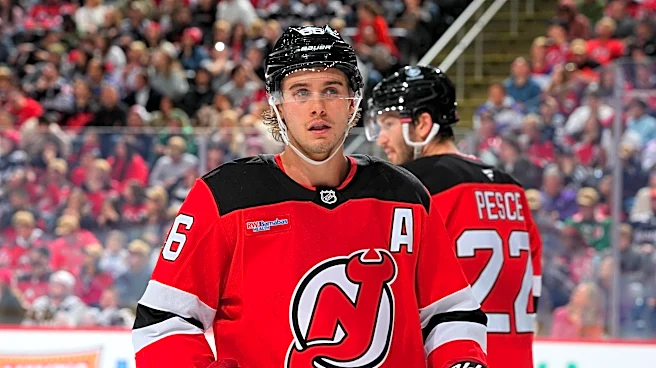
I noted a few times last season how the penalty kill was significantly better with Brett Pesce than without it. That might’ve been true last year, but that hasn’t been the case so far this season.
Through the Winnipeg game, Siegenthaler leads in ice time on the kill at 31:28, followed closely by Pesce (30:40). Hamilton (27:37), Hughes (23:04), and Dillon (11:46) round out the defensemen
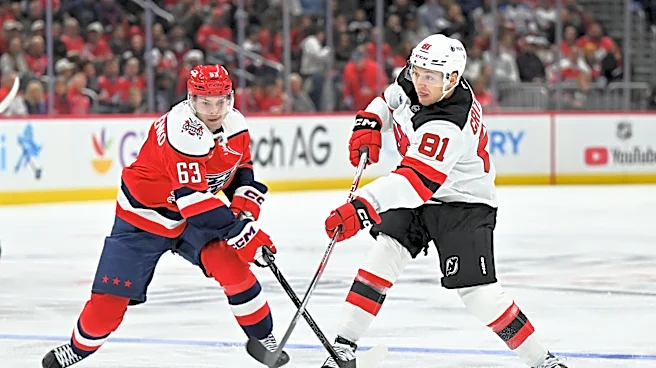
The forwards are about who you’d expect as well. Hischier continues to lead the way at 25:55, with Glass right on his tail at 25:04. First-year Devil Evan Rodrigues has played a significant role at 24:52. Mercer, who has since been traded to Winnipeg, checks in next at 18:04, with Brown (13:16), Arseny Gritsyuk (6:18), Timo Meier (5:46), Bratt (4:58), and Jack Hughes (3:09) rounding out the forwards.
It should be noted that the Devils were killing penalties at a 75% rate (21 of 28) when Dawson Mercer was still on the roster. They’re at 58.8% post-Mercer trade (10 of 17) including last night’s game vs. Washington. So some of the drop off might be explained by Mercer’s absence. Still, the rest of the personnel is mostly the same, and I don’t think the other key players on the penalty kill unit just forgot how to kill penalties overnight.
Taking a Look At The Stats
I decided that when it comes to looking at the the stats, it was probably best to only go back to the 2024-25 season, as that covers the entirety of the Brett Pesce/Brenden Dillon era as Devils. Cody Glass joined the Devils later in the 2024-25 season, and with the exception of the last two weeks of games, it covers the Dawson Mercer era as well. Nico Hischier, Jonas Siegenthaler, and Dougie Hamilton (and to the lesser extent that Jesper Bratt and Jack Hughes have had a role on the PK) all predate 2024-25. Not to mention that that three season span covers the entirety of the Sheldon Keefe era.
Stats are courtesy of MoneyPuck and Natural Stat Trick, where noted, and do not include last night’s game versus Washington.

I’m not a statistician, but a quick look at this year’s stats actually would suggest the Devils aren’t giving up a whole heck of a lot on the kill. They’re not facing a ton of shots in general, and they’re certainly not facing a ton of high danger chances. No team has fewer expected goals against, and even factoring in that the Devils are one of the least penalized teams in the league, the numbers are still respectable on a per 60 basis.
It might be an oversimplification to boil it down to “you gotta get a save”, and its important to keep in mind that for 2026-27, we’re talking about relatively small sample sizes. But also, your goaltender has to be your best penalty killer, so you gotta start getting some saves if you’re Connor Hellebuyck (who will be here the long haul) and Jake Allen.
Hellebuyck has been very good on the kill the last two seasons, and Allen was good last year, so one would hope that these early season struggles are just a blip and not a trend. In Hellebuyck’s case, it would be understandable. He’s been dropped on a new team with no training camp and is still familiarizing himself with his new teammates and their tendencies. In Allen’s case, one hopes it’s not a troubling sign as he continues to advance to the later stages of his career.
A Brief Look At The Tape
I’m not a statistician. I’m certainly not a hockey coach. So bear with me as I give my thoughts on the penalty kill.
I don’t see a whole lot differently looking at the kill this year versus last year, in terms of structure. That would make sense as Keefe and Brad Shaw are constants on the coaching staff. I also don’t think its fair to rip Brad Shaw to shreds when you consider the totality of his work, as the Devils have generally defended well at 5v5 to this point.
With that out of the way, I see a Devils team that is defending well…..for the most part. The problem is when they do make mistakes, it’s come back to bite them in a big way. A failed clear slash great keep-in by Matthew Schaefer leading to a Bo Horvat goal is a great example.
There’s been a few PPG against, such as Gabe Landeskog, Robert Thomas, and Dawson Mercer where they didn’t defend a cross-slot pass through the crease good enough and it wound up in the back of the net. And there’s only so much one can do down two men where if you give Leon Draisaitl this kind of space, he’ll burn you every time. Some of these are goals where I can’t put it on the goaltender because the goaltender simply has no chance.
The Devils haven’t been down two men a lot this season. But when they are down two men, it’s come back to haunt them. Like what happened to Dillon the other night when a puck went in off of his skate.
One thing I did want to mention after hearing the MSG broadcast discuss it last night was the Devils getting burned late in recent penalty kill situations. And that is indeed true. The Devils have given up a goal with 3 seconds, 8 seconds, and 19 seconds remaining their last three kills, and there are two other instances with 4 and 14 seconds to go.
I don’t want to sugarcoat it like I think Ken Daneyko and Bryce Salvador were though when they were saying it’s a sign the Devils were indeed playing well on the kill. To me, its a sign of a lack of focus slash execution that you’re failing to get through the full two minutes. They’re also failing to gain any ancillary benefit mentally that comes from successfully killing a penalty. I don’t know if their recent trend of giving up goals late in the penalty are a case of tired penalty killers because they’re stuck out there on long shifts or if it is just a lack of attention to detail. But those extra PPG against add up, and it’s all part of the reason they’re just under 66% on the season. You don’t get credit for almost killing penalties, just like you don’t get credit for almost scoring on the power play.
At the end of the day, it’s easier said than done to say “maintain your structure” when the nature of penalty kills, in general, is about survival. Break up a pass, clear the puck, and get off the ice for the next group so you’re not stuck out there for prolonged shifts. Teams are looking to get the goaltender moving east-to-west, to get the opposition off balance, and they’re allowed to make plays too. They’ve made more plays than the Devils to this point, which is why they are where they are.
Final Thoughts, of Sorts
The Devils have actually been one of the more disciplined teams in the league. No team has gone to the box fewer times than New Jersey. And it doesn’t take a rocket scientist to suggest that if you’re not going to the penalty box, you’re not going to give up a goal on the penalty kill.
Except the Devils are still giving up a lot of goals on the penalty kill. Because of course they are.
I generally think that the Devils will ultimately be fine on the kill. Hellebuyck has an established track record of being perfectly fine on the kill, and I believe as he continues to settle in to his new surroundings, he’ll make his share of stops.
If the Devils were to make any personnel changes on the kill, I think they’d need to go outside of the organization for that. They may be a short a defenseman depending upon the severity of the Johnathan Kovacevic injury, and they clearly don’t want to use Declan Chisholm on the kill, so it limits their options on the backend. Any Utica call up probably needs to be ready to jump right in on the second or third wave of a kill, so I can understand if they don’t want to expose someone like Anton Silaev or Ethan Edwards to that right now.
But I also look at the forwards, and the approach in general, and I see the Devils sitting back in their structure and not being particularly aggressive either using their stick to break up plays or getting in somebody’s space and forcing them to make a decision with the puck. It’s the type of thing that’s tough to explain, but go watch how aggressive a team like the Hurricanes are on the kill and then our penalty kill and you’ll see what I mean.
The Devils futility can probably a combination of factors at the end of the day….coaching/systemic breakdowns. Bad goaltending. Missing a key penalty killer like Mercer. And I would be concerned if the Devils suffered any more injuries to players they count on on these units. I don’t know if I’m quite at the point where I want any trade deadline acquisition to have an established track record of playing well on the penalty kill. Let’s see how they fare over the next 20 games before reaching a conclusion there.
Please feel free to let me know your thoughts on the Devils penalty kill thus far this season in the comments below. Thanks for reading.