



In honor of the Philadelphia Phillies playing host to the 2026 Major League Baseball All-Star Game at Citizens Bank Park, we here at The Good Phight are launching a yearlong series that focuses on the history of the Phillies and the All-Star Game.
Check back regularly for posts about the Phillies participation (or lack thereof) in the Midsummer Classic over its history.It’s time once again for a look at some Phillies one-time All-Stars. However, unlike the rest of this series so far (which you can
catch up on here) there is only one member of the 1960s Phillies who was a one-time All-Star as a member of the Phillies, and he was just under the decade threshold.
Grant Jackson, 1969
In 1942, Grant Jackson was born as one of nine children to Joseph and Luella Jackson in Fosteria, Ohio. He was a strong athlete from an early age, lettering in football, baseball, and track during his time in high school. Unfortunately, Jackson’s family was not very well off financially, and their situation worsened when his father passed away following a heart attack in 1960 at the age of 52. That forced Jackson’s older brother and biology teacher Carlos to assume the role of the father figure in his life and help support the family. Jackson finished high school in 1961 but did not have the grades to qualify for an athletic scholarship to Bowling Green University.
That’s when he decided to take a long shot and reach out to the most famous resident of his hometown, Tony Lucadello, who also just so happened to be a scout for the Phillies. Lucadello would wind up being responsible for numerous players signing with the Phillies, including Mike Schmidt, Fergie Jenkins, and Mickey Morandini. But in 1961, Lucadello decided to give the 18-year-old Jackson a shot, as the Phillies signed the small 6-foot, 180-pound pitcher to a contract worth just $1,500. But Jackson needed the money to help his family, so he accepted. Shortly after, Jackson was introduced to the cruel realities of baseball in the time before high school players had agents, as he discovered just two days after signing with the Phillies that the Milwaukee Braves were prepared to offer him $35,000.
In any case, Jackson’s pro career started in 1962 when he was just 19 years old with the Bakersfield Bears of the California League. Jackson would spend the next two seasons there before eventually earning a promotion Triple-A in 1965 to Arkansas. Jackson, an African American, was walking into a very hostile environment in Little Rock as described by Arkansas teammate Fergie Jenkins. Jenkins described the racial climate by saying “things were tenser, more overt in Arkansas” and describing incidents where players would leave games to find their cars vandalized with racial epithets.
Jackson was not long for Arkansas though, as the Phillies made him a September call-up and he made his major league debut on September 3rd, 1965, on the road against the Cincinnati Reds. He entered in the bottom of the fifth with two on and no outs, relieving Phillies starter Ray Kulp who left with a 6-3 lead but traffic on the bases. Jackson struck out the first two hitters he faced in Tony Pérez and Deron Johnson, but he then allowed a three-run homer to Frank Robinson that tied the game at 6-6. Jackson would go on to pitch two innings and be charged with the loss as the Reds mounted a ferocious late offensive barrage to win 17-6.
The 22-year-old Jackson went on to appear in six total games his rookie year including two starts. He allowed 11 runs and four home runs in just 13.2 innings, but he also struck out 15 to flash his potential. Jackson began 1966 with the team but was demoted after just two relief appearances, except this time the Phillies Triple-A affiliate was in San Diego instead of Little Rock. That’s where he would stay for the rest of 1966, going 10-8 with a 3.96 ERA in 23 starts. Jackson made the MLB team in 1967 and stayed there all season, but only appeared in 43 games with four starts.
But then Phillies manager Gene Mauch was fired early into the 1968 season, paving the way for Bob Skinner to take control of the ballclub. Skinner was able to help Jackson correct a mechanical flaw in his delivery by speeding him up on the mound. The change worked, as Jackson had his best season in the majors to that point with a 2.95 ERA in 61 innings across 33 games and six starts. It was enough for Skinner to name Jackson the fifth starter in his rotation entering the 1969 season. Some in the media were incredulous about the idea that Jackson, who was still only 26-years-old, had finally figured it out. As Bill Conlin wrote in the Philadelphia Daily News, the Jackson story “was written every spring training about this time and is a story filled with hope,” calling Jackson “wild as a Filmore Auditorium Rock concert and as undisciplined as a Berkley student.” Jackson had remarked that “People ask me if this is a now or never year, I tell them it’s going to be a now year. I’ve had my last never year. This is going to be my year.”
Despite Conlin’s disbelief in Jackson’s talk, the lefty backed it up and then some. The 1969 Phillies finished with 99 losses, but Jackson excelled in his first real chance at being a major league starting pitcher. He was 9-10 with a 3.32 ERA in the first half of the season, earning him a nomination to the NL All-Star team for the contest to take place July 23rd at RFK Stadium in Washington, D.C. However, despite being the Phillies only representative at the midsummer classic, Jackson did not appear in the game as the NL went on to win 9-3 in large part thanks to two home runs from Willie McCovey of the Giants.
Jackson finished his All-Star season with a 14-18 record and a 3.34 ERA across 253 innings pitched with 180 strikeouts. It appeared he had finally proven himself as a pitcher, but he regressed mightily in 1970 and finished with a 5.29 ERA while having disputes with new manager Frank Lucchesi. The Phillies then finally gave up on Jackson, sending him to Baltimore in December 1970 in a package that included Sam Parilla and Jim Hutto in exchange for top outfield prospect Roger Freed who had just won MVP of the International League.
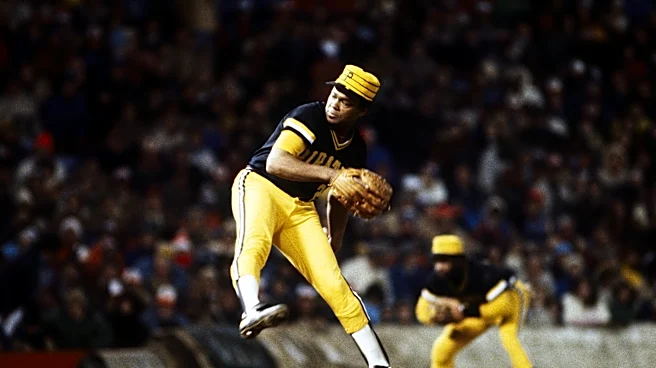
It was the best thing for Jackson’s career, as he never again had a losing record and totaled a 3.09 ERA in 538 appearances over his next 12 seasons of his career, including the 1979 season when he won the World Series as a member of the “We Are Family” Pittsburgh Pirates. Jackson had a pivotal impact in Game 7, entering a 1-0 game in the fifth inning and delivering 2.2 hitless innings of relief and earning the win to collect his first championship in three tries over the last decade. Freed meanwhile would play two seasons in Philadelphia and hit .222 in 191 games.
Sources
Maxwell Cates, Society for American Baseball Research (SABR) Biography for Grant Jackson
The Philadelphia Inquirer, Dec. 2nd, 1961
Stan Hochman, The Philadelphia Inquirer, Mar. 15th, 1967
Allen Lewis, The Philadelphia Inquirer, March 7th, 1967