



Of course a Buffalo Bills site would run this article with this headline, right?
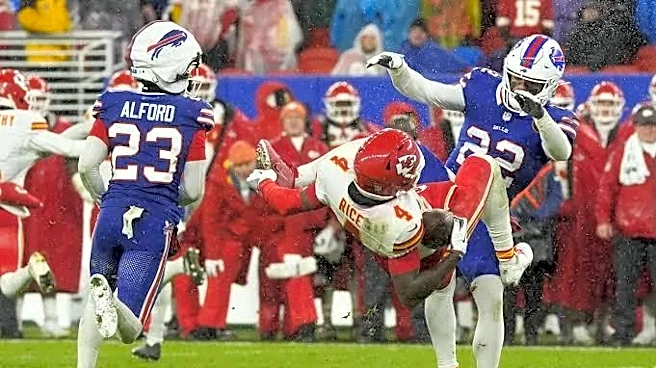
Really though, I wanted to get the bottom of the controversial call that went in the Bills’ favor on the Chiefs second-to-last possession in the fourth quarter of Buffalo’s epic 13-10 walk-off win over Kansas City on Thanksgiving night.
And I’ve reached a very definitive conclusion.
The review was correct.
Rashee Rice did not catch the football.
We have to dismiss the “eye test” here, because NFL’s rulebook is the governing
guide to the game. That distinction first has to be established.
As convoluted as it may be, this is the official rule. It’s a catch if a player:

My good bud Joe Goodberry — a wildly popular and insightful Bengals analyst and Niagara Falls native + resident — explained Friday on Twitter. Here’s the start of his thread, which featured a civil disagreement (yes, they’re possible!) between Joe and Sam Monson of the 33rd Team:
Instead of pasting each component of the lengthy back-and-forth between Goodberry and Monson, I’ll summarize the correct interpretation of the rule here.
Rice satisfied (a) and (b) on this play. He secured control of the ball first before hitting the ground, then his elbow hit the ground while in control.
But, scroll up to check (c) again.
Rice did not “perform an act common to the game” — because he was simply falling to the turf, not a common act — therefore he must survive the ground. So, (a), (b), and (c) together were not fulfilled. Had they been, it would have been a catch. Case close.
Precisely what occurred on the Rice play is clearly defined in section (2) of the rule. It specifies if (a) and (b) are satisfied, a player does not “survive the ground” if he hits the ground and loses control of the ball, there is no possession if the ball hits the ground before he regains control.
That is exactly what happened on the play.
Was it an egregious loss of control from Rice?
No.
But any degree of losing control counts if the ball hits the ground in the process.
Which is why the NFL got this call right.