






Sunderland AFC don’t tell you to expect the unexpected — it’s priced in with events on Wearside these days.
The wider support are rightly not party to the internal workings of the club — the transfer targets, the deals that are close and the long-term ambitions. It’s understood that supporters just won’t see things coming: they come prepared to be blindsided, in a good way.
How many of Sunderland’s signings would you have walked past in the street this time last year and recognised, Granit Xhaka aside?
If you think you’d have said “Bonjour, Nordi pal. Nice to see you”, I’d suggest you were being economical with the truth.
No one saw Régis Le Bris coming, nor Enzo Le Fée, and definitely not Xhaka. Yet here they are, elevating the club to a level which was a basic statistical impossibility a mere two years previously.
If you eschew the bluster and remove the expectation, the trust will follow. That’s exactly what the decision- makers at the club have managed to achieve — and my word, has it been fully earned during the last four years or so.
Me, you and Kyril Louis-Dreyfus are all sitting round a Tuscan pool in the late evening sunshine drinking an ice-cold Aperol Spritz together, fully in the knowledge that life is good in SR5 right now.

Yet with big achievement comes big decisions, and senior figures at the club have another one to make. This time it directly affects the fans, — the vast majority of whom are facing by a distance the most expensive season following Sunderland in their lifetime — it mustn’t be to their detriment.
As England assistant boss Anthony Barry alluded to at half time against Croatia, to be successful in football — or any walk of life — it isn’t about looking at what you’ve done well, but what you can improve and build upon. It’s about how you take on the challenges facing you and execute a plan to accentuate the abilities and minimise the risks.
Sometimes you need to be pragmatic and clear, yet blunt, and one of the big decisions facing those in power is the very tricky question of “How much should fans be paying for Europa League matches?”
It’s not a question that can be answered in one fell swoop, and as such, it’ll require some very, very careful thought.
The ecosystem that’s currently overtopped with goodwill has to be protected at all costs. There’s a chance here to score a huge PR win through fair pricing, clear communication and decisive decision-making, yet there’s also a risk it could go the other way, too.
Supporters must also understand while this is their club, it’s also a business.
It has financial targets and revenues to hit, to at the very least remain compliant with their Squad Cost Ratio, which as we know, is lower for clubs in European competition.
So, a balance must be found because football, like life, isn’t cheap.
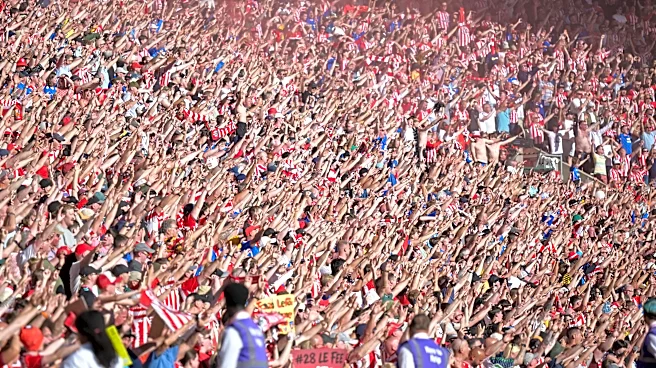
In order to make this club present the best version of itself on the European stage, the one thing we must see is a full Stadium of Light — a stadium that’s rocking and producing a noise that makes neutral or some-time attendees in the media comment on what a special place it is, is objective one.
Let’s not forget that this is an area whose football-club-spend-to-income ratio is probably higher than almost anywhere else. Not because Sunderland fans splash more cash than those in other parts of the country, but because broadly speaking, they have less money to spare to go on following the club they love.
Therefore, the price point for Europa League matches is of critical importance.

If the club doesn’t get this right, then it’s a slippery slope.
Most fans will pay, of course, but they mustn’t feel exploited, so what’s a fair price to pay? £40 for a standard ticket? Is this only for season card holders? Do we say £140-£160 for a four-game package? Will everyone be able to keep their usual seat? And what about families?
It’s very tough to arrive at a conclusion but from the conversations that’ve been had over the last few days, the common consensus is that anything at £50 or over would leave a mildly bitter taste but would be grudgingly paid.
Given the lack of European football over the last 53 years, there isn’t really much in the way of comparison as to what supporter mindset might be like — the only thing that should be noted is that Sunderland supporters don’t generally attend cup matches well.
Whole stands shut for early round cup competitions, there for everyone to have a good laugh at. Now that isn’t because the prices for Huddersfield at home last August were too high — it’s because the interest wasn’t there. The interest in Europe is of course there in abundance, but nevertheless, it still needs cultivation and careful PR management.
However, we would be well-minded to recall Manchester United at home in the 2014 League Cup semi-final.
An attendance of 31,000 shows that good PR (arguably lacking back then) can make all the difference, but it also highlights what happens if you don’t get it right.

It’s not unfair to suggest this is also a very early test run for whether the Stadium of Light could be expanded at some point in the medium term. The question has already been posed but the ability to fill the ground on nights like this is an early waypoint on the eventual development of the South Stand.
However, there are more pressing immediate considerations.
Perhaps the way to arrive at a conclusion over pricing is to ask whether bosses want to see 49,000 paying £35-£40 on average for a ticket, or do they want to see 37,000 paying £50?
In reality, the answer is obvious: full stadiums, more income generation through sales of food and drink; a better atmosphere, leading to a higher chance of success, progression deeper into the tournament and the subsequent financial benefits which flow from that.
A Europa League run could see a generation of young fans committed to the club for the rest of their lives, so this is where clear communication has to come in.
If prices are going to be a bit higher, it must be set out as to why.
As a financial necessity rather than to make an excessive profit (which no one is saying will necessarily happen), but there’s always the risk of it being seen that way. Making the difference clear is crucial, because it’ll inform your average fan whether he or she should feel taken advantage of or not.
It’s not that there’s necessarily going to be purposeful profiteering. As ever, the devil in the detail is communicating effectively.
The last two years are strewn with the rotting carcasses of football pricing PR disasters — whether that’s for European games or domestically. Just ask our friends on the banks of the Trent or at Villa Park.
The former had to reduce prices for their tie against Midtjylland in March three times because of poor sales — where the starting price was £50 but ended up being more than halved in some cases; they’d tellingly failed to sell out their previous two home games in the competition yet had done for all four group games.

The Forest midfielder Ryan Yates alluded to the importance of the fans ahead of that tie.
“It’s huge. We have spoken a lot about that connection with the supporters. At the City Ground, when it is rocking and when they are loud, they give us that extra little boost.”
It’s not rocket science.
Meanwhile, over in Birmingham, before their Champions League campaign in 2024, the Aston Villa hierarchy were branded “out of touch” for imposing a £70 starting point for matches. Prices for the group stage of last season’s Europa League were between £55 and £67 for season card holders, and around £10 higher for those without.
We all know what a positive atmosphere can do to results and the intensity of performance levels, with Chelsea, Newcastle, Arsenal recent examples. It’s also clear the players notice when support tails off, as has happened on a couple of occasions in the last twelve months.
For Sunderland at least, this is potentially a bus that hopefully won’t only stop once, but it might not come past again for many years. So supporters must be given every invitation to take their opportunity to be there, because for many it wouldn’t be a question of not wanting to pay exorbitant ticket prices, but being simply unable to.
Older generations of fans have talked for decades about following Sunderland in Europe being a bucket list ambition, so they mustn’t feel locked out at home. As Ross Stewart slotted home the second against Wycombe, it still felt light years away, yet here it is, coming down the tracks far more quickly than anyone could’ve hoped for.
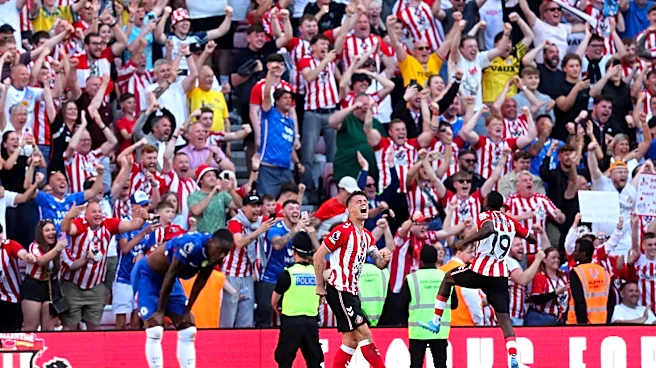
Ahead of the Wembley playoff final last year, the question was posed as to whether it was too early to get promoted. The correct answer was to go for it. The question was asked again ahead of a potential Europa League qualification. The answer this time? Exactly the same.
What this teaches you is as a club, the fans, players and staff all need to be fully in on something for its full potential to be realised. So when it comes to going deep into Europe? Let’s go for it — but the whole club must be in it together.
Because empty seats don’t sing. And they don’t celebrate, either.