
The Mets are, how should I put this, not historically known for their winning ways. The most commonly noted exception to that trend is their success on Opening Day (42-23). But perhaps it’s time we give that same recognition to their performance in the National League Division Series. The Mets have played in five Division Series — 1999, 2000, 2006, 2015, and 2024 — and they have gone a perfect 5-0, advancing to the National League Championship Series each time. Only one other franchise, the Toronto
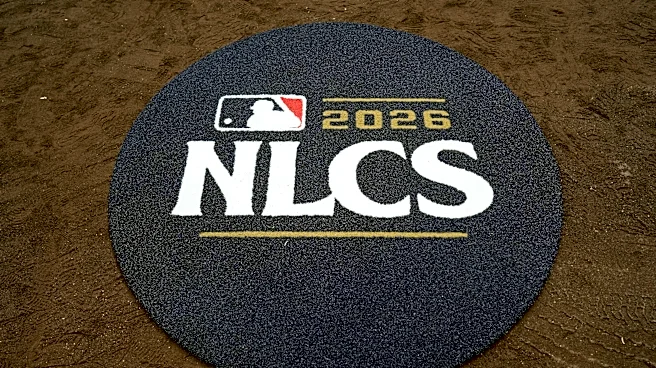
Blue Jays, has an undefeated record in the Division Series round. So with MLB’s 2026 DS having recently wrapped up, let’s count down the best moments from the Mets’ dominant Division Series history.
10. Franco freezes Bonds (2000 NLDS, Game 2)
In the 10th inning of a back-and-forth Game 2 at San Francisco, John Franco entered to put out Armando Benítez’s fire. The Mets had led 4-1 entering the bottom of the ninth inning, but Benítez surrendered a three-run, game-tying homer to J.T. Snow with two outs to go. Jay Payton put the Mets back ahead with an RBI single in the top of the 10th, but Benítez then allowed Armando Ríos to reach on a single to begin the bottom of the frame. Franco arrived and got a pair of outs on the ground — one of which erased Ríos via a bad baserunning blunder — to bring Bonds to bat with two outs as the potential tying run or final out. With a full count to the already three-time MVP Award winner, Franco threw a pitch that was beautifully painted on the inside corner (or perhaps just beautifully framed by Mike Piazza behind the plate). Either way, the umpire rung up a disgruntled Bonds, evening the series as it went back to Shea.
9. deGrom’s bakers dozen (2015 NLDS, Game 1)
Jacob deGrom’s first postseason start, much like his first All-Star appearance three months earlier, was an electrifying statement to the rest of the league (and a foreshadowing of the two Cy Young Awards to come). His 13 strikeouts tied a Mets postseason record set by Tom Seaver in Game 1 of the 1973 NLCS against the Reds at Riverfront Stadium. He also became at that point just the ninth pitcher to strike out 13 while allowing no runs in a postseason game (two players, Gerrit Cole and Clayton Kershaw, have joined that list over the past 11 years). While deGrom’s Game 5 start to clinch a series victory was arguably the more impressive display, as he bounced back from a two-run first inning and battled without his “A stuff” to still put up a quality start, his Game 1 performance was a thing of pure majesty.
8. Alfonzo’s grand slam in Arizona (1999 NLDS, Game 1)
The first grand slam in Mets playoff history couldn’t have come at a better moment. Edgardo Alfonzo had already hit a homer in Game 1 of the 1999 NLDS, putting the Mets on the board with a solo shot off Randy Johnson (in the first of the southpaw’s four consecutive Cy Young Award-winning seasons) in the first inning. When Alfonzo came to bat in the ninth inning with the bases loaded and the score tied at 4-4, he went deep again, crushing a ball down the left-field line and into the second deck to give the Mets an 8-4 lead and all but seal their series-opening victory.
7. Jones’ shutout (2000 NLDS, Game 4)
In his first postseason start after eight big league seasons with the Mets, Bobby Jones completely baffled a Giants lineup that finished the regular season with the third-best team OPS (.834) in the Majors. The 30-year-old right-hander allowed just one hit (to future Hall of Famer and former Met Jeff Kent) and two walks, completing the second shutout in Mets playoff history after Jon Matlack twirled one in Game 2 of the 1973 NLCS against the Reds. Jones also notched one of just 34 series-clinching shutouts in playoff history to date. Mike Hampton would join that list eight days later in the NLCS, making the 2000 Mets the only team to have multiple pitchers throw shutouts in series-clinchers.
6. Murphy’s takeover (2015 NLDS, Game 5)
Everyone remembers that Daniel Murphy homered in six straight playoff games, setting an MLB postseason record (while remarkably hitting four of those six against that season’s NL Cy Young Award finalists Clayton Kershaw, Zack Greinke, and Jake Arrieta). But Murphy’s other heroics in the winner-take-all Game 5 of the NLDS might be more easily overlooked. The Mets eked out a win over the Dodgers by a final of 3-2, and the second baseman was directly responsible for all three runs the Amazins’ scored. In the top of the first, he sent a triple to the warning track in left-center field, scoring Curtis Granderson and putting the Mets up 1-0. In the top of the fourth, with the Mets trailing 2-1, Murphy mustered a leadoff single. When Lucas Duda walked two batters later, Murphy caught the Dodgers’ defense sleeping and advanced to third base, allowing him to score when Travis d’Arnaud hit a sac fly which would have otherwise been a harmless flyout. Then, in the sixth, Murphy took matters into his own hands, tattooing a Greinke fastball down the right-field line for a go-ahead homer. Murphy would go on to win the NLCS MVP Award — but if there was an NLDS MVP Award, he would have won that, too.
5. Lo Duca goes 2-for-1 (2006 NLDS, Game 1)
The most memorable — and most bizarre — defensive play in Mets Division Series history set the tone for a three-game sweep against the Dodgers. In the top of the second inning of Game 1 at Shea Stadium, L.A. had runners at first and second with nobody out facing rookie John Maine. The Dodgers’ Russell Martin banked a ball off the right-field fence, setting the runners in motion. Shawn Green and José Valentín combined for a clean relay to get the ball to catcher Paul Lo Duca, who tagged the lead runner (shoutout to Jeff Kent once again) sliding head-first into home plate. Lo Duca looked up to see the verdict from the home-plate umpire John Hirschbeck, who ruled Kent out. But when Lo Duca turned back around toward the diamond, he was suddenly met with the other runner, J.D. Drew, who was attempting to take the Mets by surprise. Instead, Lo Duca managed to get the tag down before Drew’s fingers touched the plate, turning a potential bases-loaded, nobody-out jam — or a potential go-ahead hit — into a double play.
4. Céspedes flips his bat to the heavens (2015 NLDS, Game 3)
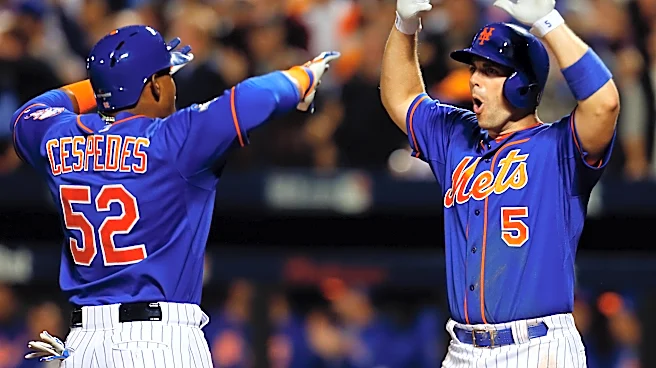
Mets fans didn’t really need any extra motivation to go all-out in the first-ever playoff game at Citi Field, but after Chase Utley’s hard slide into Rubén Tejada during Game 2 of the 2015 NLDS…well, they got that extra motivation and then some. The Citi crowd was waiting for a moment to explode from the first pitch, and it got several fantastic opportunities. Curtis Granderson hit a bases-clearing, go-ahead double in the second. Matt Harvey got out of a big jam in the third by striking out Carl Crawford. Travis d’Arnaud hit a two-run homer to make it a 6-3 Mets lead in the third. But none of those moments could match the sheer euphoria caused by the sight of Yoenis Céspedes’ mammoth three-run shot rocketing into the second-deck in left field. Suddenly, the Mets were winning 10-3, the Dodgers’ formidable pitching staff was scrambling, and Cespedes’ bat was flying over home plate like an outbound red-eye from LaGuardia. Playoff baseball had officially arrived at Citi Field.
3. Benny and the Mets and the walk-off HR (2000 NLDS, Game 3)
The fan-favorite Benny Agbayani delivered his signature moment in Game 3 of the 2000 NLDS to put the Mets ahead in both a gridlocked game and a hotly-contested series against the Giants. After Edgardo Alfonzo evened the score at 2-2 with an RBI double in the bottom of the eighth inning, neither side was able to break through until the bottom of the 13th, when Agabyani got hold of a fastball from southpaw Aaron Fultz and sent it into the left-field stands at Shea Stadium. It is one of just eight walk-off homers in playoff history to be hit in the 13th inning or later.
2. Pratt’s all (1999 NLDS, Game 4)
Todd Pratt had hit just three home runs in 71 games during the 1999 regular season, making him one of the more unlikely power threats in a stacked Mets lineup. But he proved the hero during Game 4 of the NLDS on a Saturday afternoon at Shea Stadium, with the Mets and second-year D-backs tied at 3-3 with one out in the bottom of the 10th inning. After Arizona right-hander Matt Mantei bounced a first-pitch breaking ball, the Mets’ backup catcher got a fastball over the plate and elevated it to center field. Five-time Gold Glove Award winner Steve Finely gave the ball a chase and leapt at the wall, but he couldn’t stop it from soaring over the fence and sending the Mets to the NLCS. It was the first series-clinching homer by a National League player since Bill Mazeroski’s in the 1960 World Series. There have only been three series-clinching homers in DS history, and Pratt’s was the first (before David Ortiz for the Red Sox in 2004 and Chris Burke for the Astros in 2005). Plus, the 1999 Mets would have gone on to become the only NL team in history to record multiple walk-off homers in the same postseason if Robin Ventura’s “grand-slam single” in the NLCS went down as a home run in the record books.
1. Lindor gives Citi its moment (2024 NLDS, Game 4)
The end of the Mets’ 2024 season featured one Hollywood moment after another, but Lindor’s go-ahead grand slam stands apart because it was in front of a Citi Field crowd that had waited through…a lot. They had waited 18 years (since September of 2006) to celebrate a clinch in Queens, whether for a postseason berth or series. They had waited through a four-city road hoping for the chance to experience postseason baseball in-person, watching as the Mets somehow clinched a playoff spot in Atlanta thanks to Lindor’s ninth-inning homer and even more miraculously advanced past Milwaukee thanks to Pete Alonso’s ninth-inning homer. They had also waited all night for the Mets to get on the board. When Lindor came to bat to the sound of The Temptations’ “My Girl” with the bases loaded and one out in the bottom of the sixth, New York was 2-for-11 (2 singles) with RISP, still trailing 1-0. Even with a bad back, Lindor had carried the 2024 Mets to the precipice of this magical moment. It was only right that he then be the one to deliver it. As Lindor crushed a middle-middle fastball from the Phillies’ Carlos Estévez over the right-center-field wall, that Citi crowd got to erupt after five innings, four series, and 18 years of waiting.