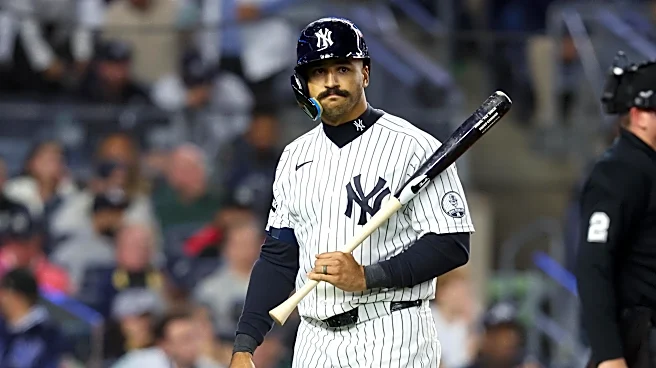

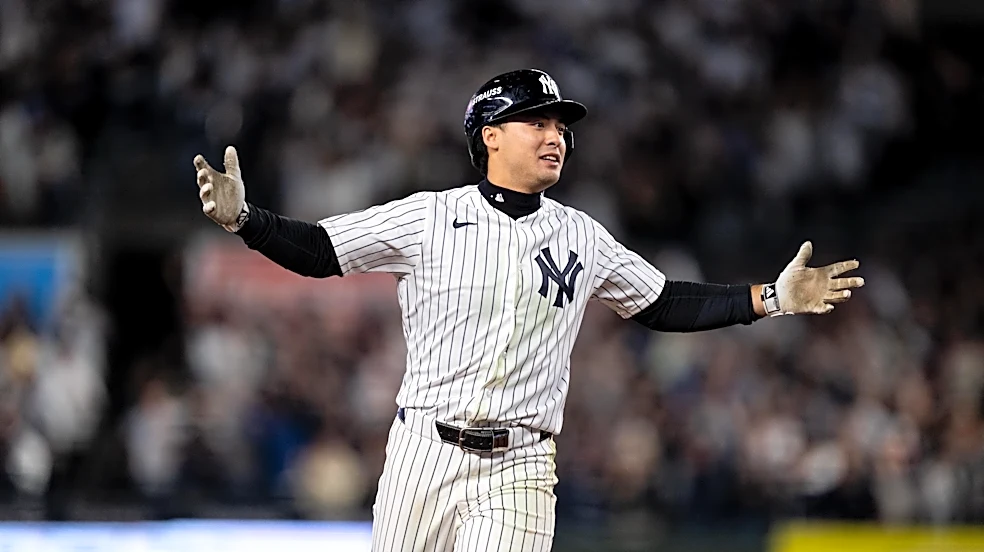

On the heels of his breakout 2025 campaign, the Yankees extended a qualifying offer to Trent Grisham, an offer that the outfielder accepted. On the surface, it seemed like a piece of business that could work out nicely for both sides. The Yankees retained their starting center fielder at a price just north of $20 million, and Grisham got a chance to prove his 2025 was no fluke, setting him up to enter free agency in 2026 without a qualifying offer and with his status as one of the top hitters on the market
cleanly established.
For a while, everything went according to plan. Then, injuries struck, Grisham’s production plummeted, and his, and the Yankees’, season ended in ignominy.
Grade: D
2026 Stats: 121 G, 484 PA, 18 HR, 67 R, 59 RBI, 9 SB, .211/.308/.395, 98 wRC+, 0.7 fWAR, 0.6 bWAR
2027 Contract Status: Free agent
Grisham got off to a nominally slow start this year, but thanks in part to the near-ubiquity of Statcast, most fans saw through his opening slump. The 29-year-old was hitting the ball well, but he wasn’t hitting ’em where they ain’t, so the early-season consensus on Grisham was that he was just one of the unluckiest hitters in baseball.
Eventually, the results started to come. After the calendar turned to May and up through June 12th, Grisham hit .290/.373/.473, and was one of the primary reasons the Yankee offense remained excellent during the interim period between Aaron Judge’s initial injury and his placement on the IL.
On that day of June 12th, however, Grisham’s season changed irreversibly. Grisham suffered what the team referred to as a “moderate” hamstring strain in his right leg, landing him on the injured list. Grisham only missed about three weeks with the ailment, but when he returned, he wasn’t the same player. From his return on July 3rd on, Grisham hit just .186/.269/.381.
What made matters worse was Grisham’s deteriorating performance in center field. Even during his superlative 2025 season, Grisham’s defense regressed by almost any measure, and at no point in 2026, before or after his hamstring injury, did Grisham look like he was in position to bounce back in that facet of the game. By season’s end, Grisham rated in the tenth percentile among outfielders in Statcast’s Range metric, and was eight runs below average by Defensive Runs Saved.
Grisham’s decline came to a head in the playoffs. He reinjured his right hamstring in early September, and hit the IL for the remainder of the regular season before the Yankees activated him for the postseason. Grisham started both games of the Wild Card Series against Boston and did well enough with the bat, picking up two hits in Game 2, but he did not look capable of playing center field at the major league level:
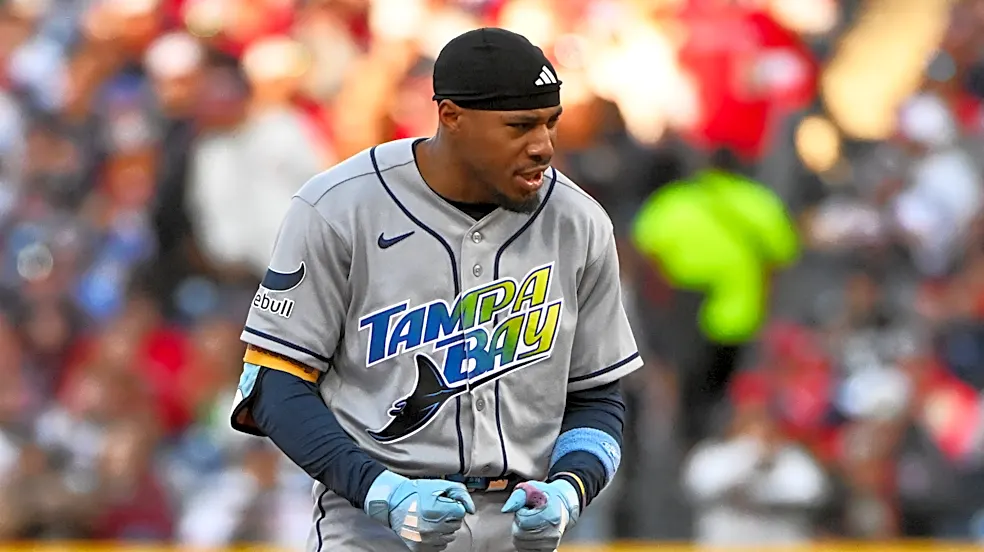
The Yankees stuck with Grisham as they faced off with Tampa Bay in the ALDS, and Grisham went 0-for-11 with five strikeouts while continuing to play a limited form of center field defense.
As far as Grisham defenders go, I actually consider myself as one of the staunchest. Grisham was one of the team’s best hitters before he got hurt this season, and though there’s no way to prove this definitively, I believe that he would have gone on to have an excellent offensive season had he stayed healthy. But the fact of the matter is that Grisham did get hurt, and the player that was scalding the ball early in the year ceased to exist. Despite that version of Grisham disappearing, the Yankees stuck with him to the bitter end, a decision that in all likelihood hurt their chances of prevailing when they faced off with the American League’s top seed in the playoffs. It’s unfortunate that Grisham hitting leadoff in the season’s last game and going 0-for-5 may very well be the lasting image of him in pinstripes for many fans, especially since Grisham’s tenure in the Bronx should largely be defined by his reinvention with the bat and his mid-career growth into a formidable power threat.
Trent Grisham and the Yankees in 2026 could have worked out. Perhaps there’s an alternate universe out there very similar to this one, where Grisham’s hamstring stayed intact and he hit 35 bombs to give the Yankees another potent lefty bat in the lineup. But that’s not the universe we live in. Here, Grisham got hurt and his performance suffered, with the team trotting him out there in a vain attempt to get him back to his prior self night after night. It’s because of that that Grisham goes home with one of the harshest grades you’ll see in our Report Card series.