

With the preseason nearly over and cutdowns on the horizon, very little on the Green Bay Packers’ roster seems up for much debate. Like most years, it’s about weighing keeping an extra receiver or an extra defensive back, or to keep nine or ten offensive lineman. Most of these decisions, particularly at the non-line positions, do not come down to performance on offense or defense, but rather which special teams roles a player can fill. A fifth cornerback or a seventh wide receiver isn’t going to see the field
much, but may be a core starter on special teams. Looking directly at you, Bo Melton.
The other consideration is often financial, though not with the typical significance you expect with NFL contracts. Green Bay doesn’t appear to be considering cutting any players with significant salary due to avoid those obligations (despite fans protestations of Keisean Nixon’s continued employment). However, there is a nitty-gritty part of the CBA that teams do pay attention to when building out their 53-man roster, and that is the termination benefit.
This will seem like incredibly small potatoes given the overall size of the salary cap in the NFL, but it can be a tie-breaker for roster spots on the very back end of the roster. The termination benefit is something a player with four accrued seasons can file for if they are on the active 53 man roster at any point during the season and are later released. If they are on the active roster in week one, it would entitle them to their entire base salary for that season. If they are released at cutdowns, but on the active roster later in the season, the league has a formula that effectively prorates the benefit for the number of weeks they were not on the active roster prior to signing. One key note is that a player can only file for this benefit once in their career, and that information is generally not something that is publicly available, so please take the who is and who is not eligible with a potential grain of salt, especially for players who have been cut mid-season before.
The list of players who are ineligible for this benefit and who are therefore not affected is quite long. I’ll first exempt every player with fewer than four accrued seasons, and that frankly takes care of most of the 90-man roster. According to Over the Cap, only 19 of the 90 players on the roster currently have reached four accrued seasons, and most of those are relatively high-level veterans or players freshly on a new multi-year contract. Players who are neither high-level veterans or on a new multi-year contract are listed below with their 2026 base salary:
- QB Tyrod Taylor: $1.3M
- CB Keisean Nixon: $4.3M
- LS Matt Orzech: $1.3M
- LB Kristian Welch: $1.215M
- LB Nick Niemann: $1.315M
- WR Skyy Moore: $1.215M
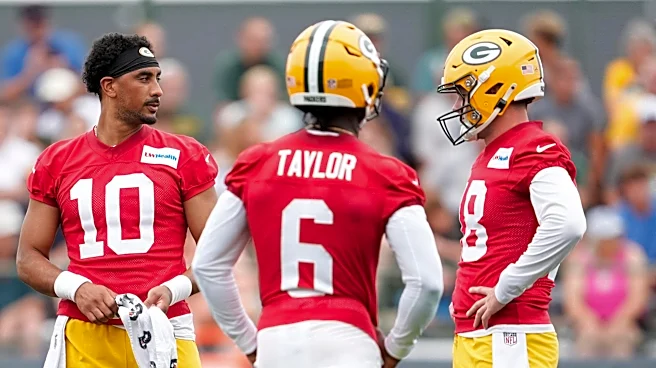
As you can see, these are mostly small potatoes in monetary terms. Despite fan protestations, Keisean Nixon is very likely to start opposite Brandon Cisse in week one. Tyrod Taylor has looked unimpressive thus far in the preseason, but Green Bay did commit some guaranteed money to him, and although Kyle McCord has played well, it has been entirely against third and fourth stringers. Nick Niemann is one of the team’s most important special teams players, and Kristian Welch is kind of discount version of that player, which makes his likelihood of being the sixth off-ball linebacker on the team relatively remote. Skyy Moore has been getting return reps and appears to be Jayden Reed’s backup on offense, so his spot looks relatively safe.
Matt Orzech is the most interesting name on the list here. If Orzech’s calf isn’t quite ready for week one, the Packers can at least kick the can on the decision by placing him on regular season PUP. This would mean Orzech would miss the first four regular season games, at minimum. This would give Green Bay an additional month to see how they like the Cal Adomitis-Daniel Whelan-Trey Smack operation before having to make any decisions. If Orzech were placed on PUP and then released before ever being elevated to the 53 man roster, he would not be subject to the termination benefit. The only thing that would hit Green Bay this year would be a dead cap hit of $562,500 as Orzech is technically in year one of a three year extension he signed last year, but long snapper money just isn’t the same as other positions.
The thing most worth noting about this is how little it is going to impact most of Green Bay’s roster decisions. Nearly everyone on the bubble has fewer than the required four accrued seasons, including players who have been professionals for more than three seasons like Bo Melton, Jonathan Ford, Arron Mosby, and Darian Kinnard. This is because a player must be on the active roster or injured off the active roster (like regular season injured reserve) for six games in one season for it to accrue.
Thankfully, the Packers should be able to focus primarily on how to build the best team for 2026 when it comes to cutdowns, rather than weighing whether or not they want to insure themselves from having to spend an extra few hundred thousand dollars if a player is cut later in the season. The only player this may seemingly impact is Matt Orzech, who, with Trey Smack’s increased success since Cal Adomitis came to town, may have already lost his job anyway.