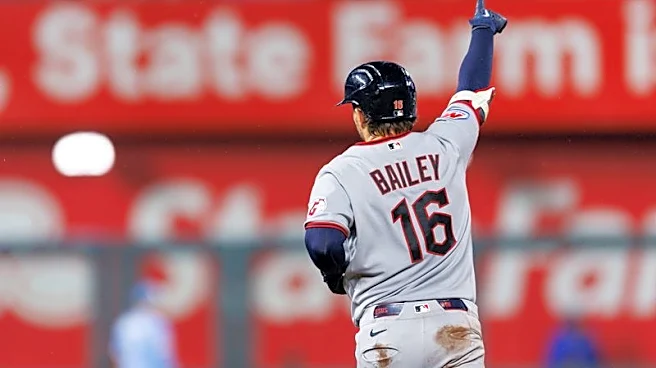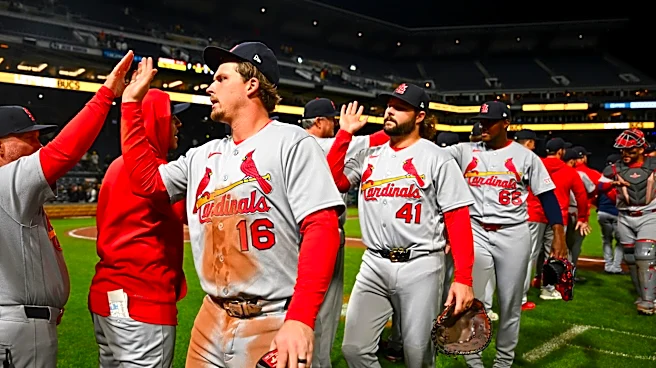

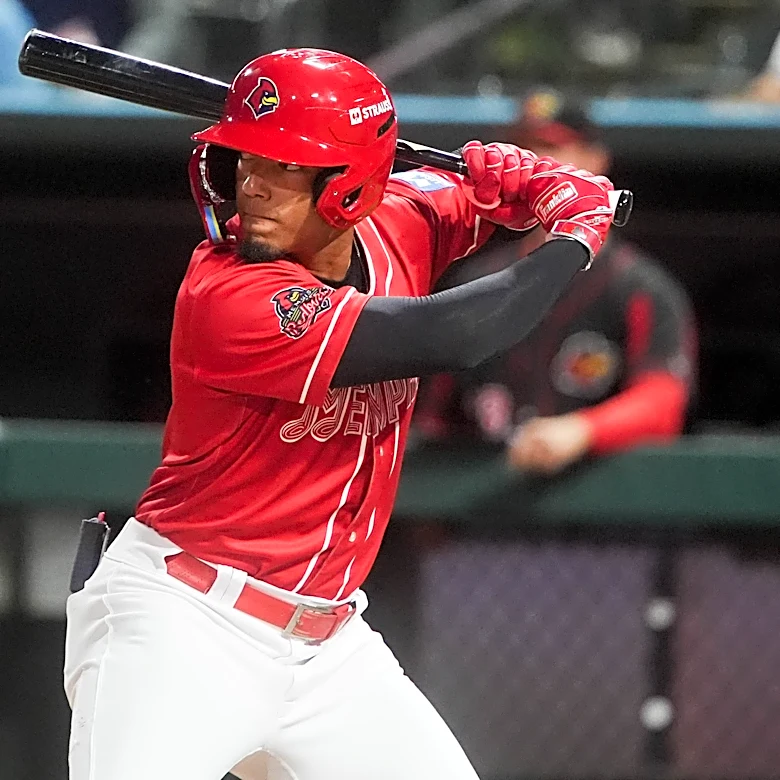


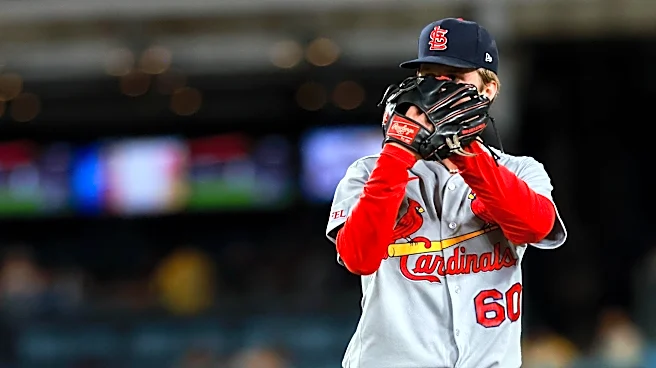
The 2026 season for the St. Louis Cardinals has come to a close. We were told this team wouldn’t prioritize “winning over everything” after jettisoning several veterans in the offseason. What came of that was a season in which we saw nearly an entire roster’s worth of players make MLB debuts, a new young core start to take shape, and an unexpected first half of winning that should set the foundation for seasons to come. Before the season began, our friend Dan Szymborski, over at Fangraphs, posted
his annual zips projections for all the Cardinals players. Based on those projections and what actually took place, let’s take a quick run-through of the roster and hand out some season grades.
Catchers

Ivan Herrera
Projection: .274/.362/.438, .349 wOBA, 127 wRC+, 1.9 fWAR
Production: .243/.353/.384, .330 wOBA, 110 wRC+, 1.4 fWAR
In a season in which Ivan Herrera was an Ironman and managed to avoid the IL all season long, and one where, metrically speaking, his defense behind the plate was mostly underwhelming, he found his way to a productive season with the bat even though it was with considerably less thump. His projected ISO coming into 2026 was .164 and only managed a .141, which is about league average. For a big-league catcher thats above average offensive production. For a primary DH, that is fairly mediocre. Given what we saw from 2025 in terms of impact and the significant step back in the slugging for Herrera this season, I’d say this season was average, if a little disappointing.
Grade: C-
Pedro Pages
Projection: .226/.278/.351, .275 wOBA, 76 wRC+, 1.6 fWAR
Production: .213/.265/.309, .256 wOBA, 60 wRC+, 0.4 fWAR
Coming into 2026, it seemed as though Pages and Herrera were going to be the two primary time-share catchers with Yohel Pozo rotating in from time to time and functioning as the primary RHH off the bench. That lasted all of about 8 weeks into the season, when Jimmy Crooks forced his way into the conversation and pushed Pages into the 3rd catcher role for roughly 2/3 of the season. Pages’ bat had fairly low expectations put on it coming into the season, and you combine that with pretty much no playing time, you get stat lines like this. Pages still delivered when it came to throwing out base stealers, and his reputation as a high-class game caller and leader in the clubhouse still remained, though players get very little credit for that, I know some will bluster about the passed balls and blocking, and some of that is very much on Pages to do a better job of getting in front of those, but I dont think it was as egregious as some fans perceive it to be, a lot of pitchers who were either young or featured poor command contributed to those numbers inflating. Overall, I think Pages is a quality backup catcher but should not be looked at as a primary backstop on a contending club. The ascension of young catchers will likely make Pages a roster casualty in one form or another this offseason.
Grade: D+
Jimmy Crooks
Projection: .241/.300/.369, .294 wOBA, 89 wRC+, 2.1 fWAR
Production: .179/.255/.336, .264 wOBA, 65 wRC+, 0.0 fWAR
Boy oh boy, what a roller coaster season of a year for Jimmy Crooks, from starting red hot in AAA and taking advantage of hitter-friendly environments, though he was still striking out and swinging and missing a ton, to a season at the big-league level where he was part of an interesting mix where Herrera wound up catching 3-5 days and Pages platooned with Crooks based on matchups the other 40% of the time. A large contingent of fans will argue he didn’t get the long, full run he should have; I would argue he didn’t make the most of his opportunities to force their hand to see more of him. Defensively, it was weird and really not up to par with what we had been sold on when it came to minor league evaluators’ scouting reports. Crooks also had a passed-ball problem which, given his and Page’s reputation, only further solidified my opinion that the optics of how poor it was were aided by erratic pitching. The swing-and-miss in his game is a huge issue; the loft-power style of his damage doesn’t play well in Busch, and his defensive display left a ton to be desired, and he’s been supplanted in the big leagues by Leo Bernal and is soon to be passed by Rainiel Rodriguez. I would argue Crooks is a change-of-scenery candidate, but perhaps the Cardinals won’t be too eager to pare back their catcher depth. This is one area of the roster STILL with a lot of options to sort through.
Grade: F
Leo Bernal
Projection: .230/.291/.344, .281 wOBA, 80 wRC+, 2.0 fWAR
Production: .280/.316/.441, .331 wOBA, 110 wRC+, 0.6 fWAR
Assuming Bernal performed at the pace he was on, roughly 0.5 fWAR per month, he would’ve finished as a 3-win catcher in 2026. Of the 111 qualified Catchers in 2026, only 6 posted an fWAR above 3, those being Adley Rutschman, William Contreras, Hunter Goodman, Carter Jensen, Dillon Dingler, and Gabriel Moreno. I realize and understand it’s a small sample size, but when you combine production with eye test, scouting information, and previous minor league performance, there are real reasons to buy into what Bernal did in September was not only real but also sustainable. Behind the dish, Bernal has a cannon for an arm; he has a reputation for working well with pitching staffs; he has shown adeptly that he can handle 1B on occasion; he is the total package of what you would want your starting catcher to be. No notes; go into 2027 as the guy and see how far he can go.
Grade: A+
Infielders

Alec Burleson
Projection: .277/.333/.444, .336 wOBA, 118 wRC+, 1.9 fWAR
Production: .279/.343/.473, .353 wOBA, 125 wRC+, 3.2 fWAR
After a 2025 season in which Manager Oli Marmol said no other player took more advantage of the “runway season” (drink) than Alec Burleson did, he followed up with another stellar performance. The MLB leader in RBI was one of the most productive players in the sport and should be the frontrunner for another Silver Slugger. I think there is little question about who you want up in a big situation other than Burly. The defense at 1B in terms of OAA: doesn’t love him, but the new “scoops” metric thinks he’s the best in the league at digging balls out of the dirt and saving his infielders an E. I expect there to be serious conversations in the offseason between Burleson and the Cardinals about an extension. The pure hitting ability and year-over-year proof of consistency and improvement lead me to the conclusion that he should be a player who will remain productive into his early to mid 30’s thus, the hand-wringing over an extension is mostly nonsense to me. Take the bird in the hand.
Grade: A+
JJ Wetherholt
Projection: .254/.340/.367, .315 wOBA, 103 wRC+, 2.8 fWAR
Production: .242/.339/.365, .318 wOBA, 101 wRC+, 4.5 fWAR
Pretty impressive stuff here by Dan and his ZIPS projection model. What he and very few of us accounted for was just how elite JJ would be defensively from day 1 at 2B. In my eyes, the clear Gold Glover at 2B, JJ was off to a rocket start in his season, but was slowed by injury, reportedly in late July, that lead to decline in production before ultimately landing him on the IL and his overall stats took a hit as a result. Showing poise in the batter’s box and is a prototypical leadoff man with 20/20 potential. The Cardinals already locked up their young star and we should expect encouraging growth year over year of JJ’s career. For his Rookie season it was above already high expectations.
Grade: B+
Masyn Winn
Projection: .252/.311/.378, .302 wOBA, 95 wRC+, 3.3 fWAR
Production: .232/.308/.317, .283 wOBA, 78 wRC+, 2.3 fWAR
Masyn Winn got off to a really weird slow start to the season from an offensive perspective. Batting cleanup on opening day and early on never really made much sense to me. Thankfully, other offensive pieces like Jordan Walker, Joshua Baez, and Leo Bernal stepped up and stepped in over the course of the season, pushing Winn down in the order to a more ideal place in the lineup. The defense remained just as exciting and highlight-reel as ever. Without much consistent thump or presence to Winn’s game, he is starting to mirror more of an Andrelton Simmons skillset than a Dansby Swanson one (20/20, Gold Glover) that I believed he could be, still could, though that hasn’t come to fruition yet. Winn is also dealing with yet another injury-plagued season, and going forward it will be hard not to have some sort of Lars Nootbaar-esque concern about injury with a Masyn Winn. I think defensively it was an as-advertised season; offensively there is still a lot to be desired.
Grade: C-
Nolan Gorman
Projection: .225/.303/.425, .315 wOBA, 104 wRC+, 2.0 fWAR
Production: .187/.275/.313, .263 wOBA, 65 wRC+, -0.5 fWAR
It was yet another disappointing season from former 1st-round pick Nolan Gorman. Caught between trying to make more contact and not making enough impact contact, it would seem as though we have seen the last of Nolan Gorman in a Cardinals uniform. Another season that resulted in a midseason demotion, and while he made good on some of the changes the organization had asked of him while there, the AAA production proved that, when he returned to the big-league level, it was just as feckless as it was before his demotion. Defensively, Gorman showed that returning to his natural position was one that was welcomed; it will do very little for his value, though, unfortunately. I hope that Gorman gets another shot elsewhere to see if a new voice could help him unlock his big power.
Grade: F
Blaze Jordan
Projection: .243/.291/.373, .290 wOBA, 86 wRC+, 0.2 fWAR
Production: .247/.276/.382, .284 wOBA, 79 wRC+, 0.1 fWAR
After an offseason in which Blaze wasn’t added to the 40-man roster, he, like Crooks, came out of the gate swinging a scorching hot bat that led to his promotion in early June, and right away he became a breath of fresh air after watching 9 weeks of Nolan Gorman carry a 35+% K rate. His ability to get the bat on the ball is a skill, though he chases too many pitches out of the zone, and he doesn’t take his walks. There is still more to be proven from Blaze before we are to assume he’s a capable everyday type of bat. He did show well against LHP and could ultimately be a platoon CI player, and there is a role for that type of player long term. The defense was up and down. At first, Blaze surprised us all, making rangy plays all over the hot corner; as time went on, you started to see some of the cracks, and it started costing the Cardinals runs. Could it take a step forward? Yes. A lot of what Blaze showed was unclear about what he could be long-term; if I could give an incomplete, I would.
Grade: C-
Thomas Saggese
Projection: .248/.301/.367, .293 wOBA, 89 wRC+, 1.4 fWAR
Production: .234/.295/.354, .288 wOBA, 81 wRC+, 0.3 fWAR
It was a strange start for Saggese, who opted to play for Team Italy in the WBC, thus making his inclusion on the roster a shakier proposition. Italy didn’t play Saggese, which clearly affected his build-up to the season. After a less-than-stellar showing as a utility player, Saggese was sent to Memphis, where he benefited from everyday at-bats and seemingly found his offensive footing again. When given the opportunity in late August into early September, Saggese showed some real everyday chops and flashed some power we hadn’t really seen from him at the big league level yet. So much so that he gave the front office something to think about heading into the offseason about his viability as the potential 3rd basemen in 2027. Defensively, his versatility is a plus, and his ability to capably handle short will prove valuable as Masyn Winn seems destined to get injured every season. So, I would expect him to have some kind of role on the club going into next season.
Grade: C-
Jose Fermin
Projection: .235/.331/.342, .303 wOBA, 95 wRC+, 1.1 fWAR
Production: .251/.312/.359, .298 wOBA, 88 wRC+, 0.4 fWAR
Coming into 2026, most fans saw Fermin as fungible 40-man roster fodder. What he proved to be this season was a very valuable utilty player filling in at multiple spots and playing competitive outfield reps and looking like the passable bench bat he had long been thought to be. Nothing about Fermin’s game screams anything more than that, but a useful piece for a club that will utilize it’s bench to win games on the margins.
Grade C-
Outfielders

Jordan Walker
Projection: .232/.296/.373, .293 wOBA, 89 wRC+, -0.2 fWAR
Production: .271/.329/.469, .346 wOBA, 120 wRC+, 2.8 fWAR
What a year for Jordan Walker, finally making good on all the hype and promise that came along with his prospect pedigree and draft selection. Most of you were thinking it was better for him to start in AAA, and I remember a lot of you pushing back against Manager Oli Marmol’s assertion that there was nothing he could tangibly do at AAA that would help him hit big-league pitching. That evaluation turned out to be correct. While there were still down periods, we saw more than our fair share of ups and flashes for Walker to tether himself to what success for him looks like, so when he gets out of sync he can correct it quicker. Defensively, he still has a cannon of an arm, and the OAA metric still doesn’t think he is all that great; at times, it can be a little clunky still. For the most part, using the eye test, he’s more than capable in RF and should only continue to improve with each game/rep. I dont know how any fan can look at 2026 for the reigning Home Run Derby champ as anything other than a tremendous success.
Grade: A+
Nathan Church
Projection: .252/.312/.353, .293 wOBA, 89 wRC+, 1.1 fWAR
Production: .249/.292/.367, .290 wOBA, 83 wRC+, 0.5 fWAR
The opening-day LF turned into the season-long starting CF after Victor Scott II couldn’t hold onto the job. It appears Church is penciled in as the expected starting CF heading into 2027, but there is nothing in that stat line that says you should accept that that spot is spoken for long term. The occasional pop and ability to do damage on breaking balls make Church a fine offensive contributor, more likely suited for a 4th outfielder role long term. Defensively, the arm is strong in CF, and he has the range and speed to track balls down in the gap and the athleticism to go up and take home runs away. Overall, I think it was a fairly underwhelming season for Church, even though he was just about as projected.
Grade: C-
Joshua Baez
Projection: .234/.308/.388, .305 wOBA, 97 wRC+, 1.5 fWAR
Production: .230/.278/.510, .335 wOBA, 113 wRC+, 0.2 fWAR
One of the most impressive power displays from a Cardinals minor leaguer in a few years, Joshua Baez arrival in St. Louis became quite inevitable by about June. The Cardinals opted to keep him down until the middle of August to retain his rookie eligibility and to continue working on his in-zone contact issues. What resulted was the greatest MLB debut in history and 4 weeks of impactful offense that the Cardinals lineup sorely lacked for most of the season. An Oblique injury ended Baez’s season prematurely, though there was little question about his viability going into next season regardless. A big athletic guy with raw defensive tools, Baez looked a little out of his element in a big league outfield at times. That will surely be cleaned up over time, and there’s very little concern over that long term. A successful season and one to build on as he looks to contend for ROTY in 2027.
Grade: B-
Bryan Torres
Projection: .278/.365/.357, .324 wOBA, 110 wRC+, 1.4 fWAR
Production: .229/.309/.331, .289 wOBA, 82 wRC+, 0.1 fWAR
Speaking of players who homered in their big-league debut. Bryan Torres was a useful bench bat for a majority of the season and was utilized as a contributor in pinch opportunities against RHP. A contact-oriented approach and the ability to take quality AB’s at 29 years old; there is very little projection involved in terms of role moving forward, but as a story grinding through the minor leagues and making his persevered debut. It was a welcome stabilizing addition to the roster. Capable of playing 2B and all 3 outfield spots. He doesn’t exactly have the arm for RF or 3B but can be useful in his limited spots. A capable bench piece.
Grade: D+
Victor Scott II
Projection: .224/.301/.319, .279 wOBA, 79 wRC+, 1.7 fWAR
Production: .193/.270/.253, .243 wOBA, 51 wRC+, -0.3 fWAR
Coming into 2026, the Cardinals internally had high expectations for what a Victor Scott season could look like. There was a big vocal push to pump him up, and unfortunately he wound up being more of a flat tire. It’s never seemed like Scott has been able to find his consistent footing at the big-league level despite a large sample of opportunity. Next to Nolan Gorman, Victor Scott II appears to be the next likeliest roster casualty this upcoming offseason, and perhaps a new organization will help him unlock a more consistent approach to find success. His time in St. Louis, based on his utilization, has come to an end.
Grade: F
Starting Rotation

Michael McGreevy
Projection: 154 IP, 3.92 ERA, 3.97 FIP, 17.2 K%, 1.9 fWAR
Production: 168.2 IP, 3.95 ERA, 4.23 FIP, 16.4 K%, 1.9 fWAR
In his first full season with the Birds on the Bat, Michael McGreevy has established himself as a legit big-league starter. On a contending team, he likely slots in somewhere near the back, but a guy who will reliably eat innings, give you a chance to win, and hover around a 4 ERA. When you talk about a steady, dependable back-end rotation piece in the dictionary, it’s a picture of Michael McGreevy.
Grade: C
Andre Pallante
Projection: 135.2 IP, 4.24 ERA, 4.09 FIP, 16.5 K%, 1.5 fWAR
Production: 157 IP, 3.61 ERA, 3.71 FIP, 16.2 K%, 2.7 fWAR
After a disastrous 2nd half of 2025, a lot of fans came into the season wondering what type of performance they would receive out of Andre Pallante, and the Cardinals’ patience was rewarded with an effective bounce-back season. Performing like a solid 3-4 starter in a contending rotation. Pallante’s outlier ability to get ground balls and use his gold-glove defenders behind him allows him to work efficiently and give the team a chance to win on a consistent basis. As Pallante wades deeper into the arbitration waters, his price tag will continue to go up. It may not be a cost-prohibitive number going into 2027 for the value he provides, but he may be a trade chip in the near future as more and more of the Cardinals’ young starters continue to ascend up the minor league system.
Grade: B+
Kyle Leahy
Projection: 86.2 IP, 4.05 ERA, 3.85 FIP, 20.9 K%, 0.7 fWAR
Production: 140 IP, 3.66 ERA, 3.60 FIP, 22.1 K%, 2.6 fWAR
I am eating virtual crow on this one. I did not think Kyle Leahy was going to be able to shift into another gear in his role as a starting pitcher, and I wrote about that in mid June. Facing the Padres at home, Kyle Leahy seemed to figure something out, and from that point to the end of the season, he pitched like the Cardinals’ best starting pitcher. Posting numbers comparable to a 3-4 starter, he looks the part after some trial and error in the first 2 months of the season. I’ll be fascinated to see if the Cardinals wind up having to decide between Leahy and Pallante over the next 12 months as they continue to promote young guys to the big leagues. Between the first 3 starters mentioned, the Cardinals are in a solid spot with the bridge rotation that will lead to their contending arms.
Grade: A-
Quinn Matthews
Projection: 101.1 IP, 4.35 ERA, 4.46 FIP, 22.4 K%, 0.8 fWAR
Production: 49.1 IP, 3.83 ERA, 3.83 FIP, 21.8 K%, 0.8 fWAR
Since the end of 2024, Quinn Matthews had been stuck at the AAA level trying to break through due to injury and poor command; he had to wait almost 2 full calendar years before getting his shot in a big-league rotation. After the trade of Dustin May and the injury to Hunter Dobbins, the every 5th day opportunity opened up, and Quinn certainly seemed to find his groove down the stretch and show why he was the 2024 minor league pitcher of the year. Quinn would certainly be someone who is penciled into the 2027 rotation with the ability to pitch in a mid-rotation capacity at his ceiling. A positive ending to Quinn’s 2026.
Grade: B-
Hunter Dobbins
Projection: 78.2 IP, 4.57 ERA, 4.52 FIP, 15.8 K%, 0.6 fWAR
Production: 40 IP, 3.83 ERA, 4.55 FIP, 22.0 K%, 0.3 fWAR
It was a tough 2026 season for Dobbins, bookended by a major injury. After suffering a torn ACL in 2025, Dobbins came into the season as the de facto 6th starter. Making occasional spot starts, much like McGreevy did in 2025, before what was expected to be Dustin May’s spot in the rotation for him to take in the 2nd half and finish the season with. Unfortunately, a torn UCL this time around will cost Dobbins pretty much all of 2027. In the brief appearance we were able to see of Dobbins, he flashed some real upside that should guarantee him a role on the big-league staff upon his return; in what capacity, that’s TBD.
Grade: C
Matthew Liberatore
Projection: 132 IP, 4.02 ERA, 3.93 FIP, 20.4 K%, 1.7 fWAR
Production: 155 IP, 5.23 ERA, 4.62 FIP, 22.8 K%, 1.1 fWAR
It was a forgettable and challenging season for Matthew Libteratore, who won the opening day job over Dustin May and seemed primed to come into 2026 ready to take a step forward as a big-league starter. However, we learned that it was just a continuation of what we saw in the 2nd half of the 2025 season. This season was the big test for Libby to prove he could start, and he did not do enough to put his name in pencil for the 2027 rotation. In all likelihood, we will hear about Libby coming to camp stretched out to be a starter. That means nothing, only that it’s easier for guys to come in built up ready for a starter’s workload rather than having to do it on the fly in season. I’m sure the Cardinals will point to Pallante and his success this season and how Libby could turn it around just like Andre did. Matthew Liberatore will face some pretty fierce in-house competition for that rotation spot, however. The return of Richard Fitts, Cooper Hjerpe, Mason Molina, Jurrangelo Cintje, and potentially an outside-the-org acquisition could all push Liberatore to a bullpen role, where he has had success in the past and would allow his fastball to play up. It will be an intriguing offseason to monitor from the Matthew Liberatore perspective for sure.
Grade: D-
Bullpen

Riley O’Brien
Projection: 55.2 IP, 3.88 ERA, 3.96 FIP, 24.2 K%, 0.1 fWAR, 13 Saves
Production: 64 IP, 4.08 ERA, 3.95 FIP, 23.2 K%, 0.3 fWAR, 38 Saves
Watching Riley O’Brien at times this season was either really fun or like getting on a roller coaster; you had to strap yourself in, pull down the safety bar, and hold on for dear life. Such is the life of a closer. I realize he blew several saves during the season and it wasn’t always pretty, but when you consider he finished the season tied with Mason Miller for the most saves in the NL, it’s pretty hard to call that a disappointment. When you look at his projections, he’s right in line with pre-season expectations; his failures are amplified because of the role and intensity in which he has to perform. Removing the emotion of some tough late-season losses, it was still a very productive season for Riley O’Brien overall.
Grade: B-
Ryne Stanek
Projection: 48.1 IP, 4.10 ERA, 4.00 FIP, 23.3 K%, 0.2 fWAR
Production: 62.2 IP, 4.02 ERA, 4.52 FIP, 24.3 K%, 0.0 fWAR
The token veteran reliever of this season was Ryne Stanek, and his role was to help young guys learn how to prepare, grow, and handle adversity, while offering important innings out of the bullpen. It’s hard to say exactly what the human impact Stanek had by the numbers, but by all accounts from those who play with him praise his leadership and ability to be a good teammate. The on-field production was solid if unspectacular as a whole. The ability to post all season long and get important outs throughout the season were positives. Yes, he had blow-ups and could be incredibly erratic at times. I’d call it a mediocre season.
Grade: C
Justin Bruihl
Projection: 50.2 IP, 4.26 ERA, 4.14 FIP, 20.7 K%, 0.1 fWAR
Production: 75.2 IP, 3.81 ERA, 3.97 FIP, 15.6 K%, 0.3 fWAR
Coming into 2026, one of the unheralded acquisitions came in the form of Justin Bruihl to be the 2nd lefty out of the pen alongside JoJo Romero after cutting bait with John King. The first couple of months were an adventure. Bruihl himself admitted he was trying too hard to get to more velo; he focused on control and command in the latter 2/3 of the season and really let his pitch movement do the work. He was a really solid, reliable option from the left side, and his perfectly suited for the low-leverage middle-inning lefty lanes. Look for youngster Sandro Santana to step into the leverage lefty role next season to allow Bruihl to slide back to the role he’s built for, and this pen will look that much more competitive.
Grade: B
Gordon Graceffo
Projection: 97.1 IP, 4.25 ERA, 4.05 FIP, 18.8 K%, 0.9 fWAR
Production: 78 IP, 2.77 ERA, 3.92 FIP, 18.6 K%, 0.4 fWAR
To think that Gordon Graceffo was the final roster cut before the season, and then an early injury to Matt Pushard allowed him to basically spend the full season with the big-league team, really was a motivating factor for Gordon, and he took full advantage of his opportunities. Leading all Cardinals relievers in fWAR, the projection is a little misleading due to ZIPS projecting him as a starter still. The FIP is also misleading, as it reflects more of his 1st half performance. Graceffo admitted to a grip change on his slider that he began utilizing on July 9th against Milwaukee. After that point, Graceffo posted a 2.13 ERA and a 2.52 FIP and struck out 27% of batters in 38 IP. Look for Graceffo to get high-leverage opportunities out of the pen early next season.
Grade: A-
Luis Gastelum
Projection: 56.2 IP, 3.97 ERA, 3.84 FIP, 23.6 K%, 0.3 fWAR
Production: 36.2 IP, 4.42 ERA, 3.98 FIP, 28.9 K%, 0.1 fWAR
It was a tough start to Gastelum’s big-league career, but after identifying a pitch-tipping issue, he really started to show why so many prospect evaluators were high on him. The changeup is a legit weapon out of the pen, and he mixes it in well with his fastball and sweeper. Gastelum is another guy I’d keep an eye on for high-leverage innings in 2027.
Grade: B-
George Soriano
Projection: 70.1 IP, 4.48 ERA, 4.33 FIP, 21.7 K%, 0.0 fWAR
Production: 66 IP, 4.23 ERA, 4.80 FIP, 22.8 K%, -0.3 fWAR
It really was a tale of two halves for George Soriano, almost a complete inverse of the Justin Bruihl season, where the first 4 were really good, and the last 2+ were a disaster. The stuff is real, the changeup is nasty, but you could tell Manager Oli Marmol rode Soriano hard this season, especially after the loss of JoJo Romero. Credit to Soriano for taking the ball as often as he did, but you could tell by late August he was gassed. I think first half Soriano is the real one, and I would expect to see him return in 2027 and find his effectiveness again with adequate rest and recovery.
Grade: C-
Matt Svanson
Projection: 71.2 IP, 3.77 ERA, 4.00 FIP, 21.7 K%, 0.3 fWAR
Production: 42.1 IP, 7.44 ERA, 4.38 FIP, 19.7 K%, 0.0 fWAR
After Chris Roycroft was sent to Tampa Bay, the new “King of negative BABIP” became Matt Svanson. The 4.38 FIP is why he still has a spot on the 40-man roster, and his 2025 is why he will be allowed to come back and try something different in 2027 during spring training to try and recapture that form. It was just an ugly season from the jump for Svanson and he, like Roycroft, couldn’t seem to figure out how to stop the snowball once it started. A truly disappointing season from a reliever many had high hopes he could be a factor in the closer role coming into 2026.
Grade: F
Ryan Fernandez
Projection: 58.2 IP, 4.14 ERA, 3.92 FIP, 24.9 K%, 0.3 fWAR
Production: 23 IP, 3.52 ERA, 3.23 FIP, 28 K%, 0.2 fWAR
I thought Ryan Fernandez was solid in his relief opportunities as he rebounded from a tough 2025. Maybe a little bit more surprised he wasn’t given more opportunities down the stretch, but I wonder if the Cardinals will tender him a contract going into next season. There wasn’t really a consistent Memphis shuttle this season, given the lack of flexibility on the roster and in the bullpen.
Grade: C+
So much of 2026 was about finally getting answers on guys who have been in the organization for years. Some positives emerged, like Jordan Walker, Kyle Leahy, Gordon Graceffo, JJ Wetherholt, and Leo Bernal. Some answers were also revealed in the inverse: Nolan Gorman and Victor Scott II, specifically. Overall it was a succesful season when it came to getting answers as the club moves forward with its build and knowing whats yet to come from the upper levels, and beyond, it really is an exciting time to be a Cardinals fan, even if it is another October missed, the rest of the league should be on notice that this organization that resembled a stale saltine cracker has been revitalized with young talent who will make an impact over a full 162 that, or as close of one as we get in 2027, that should have the Cardinals in the hunt or even a return to red October.
-Thanks for reading