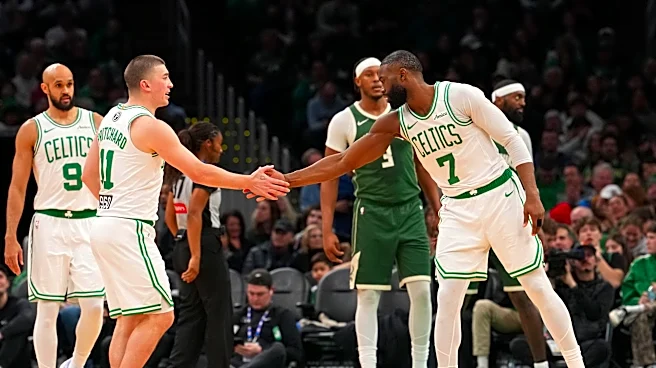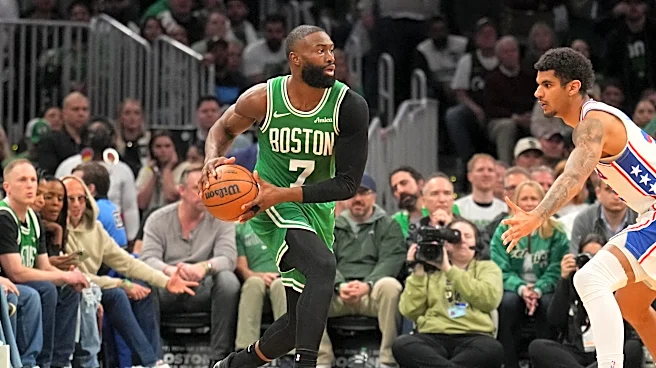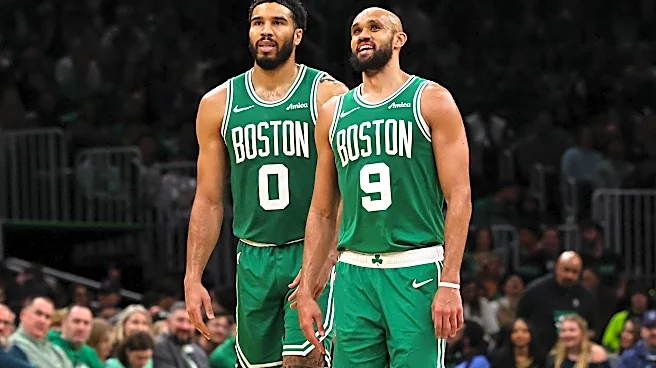



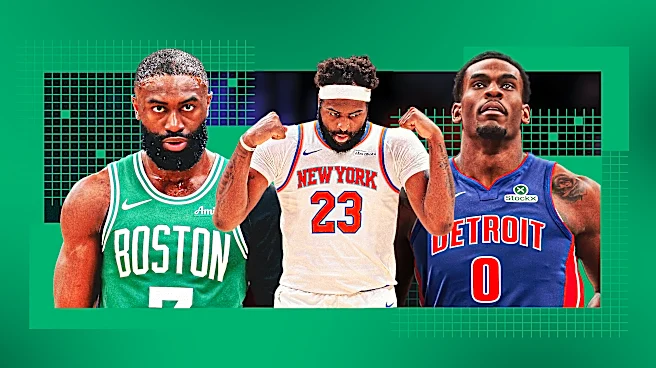
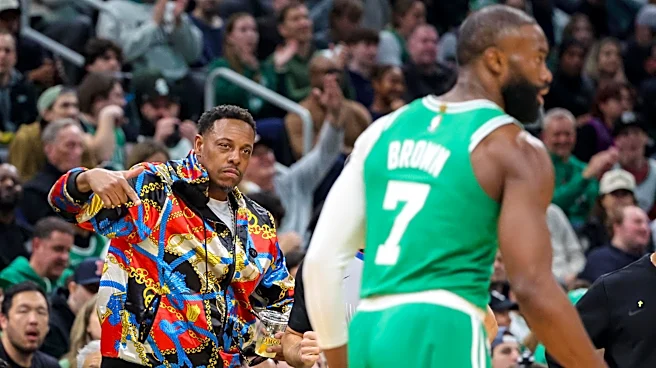


In the wake of a franchise-altering Jaylen Brown trade, Brad Stevens spent the majority of his press conference hammering home the idea of optionality as a key to their path forward. The team has choices without locking themselves into any direction.
It’s hard to remove the emotions from this trade, but leaning on one of Stevens’ other favorite sayings, we can start to see things from a 10,000-foot view. From a higher altitude, the vision for Boston next season becomes more appealing.
As currently
constructed, they have the makings of a great team, and most importantly, an elite defensive unit.
Last season, they fared well on that end with the 4th best defensive rating (111.7). They consistently found the right recipe to succeed, usually by dictating where other teams’ offense came from.
Looking at their opponents shot diet, just 20.8% of shots came at the rim, the best in the NBA by a decent margin. Similarly, they managed to push teams toward mid-range attempts. These factors contributed to them suppressing their opponents’ efficiency. They held teams to the third lowest true shooting percentage behind the Thunder and Spurs.
There was one hole in an otherwise strong defense.
The Celtics ranked 29th in opponent turnovers, and 29th in dTOV, which quantifies the amount of defensive net rating attributed to forcing opponent turnovers versus league average. Live-ball takeaways weren’t part of their formula, and their hands matched that, too. Boston ranked 6th lowest in deflections during the regular season, and the number cratered further in the playoffs, where they averaged the fewest in the league at 10 per game.
The absence of takeaways showed up on the other end of the floor as well. Boston had the fewest transition possessions per game in the league, and ranked 25th in points off turnovers. Without forcing live-ball mistakes, they miss out on chances for easy offense.
They still finished with the fourth-best defense in the league despite rarely forcing turnovers.
Of the three teams with better defensive ratings, the Pistons and Thunder ranked first and second in the league at generating turnovers. The Spurs ranked 28th, but made up for it with a 7’5 alien patrolling the paint.
Boston doesn’t have that kind of alien, so more disruption on the ball and in the passing lanes is the clearest lever to pull. That’s exactly what they added this offseason.
Paul George graded out at +1.0 dTOV last season, 93rd percentile among his position. He brought in 1.7 steals to go along with 4.1 deflections per game. He has extremely quick hands and reflexes allowing him to poke the ball free on drives or get a hand on a seemingly open pass.
Mitchell Robinson offers a similarly complementary defensive profile. His +0.3 dTOV ranks in the 85th percentile at center, backed by 1.2 blocks and 0.9 steals a game. He turns possessions over with a STOP% in the 90th percentile, which is a great boost for a team that didn’t have much defensive impact at center behind Queta.
They’ve added two core rotation pieces that historically grade out extremely well defensively, and fill some real gaps.
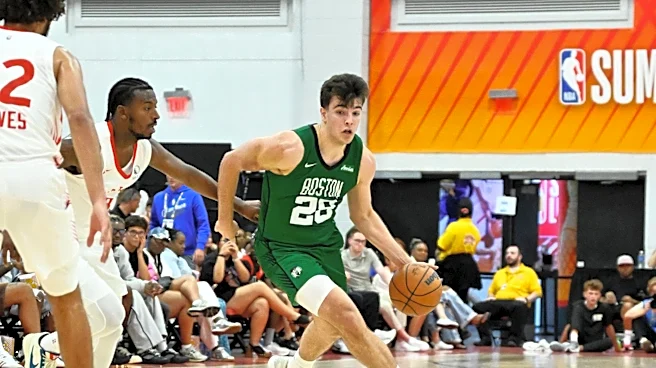
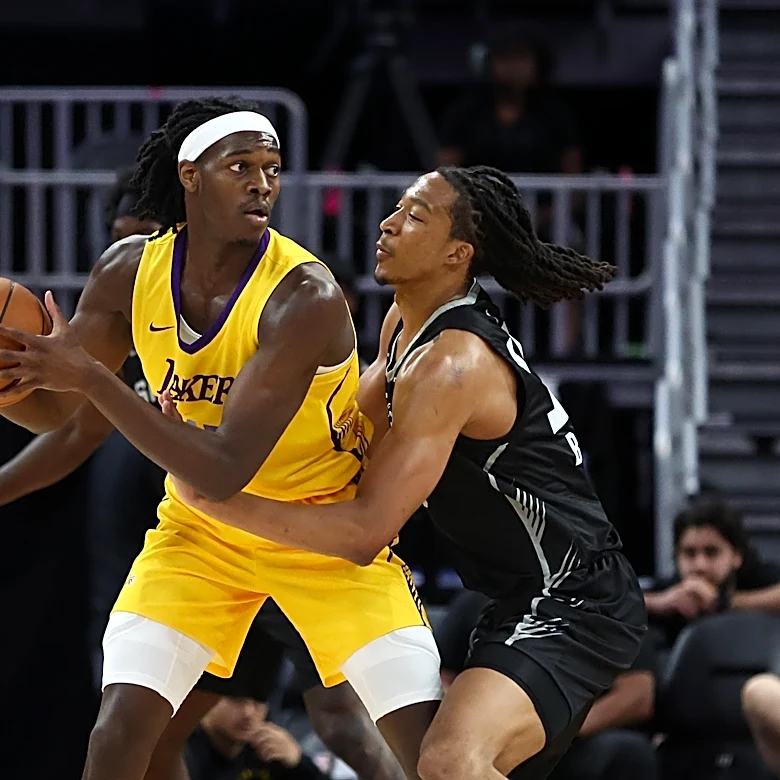
The draft additions are both signs of what the organization is valuing as well. Dillon Mitchell graded out in the 89th percentile in DBPM and 93rd in steal rate at St. John’s. Chris Cenac Jr. is a mobile big with a 7’5 wingspan and reason to believe he can be more impactful defensively than his Houston stats showed. A combined 9 stocks in their first Summer League appearance is a good introduction.
Put it all together, and Boston has the resources to supercharge their defensive identity.
They can let Hugo and Walsh hound ball handlers while White, Tatum, and George shrink the rest of the floor with their defensive playmaking and help instincts. Then there’s the combination of Queta and Robinson to send back shots at the rim.
For what it’s worth, the Celtics do a great job limiting opponent free throws. They’re tied for the third-fewest opponent free throw attempts allowed in the NBA at 21.2 per game. Being disciplined is a skill that they use to their advantage. But it can also be a sign of a less aggressive approach, reflected in their low forced turnover rates.
There are two ends of the spectrum. The Pistons force the most turnovers per game, but they also allow the most opponent free throws in the league. The Thunder rank second in forcing turnovers, while allowing the seventh-fewest opponent free throws. Boston has room to force more turnovers without completely losing their free throw rate advantage.
They would be wise to amp up the pressure and take a few more calculated risks in the passing and driving lanes. The additions of George, Robinson, Mitchell, and Cenac Jr. all point in that direction. As a team that already wins the possession battle on offense, they have an opportunity to widen that gap on the defensive end.
Mazzulla was blunt about the collapse against Philadelphia, calling the criticism his staff faced deserved. The self-reflection could lead to a few places, but the numbers and film point to one. The defense had a hole. They’ve acquired the right tools to tweak the formula and become a more well-rounded defense that’s difficult to break.