

“I think it says that he’s really, really tough.“
– Nebraska Head Coach Matt Rhule after I asked how it spoke to Anthony Colandrea’s toughness, given the cascade of injuries among the top teams in the Big 10 who’ve lost quarterbacks for the season or for significant amounts of time.
The Big 10 heads into the final week of the regular season in actual danger of being a single-bid conference for this season’s College Football Playoff after claiming the previous three titles with three different teams.
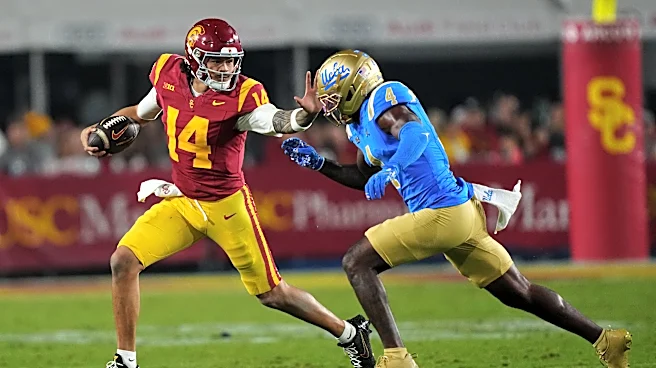
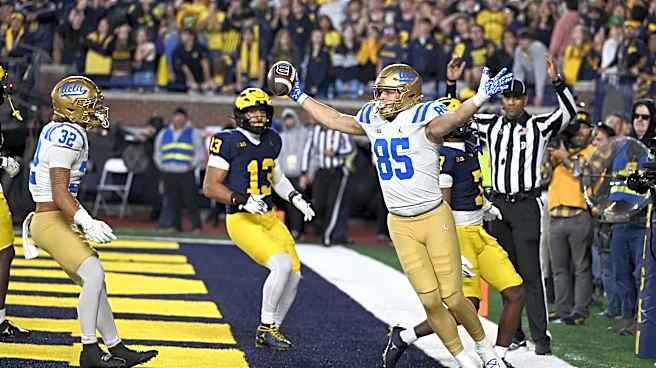
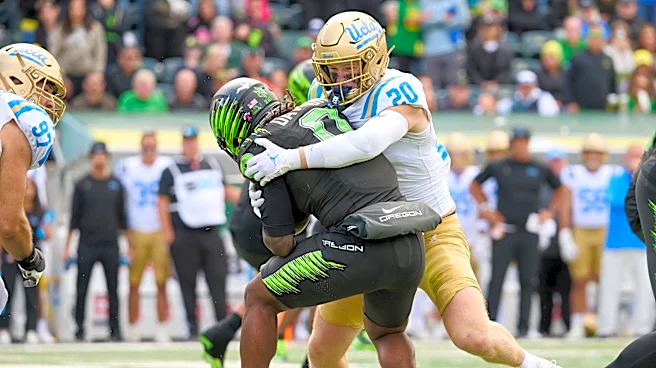
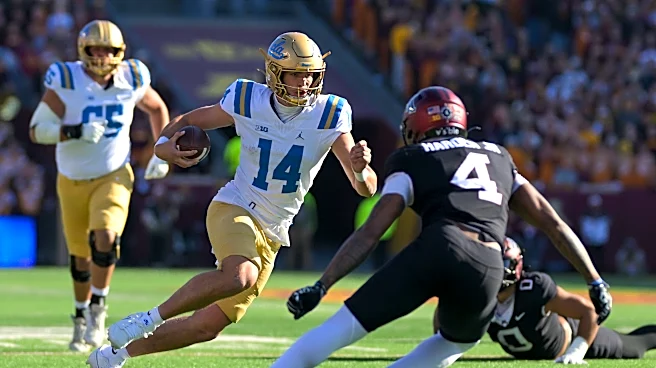
However, if the tournament began today using the current CFP rankings (allowing for one Group of Five team), the only Big 10 participant would be UCLA at #9 – where they plummeted after an 18-16 overtime loss to Michigan and their post-Connor Stalions special-needs offense. That took them from undefeated at #4 to straight on the bubble where a loss to USC might knock them out of both the Big 10 title game AND the CFP. And the loss of starting QB Nico Iamaleava for the season against Oregon and now possibly backup Ty Dieffenbach would not boost their at-large hopes.
A QB injury you say? For anyone wondering the reason for the Big 10’s drop this season, that’s probably the biggest reason. The following team’s field generals have been lost for at least significant time if not the season:
- #9 UCLA – Iamaleava
- #12 Oregon – Dante Moore
- #14 Indiana – Josh Hoover
- #21 Ohio State – Julian Sayin
- #24 Washington – Demond Williams

The SEC, by comparison, has kept most of its signal-callers healthy and boast the #’s 1, 3, 5 & 6 teams inside the CFP Top 11.
So what does all of that have to do with Colandrea?
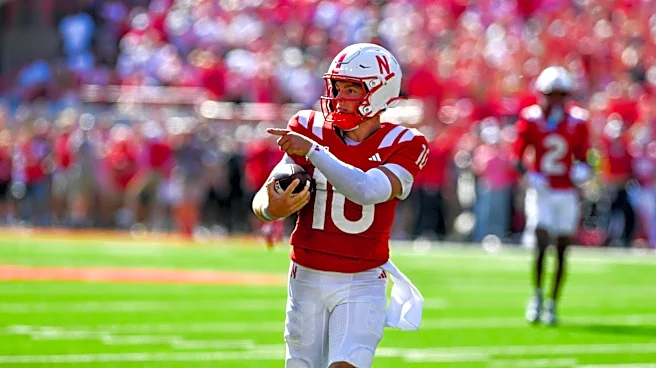
Well, for the first thing, he probably runs more than anyone on the above list…and he’s still standing. Put it this way – if Nebraska had held onto 4th quarter leads instead of taking aim at their toes, we’d be looking pretty good with a 10-1 record, a tie atop the Big 10 standings, and very likely pretty safe for a CFP bid with an upcoming game against Iowa which would mean much, much more.
As in, even if we lost, a 10-2 record with a healthy star QB would go much, much farther for staying that Top 11.
But enough of the coulda-beens. Let’s talk about where Nebraska and Colandrea are.
“Going back early on, some of the questions were about should he slide, and I was just kind of like, when you have a guy like that, you don’t want him to be Anthony Lite.” – Matt Rhule
One can understand this approach for a number of reasons. Dante Moore sort of embodied the fact that not much appears safe about sliding unless QB’s begin the slide far from any contact. Instead, the competitor in them tries to get those extra yards, and slide at the last possible second – which in turn leaves them both in reach of and most defenseless for a huge hit. Rolling and dropping may not hang the chin up there but also still leave quarterbacks open for a pounding.
Colandrea opts for a forward dive, a sprint out of bounds or just lowering the old shoulder and he’s usually pretty smart about who he runs into and who he dives away from. The out of bounds is pretty safe too, at least when Big 10 refs aren’t turning a blind eye to late hits, which they have on multiple occasions in 2026.

And, full disclosure, I absolutely asked Rhule a few weeks ago if he’d thought about encouraging more sliding. To his credit, he’s still giving basically the same answer.
“(When) I was growing up, they had Nintendo. They had these little codes: up, down, up, down, left, right, left, right. Like if you had the code, you wanted to use it. That’s his code, right? He just can run the ball, and he plays really fast, and he’s aggressive.”
“And so taming it as little (as possible) in terms of being smart with the football, obviously. I talked about the ball security this past week, how many interceptions he’s going to throw? But I think we’re 6th fewest turnovers in the nation right now, right? Only one in four road games. So I think that we’re putting the ball in his hands a lot. (And) I think it speaks a lot to what he’s doing.”
And though I believe in letting him be him, I admit to some PTSD from how the offense looked after Dylan Raiola went down last season in the Southern Cal game. While not lights out with Raiola, it sputtered at best after he was lost, except possibly in garbage time and against UCLA. But even in the latter game, their 28 points paled next to what other teams scored on UCLA in the Bruins’ last five games – and the Huskers failed to put up a point in the last 25+ minutes while hanging on to a 28-21 win.
I definitely have had a fear or two of an injured Colandrea taking the Huskers back to those blowouts.
But I also remember 2023 when Heinrich Haarberg appeared to be told to take it easy after absorbing hits in his first couple of starts. But anyone who played football knows going full speed is much less painful than slowing up and eating a defender’s full-speed hit and Haarberg appeared to take a worse beating by doing just that at times.
Maybe Rhule learned a little from that, maybe he didn’t.
What he does have on staff is a former coach from that era when quarterbacks ran, and ran often – at the very least more than Colandrea. And Ron Brown was there with the honest answers when Coach Rhule asked how they dealt with it in the 90’s:
“And then we have the benefit of having kind of Ron Brown in there, right? I think I asked him like last week, ‘Did you guys ever worry about how much you guys ran (the QB’s)?‘ and so on and so on. And he was like, ‘Coach, they were live in spring ball. (That’s) just the way we played.‘ Anthony’s not live, but I want him to play and run when it’s time to run.”
So when it comes to 2026 and probably beyond, his advice to Colandrea includes absolutely nothing about holding back:
“It’s like just go be you, man, play each play the way it comes out and be special and he did that on Saturday and he’s doing it on Friday.“
And why not, because so far Anthony Colandrea has proven he can do it and do it fast. And, most importantly, he has the lightning-quick instincts to do it smartly.
And keep getting up.