







Think back to last football season. Don’t worry, I’m not going to ask you to think about North Carolina’s season, which was somehow both unforgettable and very forgettable.
I’m more asking you to think about what happened in the ACC as a whole. As you might remember, a very weird conference season ended with a 10-2 an eventual national runner up Miami team missing out on the ACC Championship Game. That’s because, after 7-1 Virginia, there was a five-way tie for the second spot in the championship
game at 6-2. Somehow, 7-5 Duke emerged out of that tie, and then beat UVA to win the conference.
That mess caused a brief worry that the ACC would end up left out of last year’s College Football Playoff altogether. Virginia would’ve made it if they won, but their loss left it up to whether the selection committee was going to take Miami as an at-large or not. In the end, they did and the Hurricanes made it all the way to the championship game, but the conference was fairly close to missing out of the playoff entirely.
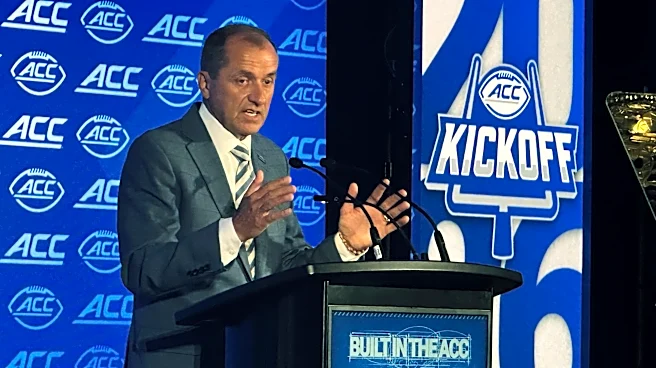
Now with the 2026 season a little over a month away, the conference has made some changes to their tiebreakers to try and avoid that situation again…sort of.
If you want to check out the full new rules yourself, you can try and make heads or tails of it here. That being said, the full document reads like this joke post from Jon Bois of the NFL’s overtime rules.
The reason for the conference needing to update the rules is that not all teams are playing the same number of ACC games this year. While the league is moving into a nine-game conference season and has an odd number of teams as of now, one team will always end up playing only eight games. However in 2026, the number of teams to do so is five due to several teams having already had two power five non-conference games on the books. UNC is one of said teams, as they’ll face TCU and Notre Dame.
For the teams that play fewer conference games, they need to finish with the same amount of wins or losses as the best nine-game team, ie 7-1 would get into the tiebreaker with an 8-1 team or a 7-2 one.
The first tiebreaker after that would be head-to-head, either in a single game between two teams, or the best record in head-to-head games in a tie of three or more teams. The biggest new change is that if there’s still a tie after that, it will be broken by whatever the “Team Success Ranking provided by SportSource Analytics” is. After that, you get into the “random draw” territory.
If your reaction to all that is this, I don’t blame you:

The good (?) news is that these tiebreakers won’t need to be used for UNC this year, as I can’t imagine they’ll be in the Championship Game race, but we shall see.