




Last summer felt surreal.
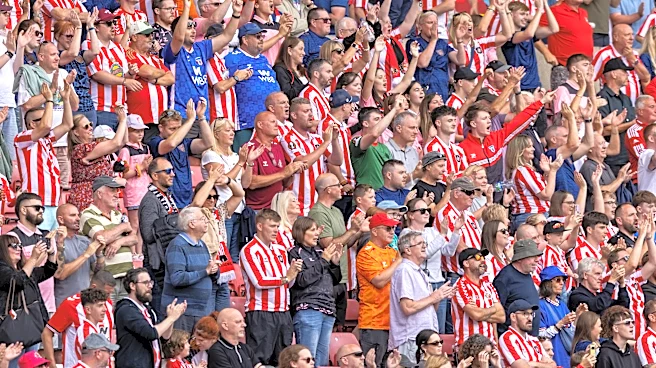
After years spent clawing our way back through the divisions, Sunderland supporters found themselves preparing for a Premier League season again. There was excitement, certainly, but also uncertainty. Nobody quite knew what to expect. Every new signing was scrutinised through the same lens. Could they cope? Could the club cope? More importantly, could Sunderland prove they belonged?
The mood feels different this time. The anticipation remains, but the nerves have softened.
Sunderland enter a second consecutive Premier League campaign not as newcomers trying to find their feet, but as a club looking to build on what they have already achieved. Last season answered certain questions. Sunderland belong. The challenge now is discovering how much further this team can go.
It feels like we have the blueprint.
Last summer, every signing felt like a question. Twelve months later, they are no longer names on a transfer shortlist. They are Sunderland players, and supporters already sing their names. Many of them have become answers. That feels significant.
For much of my life supporting Sunderland, progress meant recovery. Every successful season represented another step back towards where we felt the club belonged. Escaping League One. Returning to the Championship. Winning promotion. Re-establishing ourselves among the elite.
The objective was always clear because the destination never changed. Get back. This season is different because Sunderland have already arrived. Improvement is no longer measured by league status. It is measured by growth. Growth of the club. Growth of the squad. Growth of the players who have carried Sunderland to this point.
And perhaps that is where the excitement lies.
Take Chris Rigg. Last season felt like confirmation. Supporters already knew what he was capable of, but the Premier League provided the stage on which everyone else could see it too. There is something remarkable about the way conversations surrounding him have changed. Not because expectations have lowered, but because they have risen so naturally. We no longer discuss whether he is ready. We discuss how good he might become.
Régis Le Bris has already spoken about Rigg returning for pre-season a “different player”, and there have been signs of that on the pitch. The confidence seems greater. The influence seems greater.
Frighteningly, he is still only 19 years old.

Then there is Trai Hume, a footballer who seems to have spent much of his Sunderland career proving people wrong.
Every step up has been accompanied by questions. Could he handle the Championship? Could he cope in the Premier League? Each time, he has answered those doubts the same way, by making them disappear altogether. There was even a time when it was asked if he could handle League One, which now seems completely alien.
Hume has become one of those footballers supporters almost take for granted – the kind whose consistency means their quality is sometimes overlooked.
Yet there is a compelling argument that he still has another level to reach.
He’ll never lose those “Hume tackles” that present us all with the opportunity to bellow his surname, but he’s also capable of something more. Something greater. The kind of recognition that eventually forces the rest of the country to see what Sunderland supporters have known for years.

Chemsdine Talbi represents something slightly different.
Possibility.
Every exciting Sunderland side seems to possess players who make supporters lean forward in their seats the moment they receive possession. The players capable of turning routine moments into memorable ones. The players who make football feel unpredictable.
Talbi feels capable of becoming that player. The excitement is not built purely on potential.
While Sunderland supporters are still discovering exactly what he might become, Morocco have already trusted him on the international stage. Involved across five World Cup matches, including games against Brazil, the Netherlands and France, he arrives back on Wearside carrying impressive credentials.
His country knows he has it. We think we do. Now he can show us.
There is a freshness to him, a sense that supporters are still discovering exactly what he might become. The best summers are often fuelled by optimism, and few players embody optimism more than those whose ceiling remains unknown.

Every season needs a breakthrough story. This year’s might be Nilson Angulo. Each season produces a footballer who suddenly forces his way into the conversation. The breakthrough player. The one supporters spent months discussing before finally watching everything click into place. Could Angulo be that player? Perhaps.
The appeal lies in the uncertainty. Sunderland’s recent rise has been built on development. Identifying talent, nurturing it and giving players the environment to improve. Angulo feels like the next chapter in that story. Another, like Talbi, who entertained for his country, Ecuador, during the World Cup. A stunning goal against Germany offered a reminder of the qualities Sunderland supporters have only seen in flashes. Direct, fearless and impossible to ignore, it was the sort of performance that makes you wonder what might happen if everything aligns.
Maybe that’s why Angulo feels so compelling. He isn’t the finished article. Neither is Sunderland.

What about Habib Diarra? In many ways, his story differs from the others. Rigg, Hume, Talbi and Angulo all enter the season with momentum behind them. Diarra enters it with unfinished business. His Sunderland career could hardly have started more brightly. Arriving on Wearside carrying the weight of a significant transfer fee, he looked every bit the player supporters hoped he would be. Dynamic, confident and influential, he quickly became one of the most exciting aspects of Sunderland’s new-look side.
Then came the injury. Football has a habit of interrupting stories just as they appear to be gathering pace. The rhythm disappeared, the momentum faded and when Diarra returned, he never quite looked the same player who had illuminated those opening weeks. Yet the talent has never been in doubt.
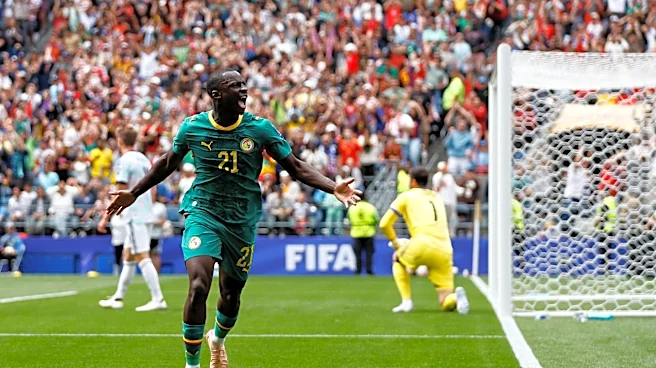
Like Talbi and Angulo, Diarra spent the summer reminding the wider football world of exactly what he is capable of. Two goals for Senegal in the World Cup underlined both his quality and his importance to his national side.
Perhaps that is what makes this season feel so captivating. We have already seen flashes of what Habib Diarra can become. We have already seen the performances that generated such excitement when he first arrived.
The challenge now is recapturing them. His is not a story of discovery. It is a story of redemption.

The anticipation surrounding Sunderland’s second Premier League season isn’t rooted in survival. It isn’t driven by fear of what might happen if things go wrong. It comes from curiosity. The curiosity of a fanbase beginning to wonder what happens if things go right.
Last summer, we wondered whether Sunderland belonged in the Premier League. A year later, they have given us our highest league finish in over twenty years and the prospect of European football.
They’re better questions now. This summer, we wonder how influential Chris Rigg can become. We wonder whether Trai Hume has another level to reach. We wonder what Talbi might develop into. We wonder whether Angulo is ready for his breakthrough. We wonder if Diarra can return to the spotlight. They’re better questions.
Not because they guarantee success, but because they reveal how much has changed.
For years, Sunderland supporters spent their time looking backwards, measuring progress against what had been lost. Now, for perhaps the first time in a generation, Sunderland are looking ahead.
And that might be the most exciting development of all.