


When it’s time, it’s time.
Through all the playoff heartbreak and frustration over the last 10 years, it felt like one year would be the one they got hot. At the same time, it felt like they might never get there.
Year in, year out, playoff atmosphere was at the forefront of every playoff conversation. From early start times during the week to crowd pops that put the punctuation on another great regular season followed by a poor postseason performance.
When it comes to postseason play, no matter the
sport, the expectation is for the stadium to be sold out. Loud and rambunctious fans make it difficult for teams to perform at their expected level. Crowds who are loud, involved, and have chants give their home team an extra advantage. In 2019, the Washington Nationals crowd sought their first World Series Championship, and what gave them that juice began with former Brewer Gerardo Parra’s “Baby Shark” walk-up song. In 2023, Philadelphia Phillies Bryson Stott had the crowd rocking with Tai Verdes song “A-O-K” as his walk-up song, fueling one of the best postseason crowd pops when he hit a grand slam against the Miami Marlins.
With friendly walk-up songs, then comes the West Coast sound. The oversaturation of bass in San Diego and the ear-blasting organ in Los Angeles. While the organ at Dodger Stadium can be considered traditional, it’s entangled with fandom PTSD each time the Brewers take on the Dodgers in the postseason. For every game that they found themselves in a hole they couldn’t quite dig themselves out of, there was that organ again, at the forefront of the most expensive team in baseball.
For years, criticism of Brewers fans not filling American Family Field roamed the social media streets. Frustration with start times and ticket prices backed the complaints. American Family Field has a seating capacity of 41,900, and in 2024, Brewers fans never hit the sellout mark. Same goes for the 2021 and 2023 seasons. Between four playoff games that were held in Milwaukee, only one hit the sellout mark, in Game 2 of the NLDS against the Atlanta Braves in 2021.
This year, things felt different, so much so that it was felt by the players. “There’s nothing that can prepare you for the playoffs,” Cooper Pratt mentioned in an interview with the podcast Baseball is Dead. “Because Game 1 against San Diego, I was like, oh my gosh. My heart was pounding through my chest. I look up, everyone’s got their towels, they’re doing the anthem, and they’re shooting the cameras on the jumbotron, and there was an eagle.”
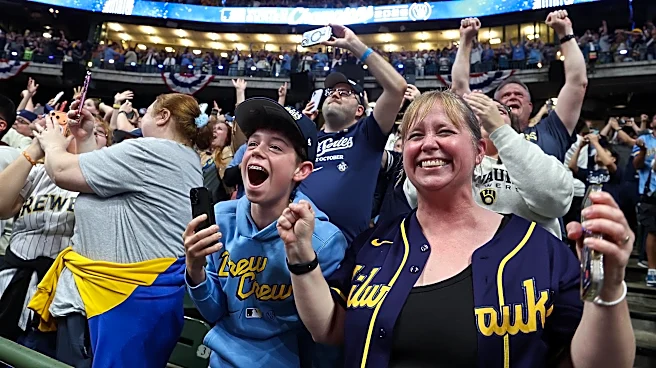
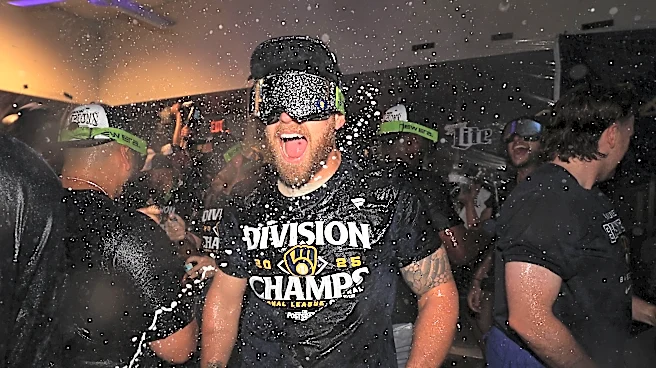
Even though the Brewers have statistically had home-field advantage over the last few years, it has never felt like it. For once, the Brewers truly had home-field advantage, in Milwaukee and, perhaps shockingly, on the road in St. Petersburg. We’ve seen it at various times throughout the regular season, but never during big moments quite like what we saw beginning in the first couple of games against the Padres. The first of many came during Game 2 of the NLDS against the Padres in the bottom of the ninth inning, when Jackson Chourio walked it off. A moment that has felt impossible in the past became possible, and it began the snowball effect of epic crowd moments for the Brewers.
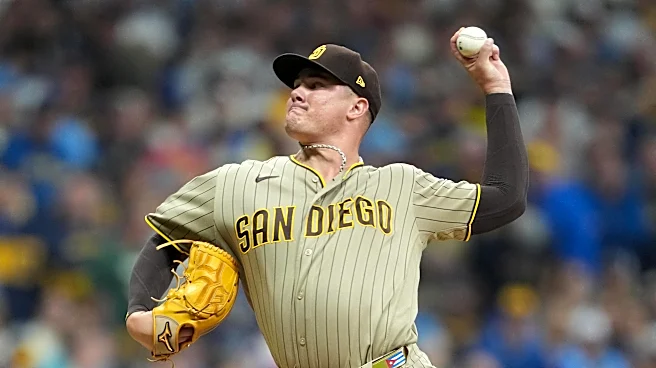
Of course, right after the walk-off hit came the San Diego crowd. Objectively, one of the toughest environments to play in, no matter the year. “When we went to San Diego, it was so loud,” Pratt said. “They’d throw a strike, and everyone’s screaming.”
While maybe as a couch spectator we won’t understand the full feeling of being screamed out, we’ll understand the overpowering bass through the radio airwaves. Then came the games at Dodger Stadium, one of the largest baseball stadiums in the world with a capacity of 56,000. While the late-night games back in the Midwest were around the same time as Californians getting off work, the Dodgers fell short of a sellout by at least 6,000 in both NLCS games. For a team that was coming off of back-to-back championships, it came as a shock to most.
“It was just a little different in L.A., not that they weren’t loud, because when it got loud, it got loud,” Pratt said. “It just didn’t feel like San Diego or Tampa Bay, and Tampa Bay was half Brewers fans.”
While maybe the Brewers fans didn’t have a player’s walk-up song to sing to, fans had the willingness to go to the other side of the country to witness history and make the World Series road games feel more like home games. With half of the stadium in St. Petersburg wearing the ball and glove, it became the defining moment for Brewers fans and the city’s first World Series since 1957.