
Sometimes when we go over numbers things get missed. In this case, there were a few arms that got left out of the conversation and I would be remiss if I didn’t at least address them as camp is coming to a close. Some of the names are names you are familiar with, but they exist on the periphery of the conversation. Our numbers can help explain why that is.
There is one that came up late last season and actually looked pretty good. A third name is from one of the many non-roster invitees that has had
major league time. As we do with most of the arms, we look at both major and minor league numbers when it suits us. There is a general rule in data analysis and that general rule is that we go with more data whenever possible. Nothing kills analysis quite like small sample sizes. All three of these arms have spent more time in the minors than at the big league level. As usual, before we get started let me remind everyone about our norms for the numbers we are using.
- Chase rate: This is the percentage of balls a player swings at outside of the zone. The league average normally lives around 30 percent, but we will be looking at three year intervals and we should notice trends more than where a player is in relationship to the league average.
- Hard hit percentage: This is simply the percentage of balls that a player hits hard. Hard hit balls become hits and extra base hits more often than softer contact. Typically 35 percent is around the league average in this category.
- BABIP: This is batting average on balls in play. Home runs are obviously excluded since they are not in play. The league average tends to hover around .300 but it will largely depend on hard hit percentages and breakdowns between groundballs, flyballs, and line drives.
- Contact percentage: This is the percentage of swings that turn into contact. Typically 75 percent is around league average.
- HR/FB percentage: This is the percentage of flyballs that result in home runs. Ten percent is typically around the league average.
- LOB%: It is pretty self-explanatory. It is the number of runners that get stranded on base. The league average tends to be around 70 percent. Of course, there is some debate as to whether pitchers control that or not.
J.P. France
It should be noted that 2023 and 2024 came at the big league level where 2025 came at AAA. That can help explain the dip in contact and hard hit rate. Otherwise, France is pretty average and maybe even below average when it comes to contact rates. 2023 was a magical year for him when everything came together. He had a higher than normal left on base percentage and lower than normal BABIP.
I suppose that luck could return in limited exposure. If you pitch him exclusively in the pen and don’t let the order turn around on him then you could coax above average results out of him. In all likelihood, he will be penciled into Sugar Land’s rotation and provide decent quality depth when and if some of the ML starters go to the injury list.
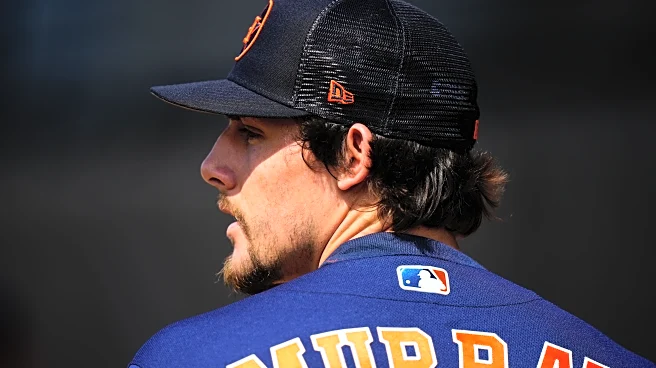
Jayden Murray
Let’s start with the good news. Murray is better than the AAA numbers he put up in 2023 and 2025. He pitched only three innings in 2024, so we did not include those numbers here. Ultimately, he has the look of an average AAA pitcher. Like most average pitchers, he is capable of short bursts of solid production and that happened late in the season in Houston. He had 11.2 innings and pitched to a 1.54 ERA. That came with a .3.78 xERA and 4.52 xFIP.
Those numbers are obviously much more in line with who he is. He is like most middle relievers pitching in the big leagues. There are going to be years when the ball bounces their way and they put up very good numbers. There are going to be years where it doesn’t. The Astros’ strategy seems to be to collect as many of those guys as possible with the hope of finding three or four guys (to go along with their two or three high leveraged relievers) to cobble together a solid pen.
Christian Roa
This is one of those calculated gambles that teams sometimes take. Roa seemed to find something last season. His chase rate went up and contact rates went down. His left on base percentage, BABI, and home run rate also improved dramatically. It could be fool’s gold and that is the risk. However, consider that Roa was brought in on a minor league contract. What’s the worst that can happen?
He has a 1.29 ERA in seven innings with seven strikeouts. So, maybe what he found last season has stuck with him. If we look at just the 2025 numbers we see that he is around the league average in contact rate, home run rate, and reasonably close in chase rate. He is just another guy that could potentially work out with good batted ball luck. The Astros have at least a half dozen of those guys and the expectation is that their pitching lab along with good batted ball luck could coax good performances out of half of them. Will Roa be one of those guys?