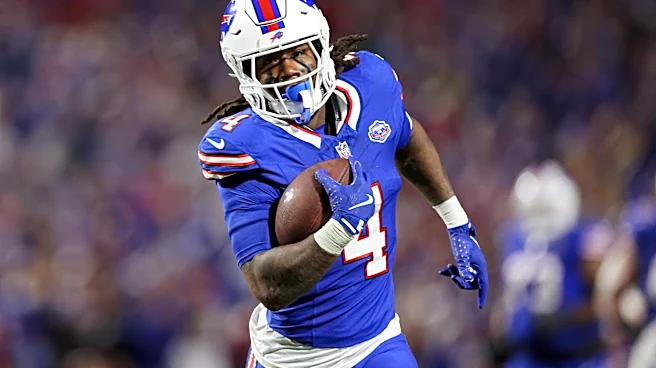





When the Buffalo Bills signed James Cook to a four-year, $46 million extension before the 2025 season, there was no shortage of criticism.
“Never pay running backs.”
That familiar sentiment echoed throughout Bills Mafia, with many questioning whether Buffalo should commit $11.5 million AAV per year to a position long considered disposable. The majority didn’t care that the contract came in way under what most “experts” had predicted.
Fast forward one year, and that narrative looks increasingly outdated.
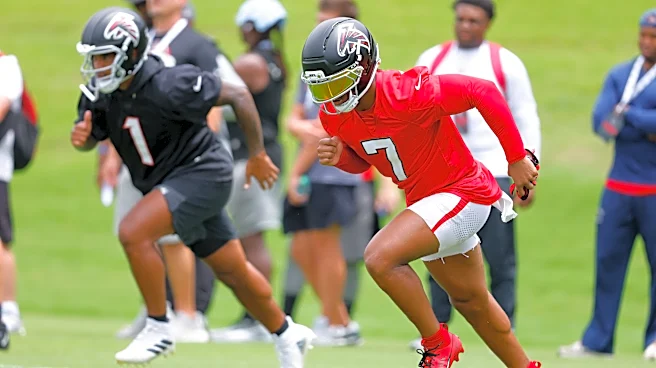
The Atlanta Falcons just reset the running back market by signing Bijan Robinson to a three-year extension worth up to $75 million. While incentives can push the deal to $25 million AAV annually, the base value sits at $66.75 million, an average of $22.25 million per season, now ranking him first amongst NFL running backs now over Saquon Barkley’s $20.6 million AAV per year.
The market has moved…and it has moved quickly.
James Cook and Kyren Williams signed extensions one year earlier that averaged less than $12 million annually. At the time, Cook’s deal placed him comfortably among the league’s highest-paid backs. Today, he ranks just 12th in average annual value, and that number is expected to fall again once Detroit’s Jahmyr Gibbs signs what will almost certainly be another market-setting extension.
The fascinating part is that Cook’s production stacks up with almost anyone in football.
He has rushed for more than 1,000 yards in three consecutive seasons. In 2025, he led the NFL with 1,621 rushing yards while finishing just shy of 2,000 yards from scrimmage. He’s also scored double-digit touchdowns in back-to-back seasons, including leading the NFL in rushing touchdowns during the 2024 campaign. That’s elite production.
Could anyone honestly name 12 or 13 running backs they would rather have than Cook today?
Probably not.
That’s what makes the criticism of his extension feel misplaced. The Bills didn’t overpay Cook. They paid him before the market exploded.
General manager Brandon Beane recognized where elite running back contracts were headed and locked in one of the league’s most productive offensive players at what is now beginning to look like an absolute bargain. An $11.5 million average annual salary seemed significant in 2025. Twelve months later, it represents barely half of what Robinson will earn and sits closer to the middle tier of starting running back contracts than the top.
The “don’t pay running backs” philosophy still exists across parts of the NFL, but the league has also shown a willingness to reward truly elite, versatile backs who can change games as runners and receivers.
Cook belongs in that conversation.
As the salary cap continues to climb and stars like Gibbs inevitably sign larger deals, Cook’s contract should only become even more team friendly.
Sometimes the best contracts aren’t the ones that look cheap on the day they’re signed. They’re the ones that look like steals a year later.