






The Portland Trail Blazers have pulled off a big move, trading for Memphis Grizzlies guard Ja Morant. The news broke earlier today creating a justifiable flood of reaction. Opinions on the deal are mixed, with viewpoints ranging through a number of different topics.
Let’s take a look at the various angles on this trade as you make up your mind about it.
The Good
Cost
One of the best features of the deal is the price for Portland.
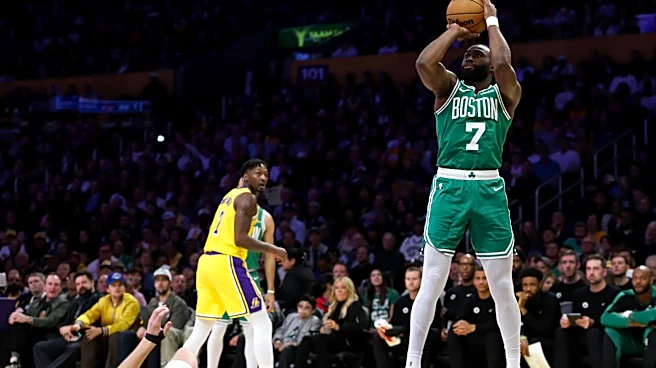
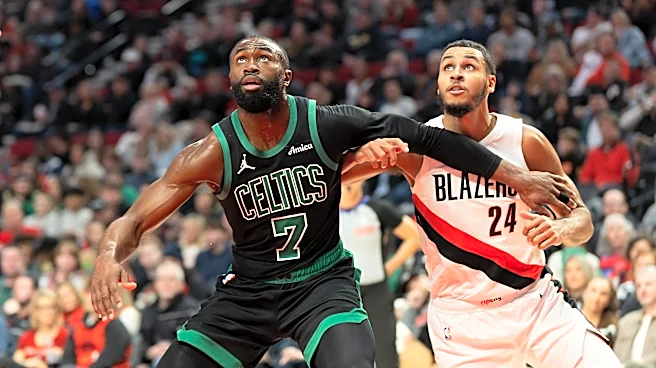
The Blazers gave up 31-year-old Jerami Grant, a former Olympian starting to wane
in effectiveness. Grant played 57 games for the Blazers last season, shooting a quite-respectable 45.3% from the field, 38.9% from the three-point arc on his way to 18.6 points per game. This was a bounce-back year after a frankly horrible 2024-25 campaign. But Grant was not a rebounder. His once-high energy level on defense had flagged. He was no longer equipped to be Option 1 or 1A, his accustomed spots in the offense. Three-point shooting was his main asset, but it was an increasingly isolated one. The last two years, Grant had been speculated to have negative value on the trade market due to his combination of down-sliding production and increasing salary.
Along with Grant, Portland sent young forward Kris Murray. Having just completed his third season in the NBA, Murray boasted lithe athleticism, unselfishness, and a fair amount of role-playing hustle. But he was not an offensive player at all, at times seeming to run from the ball. His defense and all-around play weren’t enough to make up for that deficit.
Neither Grant nor Murray figured significantly into Portland’s future. They may not factor into Memphis’ either. Which is why you’d expect to hear a list of future draft picks follow their names in this trade.
Except there are none. The Grizzlies gave up Morant for a glorified version of an expiring contract–which runs exactly as long as Morant’s does–and a prospect that isn’t prospecting that well. When you consider Morant’s talent, past production, age, and potential, this deal looks lopsided in Portland’s favor.
The move doesn’t cost Portland that much cap space either. Morant makes an average of $43 million for two years. Grant has two years left on his contract at an average of $35 million, plus Murray’s $5 million this season. Crunch the numbers and this deal cost the Blazers $3 million of cap room this year, about $8.4 million next assuming they would have released Murray. Often the team that gets the better end of the talent exchange also gets hosed financially. That didn’t happen to Portland.
Age
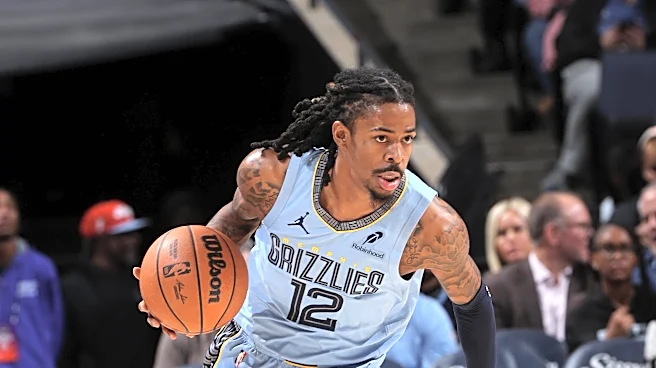
Ja Morant is only 26 years old. It’s easy to forget that because it seems like he’s been in the league forever. He’s almost exactly one year older than Murray, about a year and a half older than Deni Avdija. He fits right into Portland’s timeline, right alongside their prime players.
Talent and Athleticism
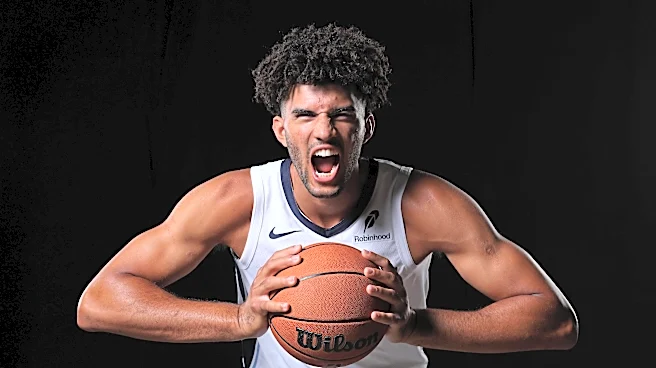
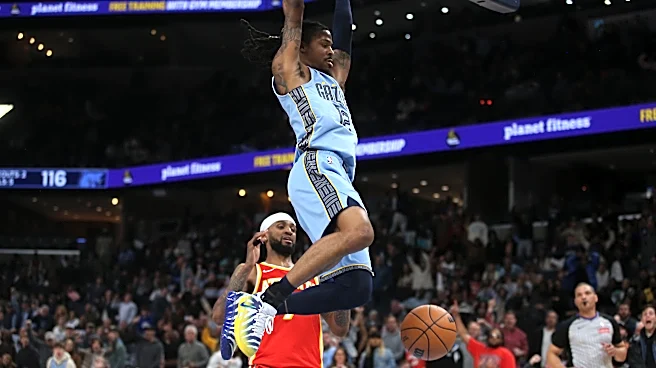
Talent and athleticism are the two main reasons people like Morant. He’s a two-time All-Star. He made the All-NBA Second Team in 2022. He’s averaged over 25 points per game three times. His dunks are spectacular. Three or four years ago, he was considered one of the brightest young lights in the league. The Blazers got their Jaylen-Brown-like player, just a while past his “best by” date. They’re hoping there’s plenty of life left in his legs and career. If so, they just got themselves a steal of epic proportions: a first option, thunderous rim-rattling, franchise-changing point guard. Morant has the potential to be everything Scoot Henderson and Shaedon Sharpe were supposed to be, wrapped together in one player.
The Bad
Slump
The Ja Morant the Blazers are getting is not the Ja Morant in the paragraph above. His last two seasons–the second barely categorizable as a season–have featured fairly significant declines in production.
In 2024-25, Morant averaged 23.2 points on 45.4% shooting, 30.9% from the arc over 50 appearances. That was a mild, though markable, drop from his peak production.
In 2025-26, Morant averaged just 19.5 points over 20 appearances, shooting 41.0% from the floor and 23.5% from three-point range. Those numbers fell off a cliff.
Morant was never known as an efficient scorer, even in his most productive years. His production last year dropped from “inefficient” to “downright bad”. The Blazers need him to experience a resurrection soon, else this experiment will begin to wear.
Three-Point Shooting
Three-point shooting was the one aspect of the game the Blazers needed to improve this summer above all others. Morant is a career .311 shooter from distance. He’s shot above 33% only twice in his seven seasons. He’s never averaged 35% shooting beyond the arc.
If inserted into Portland’s roster last year, career-average Morant would have been the 9th-best three-point shooter on the team. (That’s if he shot his career average instead of the abysmal number he actually put up last season.) That’s not improvement. That’s dragging down an already-low team average.
Defense
Of all the words written about Morant since he entered the league, approximately zero have been spent praising his defense. He’ll register decent games sometimes. He’s had a spectacular block or two during his career. But he’s not known as a defender. This is an issue in itself for a team that prides itself on defense.
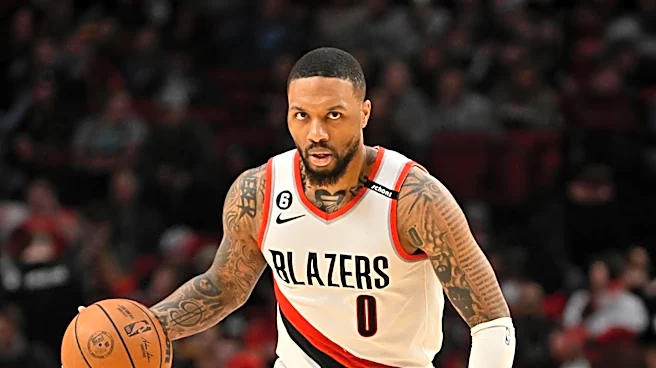
A bigger problem arises when you consider the return of Damian Lillard, another 6’2, offense-heavy, defensively-questionable guard. Either Lillard or Morant might leave a hole in Portland’s defense singly. Playing both of them together would make the frontcourt work extra hard just to keep a semblance of containment. They’re likely to become a sieve that no amount of scoring can compensate for.
The Blazers have been here before with Lillard and former backcourt mate CJ McCollum. That didn’t work when Dame was in his prime. There’s little to suggest it’ll lead them to higher heights with an aging Lillard and Morant teamed together.
Rotation and Risk
Pushing farther, it’s an open question whether, and how, Lillard and Morant can start together. Neither one would be apt to take a bench role after starring in the league their entire careers. But even if they do manage to work that out, what happens to the people around and behind them?
The Blazers were already three-deep at point guard with Lillard, Jrue Holiday, and Scoot Henderson. Now it’s four. Shaedon Sharpe should be developing at off guard. Morant will eat into his minutes and touches too.
It’s overwhelmingly likely that the Blazers will trade Holiday now. Fair enough. But the optics and interpersonal impact of swapping out one of the best veteran teammates in the universe for Morant threatens to reach whiplash level.
That’s not all. Henderson and Sharpe getting nerfed would scuttle at least 50% of Portland’s rebuilding blueprint up to this point. Everyone involved will be much more comfortable if at least one gets traded, if not both. If not, they’ll probably languish through their early-prime years, hoping to get a shot at playing instead of learning to carry the team on their own backs.
Considering the potential effects on Lillard, Holiday, Sharpe, and Henderson, the Blazers are putting a lot of eggs in the basket of a mercurial, slumping, and emotionally-questionable 26-year-old who just got sold for peanuts, spent most of last season in street clothes, and has only two years remaining on his contract in any case.
Role
Even if all that works out, what does Portland’s approach look like, real-time?
You’ve got Damian Lillard, the shooter, coming back from extended injury rehab. You have Ja Morant, the volume scorer, trying to work his way out of the doghouse and back into stardom. Then you have Deni Avdija, coming off of an All-Star season, accustomed to captaining the team and carrying the offense.
All three players can lead a team. All three players are capable of being the focal point of the offense. All three work best with the ball in their hand.
Only one, Lillard, seems to have a hope of shining while playing off-ball.
Only one, Lillard, can shoot from deep.
Only one, Avdija, can defend well.
Ideally you want three-of-three in all these categories. One of three doesn’t bode well. And none of those “ones” are Ja Morant, the player they actually traded for.
A couple of serious questions confront Portland now.
How will they work out the roles, responsibilities, and positioning for the three stars when each has a legitimate argument that the game should center around him and none of them have a track record of being special when it doesn’t?
Also, why wouldn’t opposing defenses keep a man on Lillard, then pack down in the lane against Avdija, Morant, and the non-shooters on Portland’s roster, daring the Blazers to beat them from outside just as they dared them to do this year? What did the Blazers accomplish here besides replacing Scoot Henderson with a more explosive scorer, but also one who can’t stretch the floor nearly as well?
These issues make Morant an odd fit, not just with younger teammates he might be supplanting, but literally with the established coworkers that have been team stalwarts in seasons past.
For this reason, despite indications that this is the “big deal” for Portland this summer, I wouldn’t be surprised to see more trades come down the pike in its wake. The roster just doesn’t work well as-is.
The Ugly
Most NBA fans know that Morant’s decline has been accompanied by suspensions from the league for making “gun gestures” on Instagram, repeating those offenses on the court with opposing players, and carrying openly in real life. He’s been described as a young superstar who doesn’t understand the responsibility of his position, perhaps listens to the wrong people, and has lost his way.
Lesser-known, but perhaps more important from Portland’s perspective, has been Morant’s ongoing struggles with his own team. In 2025 he claimed to be avoiding dunking to reduce his exposure to injury. His frustration with his personal role was said to be a factor in Memphis firing otherwise-successful coach Taylor Jenkins in 2025. Then last season, before Morant went down for the year, he was suspended by the Grizzlies for conduct detrimental to the team as a result of disagreements with Jenkins’ successor, Tuomas Iisalo. Nor did Morant’s conduct with teammates receive rave reviews.
This is the situation from which the Blazers are “rescuing” Morant. It remains to be seen if the troubles were all environmental or whether Morant, in fact, brings some of them with him.
We do know this. Portland just hired their own head coach, Micah Nori. He was not a week on the job when the Morant trade went down. We also know that Nori is brand new to the organization, a first-time head coach, and is serving on an incentive-laden, yearly-reviewed contract that gives him no security if something goes wrong, thus little platform from which to assert or maintain authority.
Much has been made of Nori’s contract situation. Rumblings of possible unintended effects were already shaking the ground in Portland before today. Morant’s arrival has the potential to turn those into full-on fault lines.
This is easy to demonstrate. We’ll take names out of it, because we’re not talking about individual personalities here, but systemic forces. In other words, we’re not painting a picture where any of the parties involved is right or wrong, good or bad. We’re just assuming each is doing the best they can from their point of view given the circumstances.
Coach A has two star veterans, Players B and C, on his team. Both are accustomed to starting, for good reason. Their talent and history merit it. Both are looking to resurrect their careers. Both see themselves as key players in the team’s success.
The season starts. Players B and C do well enough, but the team isn’t succeeding as much as planned. There’s too much overlap of skills and role, too little defense, and it’s just not clicking 100%. Coach A knows that it would be better for the team if one or the other stepped back. In reality, the coach would like to try some of the younger players behind the two stars, implementing a different rotation and style. But a demotion would be a serious infringement on the reputation and career of either player. Neither has a personal self-interest in doing so.
Several complicating factors present themselves:
- The coach is in his first head coaching position. He doesn’t have a track record with these players or overall. He has to earn respect. He won’t be granted it automatically.
- It’s likely that either star would consider an extended demotion as the coach not knowing how to use players effectively. Either would be fine for a short while, but unless the team succeeds wildly (and immediately) after the move, the player being demoted is going to link continued losing with his demotion. It’ll be impossible for the coach to counter that notion and hard to walk such a move back.
- Either star could whisper half a word among teammates and influence the locker room unduly. Having an unhappy star would make the season, if not the coach’s tenure, much more difficult. The elephant in the room would be a huge distraction. The team is not likely to win more if one of these stars is fuming.
- Both stars have been in locker rooms where coaches have been fired in recent years. In this case we don’t even have to assume ill-will on their part, trying to get the coach dismissed. A semi-negative sentence from the star player(s) at the end-of-year review could be enough justification to do it, especially if the team isn’t winning gangbusters anyway.
- This isn’t going to be confined to the locker room either. Benching a star is an obvious move. The coach is going to be asked about it 62 times on the day it becomes public, then in every postgame press conference after if the team loses. Both the General Manager and the Owner will hear the questions (and the implied criticism/complaints).
- The usual remedy in this situation is, “Make the right decision according to your coaching acumen. You might outlast the players you’re slighting anyway. If it doesn’t work and you get fired, at least you have your guaranteed contract to fall back on. You go out on the shield of your conviction and you’re still financially whole.” Except in this case, Coach A’s contract is at the team’s pleasure, reviewable every season, with no (known) guarantee of payment if he gets dismissed. Let’s say the contract runs $3 million per year. That means this decision could cost the coach $6 million real money. Even if it might be better for the team, is making that decision really worth that risk? It’s not like you’ll win a title either way, probably.
- Side Note: Some people have talked about the yearly-review contract and said, “As long as it’s worth enough money, what does it matter?” Making the contract more valuable doesn’t change this situation a bit, except in one, particular way. Now instead of costing the coach a potential $6 million in non-guaranteed salary, making an unpopular move could cost him a potential $20 million. That makes the fear and conflict of interest worse, not better. It also gives the players far more leverage in these locker-room negotiations, the coach even less presumed power.
It’s completely clear here that the more complexity and volatility you introduce into the situation, the more problematic and difficult this particular coaching setup becomes. And guess what? The Blazers have just multiplied the complexity of their roster exponentially while inserting one of the more volatile elements in the league. Doing so, they have created the potential for a toxic stew that even the most well-meaning of participants might find unpalatable.
Colloquially, this is the equivalent of saying, “Welcome to the neighborhood, Micah Nori! Here is a flaming bag of dog poo! Don’t forget the HOA will be along shortly to evaluate your cleanliness as a homeowner. Have fun!”
There are no implications about Coach Nori here, his qualifications, or his ability. Nor are we calling Ja Morant a bag of dog poo. The situation is. The Blazers might have been OK hiring a first-time head coach. They might have been OK breaking conventions with his coaching contract. They might have been OK trading for Morant. Doing all of the above, right on top of each other? That’s a lot.
Conclusion
This is certainly an exciting trade. You can say that for it. Morant’s potential is tantalizing. But just about everything else about this move is problematic.
It may all work out just fine: in the locker room, on the court, in the win column. But oh boy, the potential for it to not work out is considerable, the opportunities for sliding into the ditch legion.
This team has a whole slew of questions to answer before the way is clear to winning. Usually when you make something hard to do, people have a hard time doing it. Winning in the NBA is already difficult. When you stack up everything we just talked about, I’m willing to bet that the energy poured into solving roster (and coaching) riddles is going to put the Blazers at a competitive disadvantage next to teams that are more settled and better-structured.
The challenge for Morant and the Blazers is to prove that his talent is enough to overcome that disadvantage. If they get peak Morant, he gets along with everyone, and the rest of the roster fits together around him, that’ll be true. If any of those things don’t happen, this may go down as a big swing that didn’t have the home run effect that its designers were hoping.