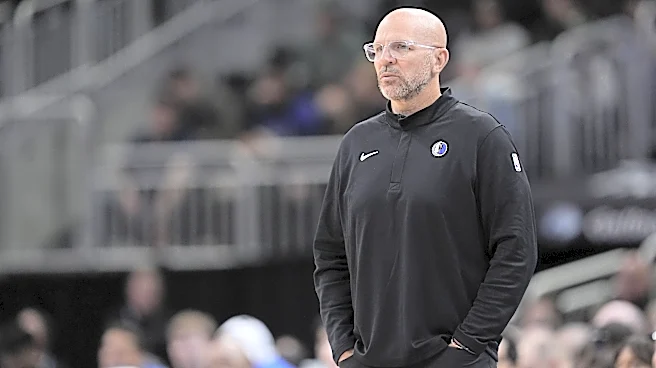

Jason Kidd is correct about some things.
The Dallas Mavericks do need to move on. The team’s record should be higher than 24-53 after falling to the Magic on Friday night. They have played in 42 clutch games (16-26) this season, and to the credit of veterans like Daniel Gafford, PJ Washington, Naji Marshall, and Klay Thompson, this roster refuses to roll over. These are professionals who understand that tape lives forever and that pride matters even when star power has been stripped away. Max Christie
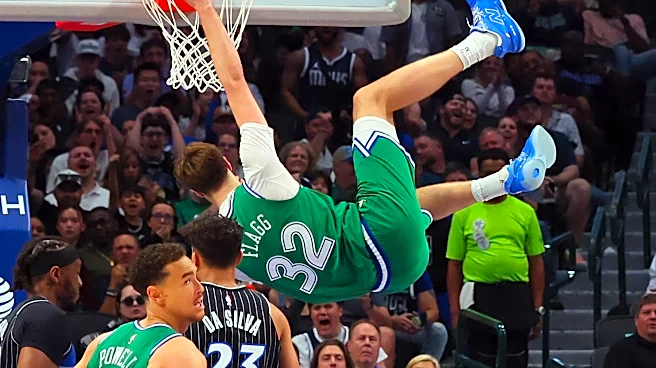
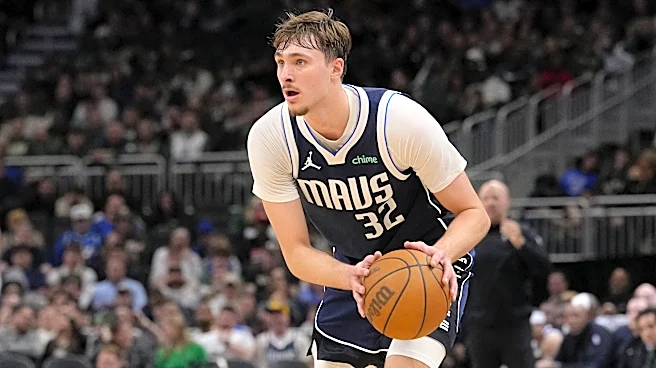
has started most of the season at shooting guard. Brandon Williams and Ryan Nembhard have split point guard duties. Cooper Flagg missed several games due to a foot injury. Kyrie Irving hasn’t played all season, and Dereck Lively II was only able to make a cameo appearance. This team has every excuse to tank comfortably, and yet they keep making games closer than lottery-bound teams should.
Kidd deserves credit for that. Getting role players to compete when the playoffs are a mathematical impossibility is a real skill. The locker room hasn’t fractured. The effort hasn’t evaporated, and that matters. But here’s where Kidd’s plea to “move forward” becomes more complicated: he’s right that the franchise needs to move on. The question is whether “forward” includes him.
Because the same man asking Mavericks fans to move past the franchise’s tumult just spent a carefully orchestrated media availability trying to scrub radioactive material off his own reputation — and the gaps in what he said are wider than what he actually admitted.
A history of honest evaluation
I’ve written about Kidd several times during his run as head coach in Dallas, and each time the evidence moved, my position moved with it.
In February 2023, I called for Kidd to be fired. The Mavericks had coughed up a 27-point lead to the Los Angeles Lakers, and when asked why he didn’t call a timeout, Kidd told reporters: “I’m not the savior here. I’m watching. I’m not playing, I’m watching just like you guys.” It was passive-aggressive deflection. An offseason that saw Jalen Brunson leave for nothing and JaVale McGee sign to be the starting center portended the disastrous regular season that unfolded. I wrote that we had crossed the Rubicon of dysfunction and that Kidd needed to go.
Then came the 2024 Finals run.
I was wrong. I admitted it publicly in May 2024, writing that Kidd had proven himself as the right coach for that moment. The adjustments were sharp, the locker room chemistry was real, and Luka Dončić’s game-winner over Rudy Gobert doesn’t happen without the defensive foundation Kidd built. I wrote: “I couldn’t be happier to be wrong.”
That wasn’t hedging. It was honest evaluation. When the evidence changes, you change your position. That’s what separates analysis from agenda.
Now, in April 2026, the evidence has changed again.
The evasion
On Friday morning, before the Mavericks hosted the Orlando Magic, Kidd called a media availability to respond to Mark Cuban’s bombshell comments on the Intersections podcast. Cuban had said, plainly, that both Kidd and Nico Harrison were responsible for trading Dončić. “That doesn’t justify it,” Cuban said, “for our coach and our general manager to stand up and trade our best player.”
Kidd’s response was carefully curated. He said he “was not part of the process” and that he “was informed at the 11th hour.” He called Cuban right away after the podcast aired. He said the dispute between Cuban and Patrick Dumont was “between the two owners.” He said he’s “here to tell you the truth.”
But here’s what Kidd didn’t say:
- He didn’t say it was a bad personnel decision.
- He didn’t say he opposed the trade.
- He didn’t say “I told them not to do it.”
- He didn’t say “I was shocked” or “I disagreed.”
- He didn’t say “…and it was the first I’d heard of it.”
The “11th hour” is a metaphorical phrase. It doesn’t mean “the first time I heard about this.” It means “when it became official.” Kidd was called to a hotel room in Cleveland and told the deal was done and would soon go public. That’s what he means by “11th hour.”
But that tells us nothing about whether he was consulted beforehand. It tells us nothing about whether he told Harrison he wanted Anthony Davis on the team. It tells us nothing about whether he complained about Dončić’s conditioning or defense in ways that emboldened Harrison to act.
Kidd has made the point in the past that his job is to cook with the ingredients he’s given — not to shop for the groceries. He’s positioned himself as the chef, not the one who decides what’s in the pantry. But if that’s true, why does Cuban say Kidd was in the room when the decision was made?
The answer is simple: “I was not part of the process” could mean “I wasn’t actually on the phone with Rob Pelinka negotiating the deal.” It doesn’t mean “I had no input.” It doesn’t mean “I didn’t tell Harrison I’d love to coach Davis.” It doesn’t mean “I didn’t signal my frustration with Luka’s habits.”
This is the blank space where a lie of omission may be hiding. Kidd is linking statements that could technically be true while leaving room for Cuban’s version to also be true. He’s potentially trying to turn a phrase and hope we’re too dumb to see the gap.
The motivation
Why does Kidd need to claim clean hands so desperately?
Because Cuban’s comments are radioactive to his future. If Kidd is publicly linked to the worst trade in NBA history, who hires him next? What fanbase welcomes him? Even if he thought trading Dončić for Davis was a good idea at the time — even if he lobbied for it — even if he told Harrison “I can’t win with Luka’s defense” — he can’t afford to admit that now.
Not after Davis played 31 games across two partial seasons. Not after Kyrie tore his ACL. Not after the Mavericks salary-dumped Davis to Washington for spare parts. Not with the franchise sitting at 24-53 and eliminated from playoff contention for the third time in Kidd’s five seasons.
So Kidd does what Kidd has always done: he curates his language carefully, deflects responsibility, and asks everyone to move on.
The record
Let’s be clear about what Jason Kidd is as a head coach.
His Dallas coaching tenure stands at 203 regular-season wins against 201 losses, and with five games left, it may well end below .500. Kidd has had two playoff runs in Dallas, powered by transcendent guard play. When that elite guard play disappeared, the results cratered.
Year 1 in Dallas: Western Conference Finals, overachievement with Dončić and Brunson
Year 2 in Dallas: Tanked the final two games, fined by the league, Lively drafted
Year 3 in Dallas: NBA Finals, Luka and Kyrie supplemented by deadline moves
Year 4 in Dallas: Luka traded, Kyrie and AD injured, limped to 39-43 and a play-in loss
Year 5 in Dallas: 24-53 so far, lottery-bound for the third time in five years
If we give Kidd full credit for the playoff runs, then these three dreadful seasons should not be contextualized away. That leaves us here, with another season circling the drain, and Kidd standing in front of media he clearly asked to gather so he could say: “When are we going to move on? We have to move forward.” He’s right. They do.
But getting role players to compete hard while steering the franchise to the lottery for the third time in five years isn’t good enough. Not when you’re carrying the stench of the Dončić trade. Not when Cuban just threw you under the same proverbial bus that already ran over Nico Harrison.
The Stench Principle
A significant chunk of the Dallas Mavericks fanbase wants everyone associated with the Dončić trade gone. It’s not complicated. It’s the basic human need for a clean slate after a trauma as deep as losing a generational talent in the dead of night.
Harrison is gone. Fired in November after “Fire Nico” chants became a cultural rallying cry in the American Airlines Center.
Cuban has been largely relegated to wildly refreshing (if you admire candid admissions over PR style evasion) vent sessions on the podcast circuit — his ownership stake reduced to 27%, his influence diminished.
Davis — the apparent long-standing sugar plum of Harrison’s roster dreams — has been dumped to Washington for flimsy draft picks and expiring contracts.
Kidd is still here. Still coaching, still deflecting in corporate doublespeak, still asking us to move forward while refusing to tell the purportedly exculpatory context that led to that hotel room in Cleveland, where he learned the world was minutes away from feeling the sports earthquake of our lives. He would have us believe he was Pollyanna pure in the weeks and months beforehand, while Harrison was marinating in his Salieri-level resentment of Luka Dončić’s genius, presence, and inner circle.
The franchise needs a clean slate. Gosh, at this point, it wouldn’t hurt to have a new logo. That’s how much this team needs to start over. And having a brand new head coach — despite Kidd being under contract — would not be the worst thing in the world for a franchise that wants to do exactly what Kidd says it should: move on.
The Insufficiency Defense
Even if everything Kidd said is true — even if he found out at the literal 11th hour, even if he had no input, even if his hands are clean — it’s still not enough.
Because the best defense Kidd can muster is: “I coach the guys they give me, and they play hard.”
That’s true. They do play hard. Gafford, Washington, Marshall, Thompson, Christie, Williams and others — they compete. The clutch games are real. The effort is undeniable.
Yet this is still a team heading to the lottery for the third time in five years under Kidd’s watch. This is still a coach whose only playoff success came when he had a top-five player in the world running the offense.
Getting role players to compete in a lost season isn’t a coaching résumé; it’s the baseline expectation.
And when Cuban says you were in the room, that is not an opinion about Kidd, it’s a public indictment of his complicity. Kidd’s comments to the media came off like a panicked search for a rhetorical escape hatch by saying “I found out at the 11th hour” without clarifying whether he supported the trade or opposed it. When you try to use carefully curated language to thread a needle between technical truth and emotional honesty, it is fair to question if you are telling the whole story of your part in this tragedy.
The path forward
Kidd is right. The Mavericks need to move on, but moving on doesn’t mean forgetting. It doesn’t mean pretending the past didn’t happen. It means learning from it. It means holding people accountable. It means making sure the same mistakes don’t happen again.
Harrison is gone because the fanbase demanded it. Cuban has been sidelined because Dumont seized control. Davis is gone because his body broke, and the franchise cut bait. Kidd is still here because he has a contract extension and because Dumont hasn’t decided yet whether continuity or a fresh start serves Flagg’s development better.
But if the franchise truly wants to move forward — if it seeks to build around Flagg with a clean slate and a new identity — then Kidd becomes part of what they need to move on from. Not because he’s a bad coach. Not because the team doesn’t play hard for him. But because the Geiger counter is still going crazy even after he attempted to Jedi mind-trick the media and the fans on Friday morning. The only way to stop the clicking is to remove every last piece of radioactive material from the building.
Kidd is right. It’s time to move forward.
The question is whether he’s willing to accept what that actually means — and if Dumont already has.