




Hello, Chicago Bears fans! Today we are continuing our comprehensive look at the Chicago Bears roster on the defense side of the ball, from the perspective of scheme fits for the Dennis Allen 4-3 scheme, and how the team can fill those holes with players that fit the respective scheme requirements at those positions in free agency, the NFL draft, and post-draft free agency. Today, we move to the second level of the defense, looking at the Dennis Allen model for linebackers.
Dennis Allen’s Scheme Requirements at Linebacker
Let’s first talk about
what Dennis Allen wants to accomplish with his linebackers. Dennis Allen runs a base 4-3 defense (with multiple fronts, including odd looks and over/under alignments) that is aggressive, attacking, and heavily features man coverage. Since 2016, Dennis Allen’s defense in New Orleans deployed man coverage on approximately 55% of dropbacks – the fifth highest in the NFL over that time period. This preference for man coverage requires his linebackers to be athletic in coverage and disciplined in their run fits. He often uses “mugged” looks – where the linebackers will walk up to the line – when in this formation, linebackers must play aggressive man-match principles.
In his base personnel (early downs vs. 12 or 21 personnel): Typically, like most 4-3 defenses, Allen has a strong side linebacker in a three-linebacker personnel grouping alongside the four defensive linemen. However, given the modern trends in the NFL passing game, Allen has adjusted, as most 4-3 defensive schemes have, to a nickel package – so much so that arguably the nickel package (where the strong side linebacker is replaced by a nickel corner/safety) is the true base alignment of Allen’s defense. NFL offenses are employing 11 personnel (1 running back, 1 tight end, 3 wide receivers) as their primary formation, to the tune of approximately 60% of offensive snaps, and the primary personnel riposte for Allen’s defense to 11 personnel is a nickel defense with only two linebackers on the field. Dime packages (frequent on 3rd-and-long or obvious passing situations): Often drops to 1 linebacker (or even 0 in extreme looks) with 6 defensive backs. Allen has leaned heavily on dime (up to 66% on some third downs in past seasons), which reduces LB snaps compared to more traditional schemes.
Play Characteristics of Allen Linebackers
This does not mean that linebackers are not an important cog on the Allen defensive approach. To the contrary, Allen places an enormous amount of responsibility in the hands of his linebackers – which is why athleticism is at a premium for the ideal model of an Allen linebacker – either at the Mike or the Will positions. As when we discussed Allen’s preferences for safeties, he wants linebackers that can be flexible and fast – Allen’s linebackers are a big part of the simulated pressure packages that he likes to throw at offenses. The key trait is speed and athleticism. Allen prizes elite short-area quickness and straight-line speed to match tight ends, slots, or running backs in man coverage. If you were ever wondering about that seemingly strange Reuben Hyppolite pick at linebacker in the 4th round of the 2025 draft – his 4.39 second 40-yard dash is the answer to that wonderment. Allen seeks to minimize the offense’s ability to exploit linebackers in space. Change-of-direction and instincts matter more than pure size for covering athletic pass-catchers. A related trait is their coverage ability. Since Allen is frequently in man coverage, his linebackers need to be able to effectively handle receivers man-to-man. The ability to mirror routes, deploy an effective trail technique, and not get washed out are essential features of an Allen linebacker. Lastly, Allen wants linebackers with high football IQ to handle the disguises, communicate the calls to the defense, and to drop in simulated pressure situations. It isn’t that Allen doesn’t care about run defense or physicality at the point of attack, but he will sacrifice those traits to get rangy, cover linebackers who can play sideline to sideline.
Physical Characteristics of the Allen Linebacker
Generally, Allen linebackers will range from 6’0″ to 6’3″ tall, 225–245 lbs in weight, and have good wingspan-to-height ratios at off-ball linebacker (Will/Mike/Sam roles). Allen looks for fast linebackers at both of the linebacker positions on the field in his nickel packages – sub 4.65 40-yard dashes are very much preferred.
Exemplars from Allen’s Defenses
Demario Davis (Saints archetype): Davis was the long-time anchor of Allen’s defense in New Orleans. He is physical, instinctive, and productive in run defense and coverage, with leadership and durability. He stands at 6’2” weighing between 235 and 248lbs, and he ran a 4.61 second 40-yard dash at the 2012 NFL Combine (speed) and posted a 38.5-inch vertical jump (athletic). When Dennis Allen goes to sleep at night, he dreams about having a linebacker like Demario Davis.
Pete Werner (Saints): Pete is an athletic, rangy off-ball LB who complemented Davis with his coverage skills and tackling. Werner absolutely showed the speed and versatility Allen seeks on the field. Werner is 6’3” weighing about 240 pounds and he ran a 4.58 second 40-yard dash.
Both of these linebackers, who were featured in historical Allen defenses, demonstrate Allen’s preference for athletic, coverage-capable linebackers with speed to handle man coverage while still delivering physical run support and blitz ability. Both are well within the range of physical characteristics Allen prefers. And Allen’s Saints defenses hummed when they featured Davis and Werner.
Bears Options at Linebacker in 2026
The Chicago Bears didn’t make many moves in the 2026 free agency, but they did make two big moves at the linebacker position. One, they released Tremaine Edmunds, who subsequently signed with the New York Giants. And Two, they signed Devin Bush away from the Cleveland Browns. The Bears signed Bush to a three-year, $30 million contract, with $21 million guaranteed. Bush was a first-round pick that many had considered a bust, but he revitalized his career recently with the Browns. Bush doesn’t check all of the boxes of Dennis Allen’s physical characteristics for an off-the-ball linebacker, but he hits perhaps the most important one: he ran a 4.43 40-yard dash. While he is just under 6 feet tall, he has a fairly compact frame at 235 lbs. At the 2019 Combine, Bush had a 40.5-inch vertical jump and a 124-inch broad jump – demonstrating explosive athleticism.
A quiet move the Bears made was to re-sign D’Marco Jackson – who filled in nicely last year when Edmunds and Edwards were out respectively. Jackson demonstrated he could handle the “green dot” and make the calls on the field, and he showed athleticism in coverage and as part of blitz packages. In short – Jackson advertised himself as an Allen-type linebacker with his 2025 play, and the Bears rewarded him with a contract. The Bears also resigned Daniel Hardy, who gets some play at outside linebacker, and Jack Sanborn, who really isn’t an Allen-type linebacker. However, both of those players are expected to be special teams contributors, and Sanborn may contribute some snaps at strong-side linebacker when the Bears are in a 4-3 alignment. Both T.J Edwards and Noah Sewell suffered season-ending injuries (broken leg, torn ACL), and their exact return next season is uncertain. Edwards, in particular, seems unlikely to be in the Bears’ long-term plans, as he is not a physical fit for the Allen linebacker prototype. Hyppolite was also injured last year; however, even when healthy, he didn’t see much of the field, and his place on the Bears roster is very much a question mark.
Free Agency: The Bears made their splash at linebacker with the Devin Bush signing, and the other linebackers who might have profiled as good fits in the Allen defense signed with other teams. The top linebackers still available at the position are long in the tooth, like Bobby Wagner, or aren’t good scheme fits. That said, if the Bears were to add from the current crop of free agents, the best choice would be Bobby Okereke. Okereke is between 6’1” and 6’2” in height and is about 235-240 pounds in weight – both well within the Allen linebacker ranges. He recorded a 4.58 second 40-yard dash at the 2019 NFL combine – again within the Allen profile. Further, in his career he has been known for both his coverage ability and his speed sideline-to-sideline. On talent alone, the best Allen linebacker fit still on the market is clearly Bobby Okereke. However, Okereke is going to be 30 years old in the 2026 NFL season – not “old” in NFL terms but he has more football behind him than in front of him. Also, he is likely to be expensive – his price tag is likely the reason he remains unsigned. Expect Okereke to sign with a team in training camp for somewhere between $8-$12 million on a one-year deal. I doubt it will be with the Bears.
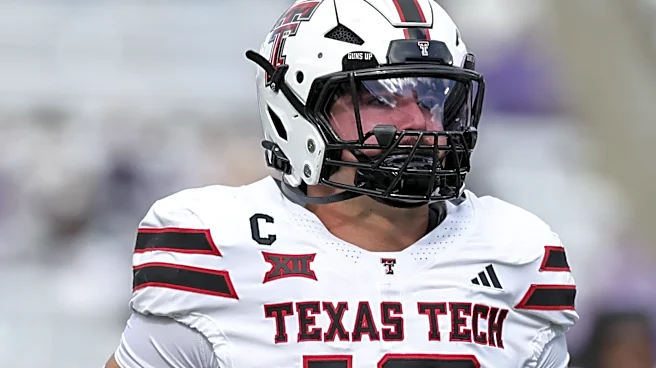
NFL Draft: Again, I will take a Day 1 through Day 3 approach to draft options. On Day 1, considering we are picking at #25 and Sonny Styles will be long gone, CJ Alen is a potential option in the 1st round. The Bears do have a history of drafting off-the-ball linebackers from Georgia in the first round, and CJ Allen fits the height/weight/speed profile of an Allen linebacker. He is 6’2” weighing between 230-235 pounds, and he ran a 4.55 second 40-yard dash. He checks all the boxes of an Allen linebacker and if the Bears didn’t have other positions they needed to prioritize with their early picks, Allen might well be the choice for Allen. More likely, if the Bears supplement their linebacking corps in the draft, it will be on Day 2 or Day 3. The Day 2 prospects I like as Allen fits are Josiah Trotter out of Missouri (6’2” / 237lbs / 4.61 40yd dash) and Jacob Rodriguez out of Texas Tech (6’1” / 231 lbs / 4.57 40yd dash). On Day 3, Justin Jefferson of the University of Alabama and Wesley Bissainthe of Miami fit the Allen profile.
Post-Draft Free Agency (cut candidates): Christian Eliss of the New England Patriots is 6’3” and 230 pounds and is a rangy linebacker who can blitz and fill gaps. He has a $7.4 million cap hit with modest dead money – if New England adds at linebacker, he could be a post-draft cut. Akeem Davis-Daither of the Arizona Cardinals is an explosive and speedy linebacker, but could be a cap cut if the Cardinals pick a linebacker in the 2026 draft. The Pittsburgh Steelers would save about 5 million in cap space if they cut Malik Harrison.
What do you think the Bears should do at the linebacker position? Tell us in the comments!