
Free agency has entered its quiet period. While there are still moves being made all over the NFL, including New England doubling its long snapper depth, the big splashes have become rare.
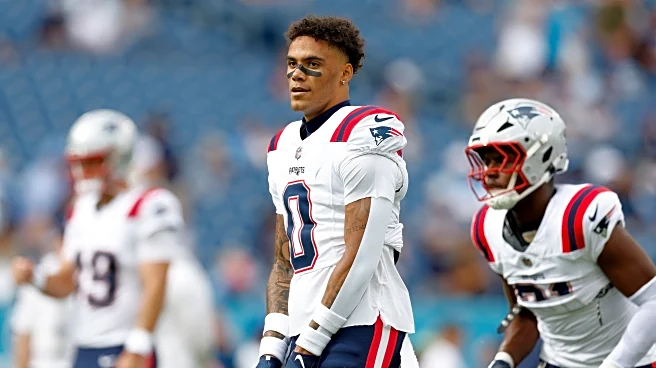
From a Patriots perspective, the first wave of free agency saw some big additions such as wide receiver Romeo Doubs, guard Alijah Vera-Tucker, edge defender Dre’Mont Jones and safety Kevin Byard. It also saw the team not break the bank too much: according to salary cap expert Miguel Benzan, the team of head coach
Mike Vrabel and EVP of player personnel Eliot Wolf has around $33.3 million to work with.
That is quite a lot of money with free agency already a week old, and places the Patriots within the top 10 in a league-wide comparison. The question, of course, now becomes what they will do with the vast resources they have available to make moves.
Here are three ways they can spend their money
Contract extensions
The Patriots entered the 2026 offseason with 14 players headed for free agency, and the group was neither noteworthy in volume nor quality (despite defensive linemen K’Lavon Chaisson and Khyiris Tonga and safety Jaylinn Hawkins all being valuable contributors last season). Looking forward, that outlook changes quite a bit.
As of today, 37 current Patriots are set for free agency, including 16 unrestricted players. Needless to say, those numbers are subject to change over the coming months, but there are a few names on the list worth mentioning.
The most notable UFAs include wide receivers Kayshon Boutte, DeMario Douglas and Mack Hollins, tight end Hunter Henry, guard Mike Onwenu, linebacker Christian Elliss, and safety Kevin Byard. Boutte, Elliss and Onwenu in particular appear to be candidates to see their contracts extended even as early as this offseason.
Of course, one name stands out above the rest: Christian Gonzalez, one of the best cornerbacks in football.
Gonzalez’s rookie deal is set to expire next offseason, and while the Patriots do have the fifth-year option at their disposal, an early extension seems to be in both sides’ best interest. Of course, such a deal would not come cheap: the 2023 first-round draft pick is set to become the highest-paid corner in football, which in turn might lead to an increase in what is currently a $4.8 million salary cap hit.
Signing Gonzalez to a new deal still seems to be a realistic option for a team with plenty of cap space available. And while he’s the obvious priority, there are other pending free agents who could be locked up long-term as well.
Trade acquisitions
Despite signing the aforementioned Romeo Doubs to a four-year, $68 million contract last week, the Patriots remain in the market for wide receiver help. Not only was the Dobbs move preceded by New England informing 2025 leading receiver Stefon Diggs of his release, the team also has the aforementioned Kayshon Boutte, DeMario Douglas and Mack Hollins all entering contract seasons. Add the fact that a true No. 1 wide receiver remains missing, and you get a recipe for the Patriots possibly getting active on the trade market to fill the need.
The market is fluid, but there has been substantial smoke regarding one potential move: the Patriots acquiring A.J. Brown from the Eagles to reunite him with his former head coach, Mike Vrabel.
No move has materialized yet, with June 1 being the next big deadline to watch. At that point, Brown’s contract would become more easily moveable from a Philadelphia perspective, which might help facilitate a trade.
From a Patriots perspective, Brown’s cap impact would then either be $7.04 million or $28.75 million depending on an option bonus in his deal being picked up for the 2026 season. Not exercising the option would result in the higher cap impact for this season and therefore put a significant dent in New England’s current cap space, although there is time to make preparatory moves before it is due on September 1. Exercising the option, meanwhile, would not hurt the 2026 books that much but increase the team’s future commitment to the wideout.
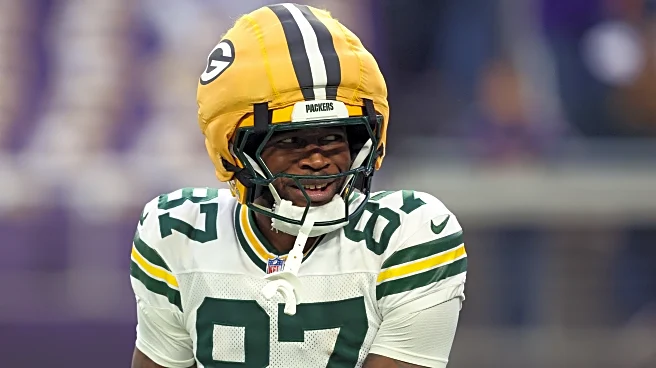
Either way, trading for Brown — or another rumored candidate, Jacksonville’s Brian Thomas Jr. ($1.08M cap number if acquired) — is one way for the Patriots to put their cap space to use.
Future expenses
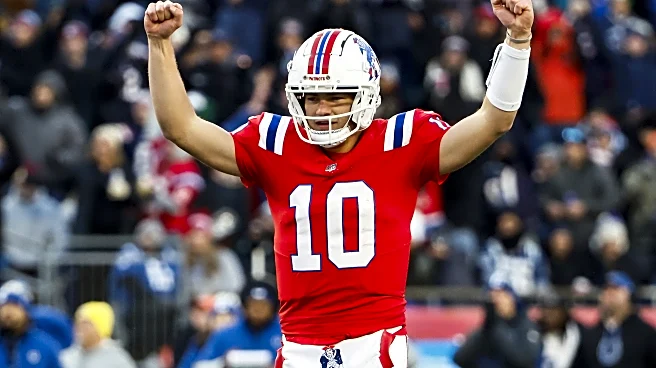
The first two scenarios, which are not mutually exclusive, are fun to think about. Signing Christian Gonzalez to a multi-year deal would lock down one of the best defenders in the game; trading for A.J. Brown or Brian Thomas Jr. would give Drake Maye a top-tier wide receiver to work with and further improve his game.
However, NFL bookkeeping is not just fun and games. Most of the times, it is also covering running costs. And there are quite a bit of those still to be considered from a Patriots perspective.
Projected future expenses include, among others, signing the upcoming draft class, taking on the 52nd and 53rd salaries, building a practice squad, and keeping some cash at hand for injury replacements or settlements. If you add those projected numbers up and subtract them from the $33.3 million mentioned earlier, you are left with an effective cap number of only $5.3 million.
That number is comparatively small and seemingly works against the grandiose plans of extending Gonzalez or trading for Brown. However, there are ways for the team to add to it without starting to slash the roster, be it in form of salary-to-signing bonus conversions or contract extensions.
Nonetheless, those future expenses are also a piece of the puzzle and have to be accounted for by the team.