


In Part 1 of our two-piece installment, we covered the back-half of the league (Nos. 17-32), which included a few surprising names for some. While it’s impossible to project rookie seasons and Year 2 leaps from some of the younger players on this list, the top half of the league is a little easier to project out. In this group, you’ll see a mix of established veterans, a handful of third-year players, and some fringe Tier 2 names that could slide up or down this season depending on their seasons and what
happens behind them. Suffice to say, the league is in a great place when it comes to quarterback talent, and this group proves that.
1. Patrick Mahomes (Kansas City Chiefs)
2025 wasn’t a great year for anyone involved with the Chiefs. The good news is that positive regression should be on their side. The bad news is that Mahomes tore his ACL late in the season, and there’s no guarantee that he’ll be ready for the start of 2026. Assuming Mahomes can return to full health, there’s little reason to doubt him returning to the top of the heap. He’s got every tool, and then some, plus a great head coach and a proven system.
The Good:
If you look at Mahomes’ 2025 season through the lens of simple stats, it might have looked like one of his worst seasons as a professional. In reality, that was not the case at all. He finished in the Top 10 in both EPA/Play and Success Rate. As a team, Kansas City had a down year, and that needs to be taken into account here. Despite that, Mahomes still played at a high level, and there’s little reason to doubt him continuing that once he returns to full health. The offensive line in front of him could use some work, and the hope is that with Eric Bieniemy back at offensive coordinator, they can once again find their run game. His weapons could use an upgrade, but there are still so few human beings on this earth who can come close to matching what he can do, both physically and mentally.
The Bad:
Any time a player suffers a major injury, there is always concern about their return to full health. How long will it take? When will he look like himself again? These are all fair questions. Mahomes will turn 31 at the start of the season, but many of the Chiefs’ failures as of late have a lot more to do with the front office than anything with Mahomes’ play. In the short term, my biggest concern is his mobility. Even if he’s not a true scrambling quarterback, his athleticism is a big part of his game. Don’t be surprised if he gets off to a slow start once he returns, but fans should also fully expect him to be rounding into form by the time the playoffs roll around in January.
2026 Outlook:
In short, Mahomes just needs to prove that he’s healthy. If he can do that, the Chiefs will be in the mix for a playoff spot, and there will be little reason to doubt Mahomes is a primary reason for them getting back to the playoffs.
2. Josh Allen (Buffalo Bills)
The Good:
Outside of Lamar Jackson, there isn’t a freakier athlete at the position other than Allen. He’s just one year removed from his first MVP, and at least physically, he’s shown no signs of slowing down. More than anything, Allen’s supporting cast has let him down more year-to-year lately than anything else. Allen ranked 4th in EPA/Play, 7th in CPOE, and 8th in success rate. While that was a slight step down from 2025, even the best quarterbacks can take a minor step back in certain categories. Really, the biggest worry with Allen at 29 is how well his body will hold up to his physical style once he enters his 30s. As long as he has a better supporting staff of skill position players around him, there’s little reason to doubt him getting back to his MVP-level ways.
The Bad:
Allen finished with his lowest passing yard total (3.668) since his 2019 campaign. Despite that, his yards-per-attempt (8.0) was a career-high. On top of the lower passing yard total, his 25 passing touchdowns were the lowest of his career. While there was a change at head coach during the offseason, his offensive coordinator from last season (Joe Brady) is now a first-year head coach. His skill-position players still lack, at least on paper, but the addition of move should push role players like Khalil Shakir down, which should, in turn, help all involved. The other concern is the loss of guard David Edwards. At least on paper, there’s not a one-for-one replacement, which could take some time to work through. Buffalo should be right in the mix for a division title, but it’s also worth wondering if they blew their best chance at getting to the Super Bowl in 2025.
2026 Outlook:
The addition of Moore should help round out a skill position group that has slowly lost talent over the years. With running back James Cook locked in on a long-term deal and a healthy year from Dalton Kincaide, there should be real optimism that the offense can get back to where they’ve been the last five-plus years. There’s no questioning Allen’s talent, but it was clear throughout most of last season, including their playoff loss, that he was trying to do too much. Hopefully, with better health and a true WR1 in Moore, the need to be Superman will dissipate, and Allen can get back to what he does best.
3. Lamar Jackson (Baltimore Ravens)
At 29, Jackson should be entering his athletic prime, but it’s fair to wonder if his nagging injuries and athletic playing style will call for a change to his game in the coming years. Heading into 2025, Jackson has played just two full seasons in his NFL career. Despite a strong start to his year, injuries and a lack of consistent play derailed what looked to be another MVP-level season. Jackson is as gifted as anyone in the game, but there’s no denying that his athleticism gives him something else that no one has. A key to his 2026 campaign is health. If he can stay healthy, nobody should doubt his ability to get back to the top, and that’s exactly what I’m banking on.
The Good:
When Jackson is healthy, there’s no more prolific pure athlete in the game. There’s a reason he’s a two-time MVP, even if he doesn’t have a Super Bowl ring to his name. 2025 started in promising fashion, and it wasn’t until his hamstring injury against the Chiefs that things felt “off”. In the games before the injury, Lamar had a 10:1 touchdown-to-interception ratio, along with his more prolific scrambling ability. He’s still on the right side of 30, and assuming he can find a way to replicate his 2024 health, there’s no reason to believe that Jackson is even close to being “done”. He has more than enough arm talent to transition his game away from running, as he’s already a damn-good passer from the pocket and in structure.
The Bad:
What happened after he returned from injury? That’s a question that many are still asking themselves. After coming back at the end of October, Jackson had just four performances where he threw for over 200 yards, and his touchdown-to-interception ratio plummeted from 10:1 to 11:6. As a whole, his rushing efficiency went down dramatically, as he finished with a career low 349 yards on the ground. For reference, in the two previous seasons when he played in just 12 games, he more than doubled his rushing totals from 2025. Although his yards per attempt stayed up near his career high, his completion percentage dipped to the lowest it had been since his rookie season. Again, while there are some concerning signs, the eye test says he simply wasn’t healthy in the second half of last season. I’ll continue to bank on him regaining form until he proves that he can’t.
2026 Outlook:
Just stay healthy. He’s just one year removed from a full 17-game season in which he threw for a career-high 41 touchdowns and his first 4,000-yard season. At 29, I find it hard to believe he’s experiencing a physical decline, which means that as long as Jesse Minter’s choice at offensive coordinator is the right fit, Jackson should be just fine. When healthy, I like Jackson over Allen, but it was just too hard for me to put him in front of Allen heading into 2026.
4. Drake Maye (New England Patriots)
The Good:
One year after Jayden Daniels took the league by storm in his rookie year, Maye followed up with an even more impressive campaign. The talent and physical tools have always been there. Still, the hiring of head coach Mike Vrabel and offensive coordinator Josh McDaniels was exactly what the doctor ordered for the young quarterback. The 23-year-old finished 2025 1st in both EPA/Play and CPOE, while finishing 2nd in success rate. If that wasn’t impressive enough, he was the only quarterback to finish with a completion percentage above 70% (72%). By all accounts, it was an MVP season for Maye in his second season, although he was just edged out by Matthew Stafford by the matter of one vote. Maye’s playoff run wasn’t anything to write home about, but considering it was his first time in such a high-level situation, there should be some grace given for a quarterback who has played just two years in the league.
The Bad:
If there’s one area of Maye’s game where vast improvement is needed, it’s taking sacks. He took the fourth most sacks in the league (47), and while the offensive line had some issues, his inability to “feel” pressure was a big issue. Like most athletic quarterbacks, Maye tends to keep “broken plays” alive a little too long, which has also led to unnecessary sacks and overall negative plays. For a second-year quarterback that came from a bad situation in his rookie year, there’s very little to nitpick about Maye heading into Year 3. The talent is there, and if 2025 was any indication, there’s still plenty of growth to take place over the next few years, which could easily land him in the league’s elite.
2026 Outlook:
Based on last year’s schedule and their holes shown in the playoffs, namely the Super Bowl, the Patriots are one of the league’s top regression candidates for 2026. That said, there’s little reason to believe that Maye is due for a big step back, unless teams can scheme after Maye’s weaknesses. That said, he’s one of the younger quarterbacks in the league, and while he was extremely close to taking home the MVP, there’s still plenty of room for growth in his game that could lead to even better results. Whether that happens in 2026 or not remains to be seen, but Patriots fans should feel extremely optimistic about the future.
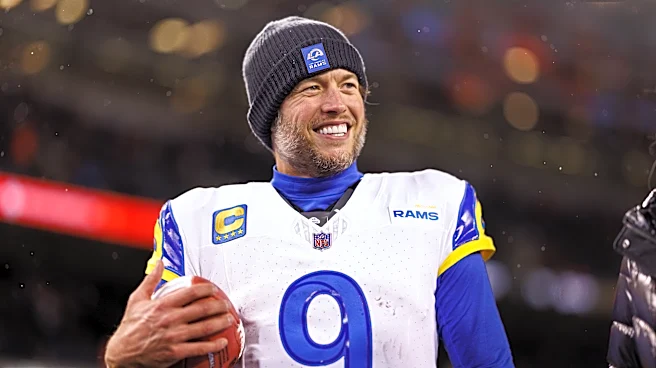
5. Matthew Stafford (Los Angeles Rams)
The Good:
Heading into last season, there were some serious questions about Stafford’s back. Despite not participating in most of training camp or the preseason, Stafford and the Rams came out firing, leading to his first-ever MVP award in his 17th season in the league. Despite being 38 years old, his arm talent is still elite. The veteran quarterback finished 2025 3rd in success rate, 5th in EPA/Play, but somehow 16th in CPOE and 17th in completion percentage (65%). By the numbers, many could make the argument that Maye was the better quarterback, but when watching the two, Stafford’s dominance led the Rams offense to league highs in both points (30.5) and total yards (394.6). While his long-term future is uncertain due to age, it’s impossible to argue against the notion that the Rams “won” the trade, simply based on how much better Stafford has played since coming to Los Angeles.
The Bad:
Age really stands out as the biggest knock against Stafford, although it’s easy to argue that he’s done nothing but get better since arriving in Los Angeles. Even as impressive as his continued arm talent is, his above-average athleticism in escaping pressure is equally impressive. That said, we’ve seen how quickly quarterbacks at his age can fall off. Considering his back issues, it’s worth wondering how much longer he can play, but at least for the time being, he’s still one of the league’s elite passers and has shown no signs of slowing down going into Year 18.
2026 Outlook:
By all accounts, the Rams should be right in the mix as a Super Bowl contender. Adding more to the defense while returning most of their offensive talent is almost always a recipe for success. Despite the front office and head coach Sean McVay telling him that it’s his team until he’s ready to walk away, it’s worth wondering how much of an impact the selection of Ty Simpson will have this year. Assuming Stafford is healthy and the offense continues to dominate, there’s little reason to doubt that the veteran quarterback will take a step back in 2026.
6. Joe Burrow (Cincinnati Bengals)
The Good:
Despite everything around him crumbling over the last few years, when healthy, Burrow remains one of the best quarterbacks in the league. One of his most impressive values is what he can do post-snap. Despite consistently bad offensive lines, he puts opposing defenses in hell with his ability to outsmart defenders and schemes. The arm talent has never been elite, but from a mental standpoint, there aren’t many quarterbacks better. Having weapons like Ja’Marr Chase and Tee Higgins always keeps this offense’s ceiling at a safe level, but an improved offensive line could help get them back into an elite territory. Despite missing two months, Burrow posted 17 touchdowns to just five interceptions. He ranked in the Top 10 in key categories, including 5th in CPOE, 9th in success rate, and 10th in EPA/Play. We’ll see if those numbers can improve with a full 17 games under center.
The Bad:
Health and availability. There’s really not a whole lot to knock Burrow on, but that has become a main factor in his NFL storyline. He continues to have higher-than-normal sack totals due to his inability to give up on players, but similar to players like Allen and Maye, that’s just something you have to live with. He’s not the most athletic player and doesn’t possess an elite arm, but with a better offensive line in front of him and a more threatening rushing attack, most of his weaknesses aren’t an issue.
2026 Outlook:
The upcoming year feels like a big one for the team, but for the 29-year-old quarterback, as long as he stays healthy and productive, his future in Cincinnati is about as stable as they come. The Bengals placed a strong emphasis on improving the defense this offseason, but I still have questions about the offensive line. If Burrow is healthy, he’ll be productive and thus be in the playoff chase. In a division without a clear front-runner, maybe this is the year that Burrow and company can take the AFC North crown again.
7. Dak Prescott (Dallas Cowboys)
The Good:
Prescott continues to receive an unfair amount of criticism each year, despite being one of the more consistent quarterbacks in the league. While I wouldn’t classify Prescott in the “elite” category, his ability to put up top-end numbers and always lead Top 5-10 offenses shouldn’t be overlooked. Following an injury-shortened 2024 campaign, Prescott led the Cowboys offense to second in yards, seventh in points, and eighth in offensive DVOA. What makes him so consistent is that he rarely makes bad throws and plays as one of the more “on time” quarterbacks in the league. The arm talent isn’t anything flashy, but he turned in quality metrics again, ranking 7th in EPA/Play, 11th in success rate, and 12th in CPOE. Although there’s nothing flashy about his game, fans can rest assured that Prescott is going to consistently play at a Top 10 level every year, assuming he’s healthy.
The Bad:
Although Prescott consistently produces as a Top 10-12 quarterback, his ceiling is what it is at this point. The 32-year-old is unlikely to challenge for an MVP and will never be considered in the “elite” category. That said, with the way Dallas’ offense operates, simply having a better defense should be enough to get them into the playoffs. While there are still some questions about his ability to elevate his play during the playoffs, getting into the playoffs (again) is the first step to building on that.
2026 Outlook:
With a better defense, the Cowboys could easily go from retooling on the fly to an NFC East contender. A big part of that will come from Prescott and his ability to elevate the offense. Considering that’s rarely been an issue, regardless of how well-rounded the rest of the team is, there are plenty of reasons to believe that he can continue to play at a similar level and not have to do as much with a better defense. The NFC East is wide open, and maybe it’s time for the Cowboys to take control again.
8. Justin Herbert (Los Angeles Chargers)
The Good:
If size, athleticism, and arm strength were all we evaluated quarterbacks on, Herbert would be one of the league’s elite every season. Despite it being somewhat of a down year for him, we started to see more improvisation from the 27-year-old quarterback. While he has the athleticism to make more throws on the run, it’s not something we saw him do with a ton of success in 2025. In many categories, Herbert saw down years, including ranking 21st in EPA/Play, 16th in CPOE, and 15th in rating (94.1). Despite being under pressure at a higher rate than any other quarterback, he tallied an impressive 66.4% completion rate. To couple with the bad offensive line in front of him, Herbert ranked in the middle of the pack in turnover-worthy plays, yet finished with the third-highest rate. It’s easy to chalk up last season as an outlier with the hope that Herbert can get back to his normal abilities and throw from a much cleaner pocket.
The Bad:
Is Herbert ever going to win a playoff game? While wins aren’t a quarterback stat, the greats take it up a notch when the lights are the brightest, which is simply something we haven’t seen from the Oregon Duck product. In many ways, 2025 was a disastrous year for the Chargers, headlined by the sheer amount of injuries sustained on the offensive line. Herbert took a league-high 54 sacks, while being pressured at a rate higher than any other quarterback. Although I would argue that most of that wasn’t his fault, he didn’t use his athleticism very well this past season. The talent is there, and assuming there’s better health in the trenches, there should be ample optimism that he can take another step forward this year.
2026 Outlook:
With Herbert’s two All-Pro caliber tackles returning from injuries, fans should feel good about his ability to manage pressure from the edges at least. Although I’m not sold on his interior line being a noticeable upgrade over last year, adding veteran Tyler Biadasz was a good step in the right direction. The additions of Brenen Thompson at receiver and David Njoku and Charlie Kolar at tight end should only enhance his passing options. The biggest “win” of the offseason was landing Mike McDonald as their offensive coordinator, even if it’s only for a season. Overall, there are plenty of reasons for optimism surrounding this offense and Herbert getting back on track after a wonky 2025 campaign.
9. Jordan Love (Green Bay Packers)
The Good:
Love’s underlying metrics present a borderline elite quarterback. He finished the season 2nd in EPA/Play, 3rd in CPOE, 6th in rating (101.2), and 7th in success rate. If football were evaluated on paper, it would be easy to make an argument for him being a Top 5 quarterback, and maybe he’ll eventually get there. While it feels like he’s been a turnover-prone passer, his six interceptions would tell a different story. The arm talent is atop the league, and his athleticism allows him to avoid sacks and extend plays, as does his quick release. In total, Love is easily a Top 10 quarterback, and in some years, he’s even higher. While each year we learn a little bit more about who he is, he’ll always be unfairly graded on a curve because of who came before him.
The Bad:
How much higher is Love’s ceiling? Although he’s a good player and a well-above-average quarterback, the last two years have presented him as more of a finished product than someone still chasing their ceiling. Even if he’s not a typical turnover-prone quarterback, he’s good for a few “what are you doing?!?!” throws each game. The numbers, especially in 2025, were impressive. Still, it’s easy to question how much he’s elevated the offense, especially when Malik Willis proved over a small sample size that he could match his overall product in most ways. Love is a good quarterback, but it’s also worth wondering if he’ll ever be a great one. For most of the NFL, it would be a “problem” that many are happy to live with, but considering their rich quarterback history, Packers fans might feel different.
2026 Outlook:
On paper, not a whole lot has changed at the skill positions for Green Bay. Romeo Doubs is off to New England, but their Top 3 receivers and Tucker Kraft are a quality group of pass catchers for any team in the league. The bigger questions come along the offensive line. Left tackle Rasheed Walker and center Elgton Jenkins are gone, which means 2024 first-round pick Jordan Morgan, and recently extended Sean Rhyan will slide into those spots. Overall, the interior is a big question mark. What that means for Love remains to be seen, but this is an offense that has seen quite a few quality offensive linemen leave in recent years. The NFC North will be hotly contested yet again, but there’s no reason why Love can’t take over the mantle as the best quarterback in the division.
10. Trevor Lawrence (Jacksonville Jaguars)
The Good:
The first half of 2025 was starting to feel like maybe Lawrence wasn’t the guy everyone believed he’d be, then it all clicked. From Week 11 through the regular season, the fifth-year quarterback averaged 265 passing yards per game, while posting 18 passing touchdowns to just four interceptions. In addition, only two of his final eight performances had a completion percentage under 60%. Despite the slow start, he still finished with career bests in yards per attempt, QBR, and touchdowns. All in all, it was good enough to get him into the MVP conversation and finish as one of the finalists for the award.
The Bad:
Consistency is something Lawrence has lacked at the NFL level, and that did not change in 2025. It was a tale of two halves to the 2025 season, and while it’s easy to feel optimistic about his run over the final seven games, if the script was flipped, would we feel the same? I’m inclined to believe he’s finally figured it out, especially under head coach Liam Coen, but some metrics (despite the strong finish) still showed a quarterback struggling with his identity. He finished the year ranked 14th in success rate, 17th in EPA/Play, 27th in CPOE, and 28th in completion percentage (minimum 250 attempts). At this point, fans just have to hope that the “new” Trevor Lawrence is the one we saw over the final seven games of the season, and not the one we’ve watched for the majority of his five-year NFL career.
2026 Outlook:
It feels like we say this every year, but 2026 is shaping up to be a defining moment in Lawrence’s career. While last year was a tale of two halves, Lawrence needs consistency to take that next step. If he can build on his final seven games, the Jaguars will be one of the more dangerous teams in the AFC. If he regresses and shows that it was just a great stretch, then long-term questions might resurface. Lawrence has all of the tools needed to be a successful NFL quarterback. When he’s good, he’s really good. The issue is that when he’s bad, he’s not a franchise-level quarterback. We’ll see if Year 2 under Coen produces the same results we saw in November onward.
11. Jared Goff (Detroit Lions)
The Good:
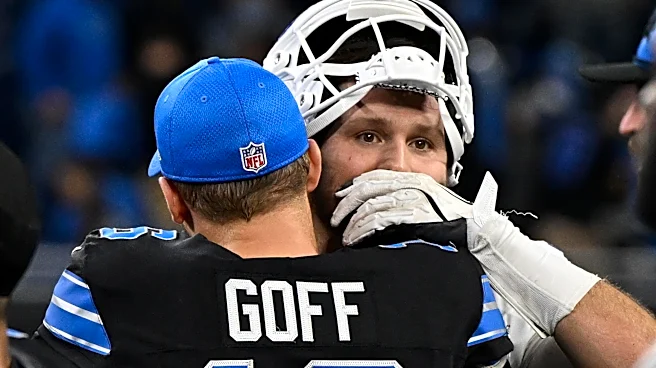
Goff has quietly become one of the more consistent quarterbacks in the league since he arrived in Detroit. For as easy as it is to talk about what he doesn’t do well, there’s a lot to like about his game. For example: Did you know that Goff capped off his third straight year ranking as the No. 2 quarterback in passing yards? On top of that, he has four straight seasons with 4,000-plus yards. Even more impressive is that since arriving in Detroit, he’s averaged fewer than 10 interceptions per season. From a numbers perspective, Goff has consistently ranked among the Top 7 quarterbacks each year. Considering the talent around him, it makes sense. Still, sometimes, it feels like he doesn’t receive enough credit for not only saving his career with the Lions but also becoming one of the league’s more productive passers over the last four seasons.
The Bad:
Although the peripheral numbers have been impressive, the metrics tell a slightly different story. Some of that is due to his limited athleticism and arm strength, but it also shows a more limited quarterback, who, while productive, has a defined ceiling that relies on the impressive talent around him. In 2025, Goff ranked outside of the Top in EPA/Play (12th), success rate (13th), and CPOE (15th). Although an incomplete offensive line was partly to blame for some of these numbers, having top skill-position players like Jahmyr Gibbs, Amon-Ra St. Brown, and Jameson Williams should have provided a slightly higher floor than it did. Some might argue that he’s a product of the talent around him, including former offensive coordinator Ben Johnson calling the plays. While I’m not sure that’s a fair categorization, 2026 feels like a defining season for the 31-year-old’s overall ceiling and general expectations moving forward.
2026 Outlook:
For Goff, a lot of the offense’s success in 2026 could come down to how successful the play-calling is. Detroit is one year removed from losing Johnson and gambling on a journeyman offensive mind in John Morton to take over the reins. While it’s fair to say head coach Dan Campbell did an admirable job of filling the void for most of the season, Drew Petzing comes over from Arizona with high expectations and little margin for error. There’s no question that Goff has been better than advertised, but if the Lions don’t get back on track with their Super Bowl aspirations, quarterback, by default, will be one of the first places people start to point fingers at.
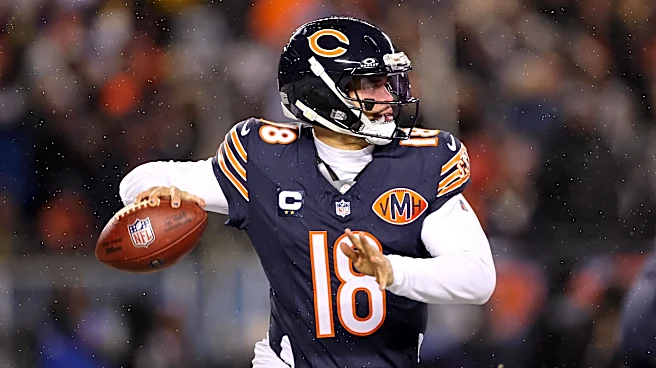
12. Caleb Williams (Chicago Bears)
The Good:
Many of the traits that led to Williams being drafted No. 1 overall didn’t show up in 2024. Luckily for the 24-year-old quarterback and the Bears organization, the first year under Ben Johnson was about as much of a “get right” campaign as anyone could have hoped for. The arm talent is otherworldly, and despite his athleticism being overlooked by many, he recorded the fastest top speed for any quarterback in 2025. The most impressive aspect of Williams’ sophomore campaign was his sack avoidance. After taking close to a record-high number in 2024, he became one of the more elusive passers in the game, while cutting his sack number in more than half in Year 2. From the perspective of pure tools and talent, there aren’t many better. Year 3 will be about putting it all together to reach the ceiling that many saw for him coming out of the draft as the top pick.
The Bad:
Although the physical tools and overall talent might jump off the page, Williams’ lack of consistency has been something that has plagued him over his first two years in the league. Outside of J.J. McCarthy, Williams’ completion rate (58.1%) was the lowest in the league for 2025. Diving deeper into some of the metrics, his numbers were relatively unimpressive. He ranked 20th in EPA/Play, 28th in success rate, and 34th in CPOE. His tendency to go from hot to cold, back to hot, will need to be addressed, and much of that stems from playing a little more in structure and taking what the defense gives him. No one doubts the skill set is there for an elite quarterback, but without improvements in key areas, Williams’ ceiling will be limited.
2026 Outlook:
Looking ahead to the Bears’ schedule, they’ll face five of the league’s top 10 defenses in DVOA from a year ago. Although the offense started to click more consistently down the stretch, most of that came in the second half of most games. With a defense that doesn’t project well on paper, there will be plenty of pressure on the offense to win shootout-type games. If Williams can lock in the accuracy part of his game, while continuing to avoid sacks and make big throws, we could see another big jump in Year 3. If his inconsistencies continue, both his and the offense’s ceiling will be in question.
13. Sam Darnold (Seattle Seahawks)
The Good:
After an impressive breakout in 2024 with the Minnesota Vikings, many wondered if Darnold’s disappointing playoff performance was him coming back down to earth. Well, it turns out that was not the case. Not only did he establish himself as an above-average quarterback who will stick around, but he also proved he was good enough to win a Super Bowl. Although his EPA/Play ranked 12th in the league, he was fourth-best in both success rate and CPOE to go along with 8.5 yards per attempt, a 99.1 rating, and an impressive 67.7% completion rate. While some skepticism is warranted for his long-term upside, he proved that he was more than “good enough” to lead his team to a No. 1 seed and ultimately a Super Bowl title. It helps to have the best receiver in the league and a well-above-average offensive line. Some might say he’s a product of his situation, and while I agree to a certain extent, winning a Super Bowl isn’t an easy feat.
The Bad:
Consistency is still an issue for the 28-year-old, though he started hot and ended hot. Although his impressive start led to him being in the MVP conversation, his stretch from Week 9 through 12 led to some unimpressive numbers: 69/108 (63.8%) for 829 yards with three touchdowns and five interceptions. His decision-making continues to be a work in progress, throwing 14 interceptions, the third-most in the league, behind only Geno Smith and Tua Tagovailoa. Every quarterback experiences tough stretches, but until he strings together another season or two of high-level play, skepticism will always factor into Darnold’s story.
2026 Outlook:
Seattle’s offensive depth chart remains largely unchanged, but the loss of running back Kenneth Walker III might loom large. They did replace him with first-round pick Jadarian Price, but any time a team loses its Super Bowl MVP, it’s a big hole to fill. Darnold will also be dealing with his third offensive coordinator in as many seasons after Klint Kubiak left for Las Vegas to take the vacant Raiders’ head coaching job. There’s little reason to believe Darnold is due for any sort of regression, but health will be key, especially at the skill positions.
14. Brock Purdy (San Francisco 49ers)
The Good:
When he’s on the field, he’s damn good. In his 11 regular-season starts, Purdy had a 2:1 touchdown-to-interception ratio, including two big games against the Bears and Indianapolis Colts. While he wasn’t always the most consistent, he finished the season ranked 1st in success rate, 2nd in CPOE, and 3rd in EPA/Play. He also finished 10th in total passing EPA, which is impressive considering he played fewer games than any other quarterback in front of him. While Purdy may never sneak into the “elite” category, better health could lead to him being considered as one of the names in that next tier of very good quarterbacks. Despite constant injuries to the offense, it always helps to have an offensive genius like Kyle Shanahan running it year after year.
The Bad:
The only thing standing in the way of Purdy being in constant conversation as a Top 7-10 quarterback is health. The only real thing (outside of health) working against him is consistent to-end performances and the fact that backup Mac Jones arguably played as well, if not better than Purdy, in relief. While the term “system quarterback” is overused and often termed as a knock on quality quarterbacks, it’s a worthwhile argument when it comes to Purdy in this offense. That said, he still can play at a league-high level, even if his backups can produce similar results. A lot of that can be mitigated by simply staying healthy and being a little more consistent from game to game. Purdy would be smart to change his playing style, especially when extending plays, which might ultimately extend his career and keep him healthier in-season.
2026 Outlook:
Unless the 49ers have another season’s worth of horrible injury luck, it’s reasonable to expect Purdy and this offense to produce another quality season. The status of George Kittle, at least early in the season, is in question, but their receivers have more speed than they did a year ago with the selection of De’Zhaun Stribbling and the free agent addition of Christian Kirk. Assuming Purdy can experience a healthier season, don’t be surprised to see him eclipse the 4,000-yard plateau for the second time in his career.
15. Jayden Daniels (Washington Commanders)
The Good:
What a difference a year can make. 2024 was about as much of a “dream season” as the Commanders or their fans could have expected. 2025 was the opposite of that in almost every way, including for Daniels. The 2024 Offensive Rookie of the Year never got his footing last season, but it wasn’t like it was all bad. He finished the season, only starting seven games with an 8:3 touchdown-to-interception ratio. One of Daniels’ biggest weapons is his speed and running ability, which was once again on display in 2025. Despite the disappointment last season, the ceiling is still high for the 25-year-old. Changing his play style will be important, but with a new offensive play caller at the helm, there’s hope that they can play to his strengths, while also forcing him to develop as a more complete quarterback. His deep ball is one of his biggest weapons, and barring a surprise, that shouldn’t change this season.
The Bad:
The play style that many worried would cause serious health issues for Daniels reared its ugly head in Year 2. The reality is simple: While Daniels is super athletic, and that’s a big part of his game, he’s also one of the skinnier quarterbacks in the league, and his body cannot withstand the type of punishment he has subjected it to at the NFL level. In addition, the quick game and highly accurate passing took a noticeable step back in 2025. He ranked 21st in success rate, 26th in EPA/Play, and 30th in CPOE. Although it’s easy to argue that it was a small sample size, the product simply did not look the same. With Kliff Kingsbury out of the picture, Dan Quinn will be relying on a relatively inexperienced David Blough, who is just three years removed from a five-year playing career. There’s still a quality ceiling for Daniels and this Washington offense, but the risk is more uncomfortable than some are willing to admit.
2026 Outlook:
Although we’ve seen quarterbacks break onto the scene in their rookie seasons and never replicate the production, Daniels’ bigger battle will be staying healthy. Some of that is on the offensive line, but he must start to play a smarter/safer brand of football. Finding his quick-game accuracy will be key to his success, but adding additional weapons and an improved offensive line should help as well. It might not be fair to expect a jump back to his rookie-season level, but it also wouldn’t be fair to expect him to have a repeat of 2025 either. Daniels will be the key to the Commanders turning things around.
16. Jalen Hurts (Philadelphia Eagles)
The Good:
On the surface, something felt off most of the year in Philadelphia. Just one year after a dominant Super Bowl victory, the Eagles’ offense took a step back, and Hurts was the prime topic of conversation. Despite that, he posted respectable numbers, including a 25:6 touchdown-to-interception ratio, while ranking 8th in CPOE, 16th in EPA/Play, and posting a 98.5 rating. While I won’t sit here and say that Hurts was “good” for the majority of the year, it’s hard to place the lion’s share of blame on him for the offensive struggles, considering the context. His strengths are clear: a low turnover total, an athletic presence in the pocket, and a powerful running ability. The flaws are there, but in the right offensive system, he’s still someone who ranks in the top half of the league.
The Bad:
Although his peripheral numbers can easily be labeled as “very good”, there was a lot to his game in 2025 that simply didn’t meet the eye. For starters, he holds the ball forever. On top of that, he didn’t throw for very many yards (201.5 yards per game), en route to posting his lowest yards per attempt in his NFL career (7.1). In some ways, it’s fair to label Hurts as a “limited” quarterback, but in fairness to him, his limitations are easy to scheme around with the right offensive mind calling plays (hence him finishing second in the MVP race just three seasons ago. Speaking of something that “feels off”, there were whispers of Hurts being a bigger cog to the offensive struggles than were originally believed. Only time will tell how true that is, but because of his limitations, seasons like 2025 can happen. Productive on the surface, while not being good enough to be the Top 7-10 quarterback the Eagles truly need.
2026 Outlook:
Every year seems like a new adventure in Philadelphia. That said, I wouldn’t expect 2026 to be any different, especially from an offensive perspective. With Jeff Stoutland off to greener pastures and questions surrounding A.J. Brown still unsolved, there’s a lot to unpack for the Eagles heading into the season. Similar to David Blough in Washington, Sean Mannion is just three years removed from his NFL playing career. On the surface, Hurts should be able to get back to a Top 10 level (or somewhere in that vicinity), but we know how volatile Philadelphia can be. With Brown not expected to return this season, Hurts will need to adjust not only to a new play-caller but also to the loss of his top target moving forward.