


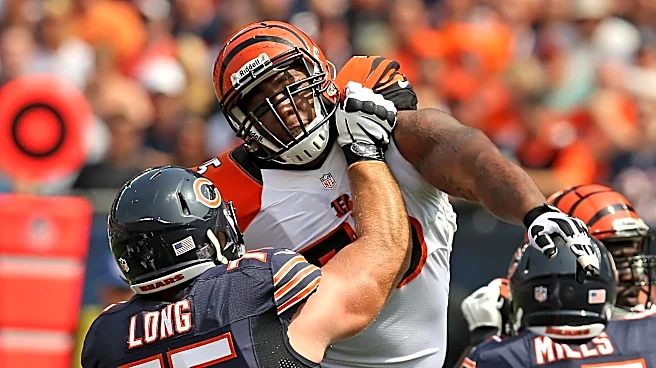


We have an absolute gauntlet of eight teams from our All-Bears Historical Fantasy Draft. That’s expected to be the case when you’re picking from a team that has the most Hall of Famers of any team in NFL history. But my team is the best, and in this article, I’ll highlight why so you hopefully vote for me when we run our tournament.
- By now, you all know the basic rules to our All-Bears Historical Fantasy Draft. We each picked a team consisting of 25 players. We got 11 picks on offense, 11 picks on defense, and three picks on special teams.
- The special teams picks were assigned to one kicker, one punter, and one miscellaneous contributor (returner, coverage defender, long snapper).
- The offensive picks require a full offensive line, a quarterback, a running back, two wide receivers, and a tight end. The 11th pick on offense could go to any skill position of the team’s choosing.
- Given the Bears’ historical preference for a 4-3 base defense over a 3-4, we required two defensive ends, two defensive tackles, two linebackers, two cornerbacks, and two safeties on defense. The 11th pick could be used at any position of the team’s choosing, whether it be a nickel defender, a third linebacker, or an extra defensive lineman.
- Each player’s skill level will be transported to the modern age. For example: a Hall Of Fame offensive lineman from the 1940s, while smaller than the modern o-lineman, will still be a Hall Of Famer.
- We also only get the player’s ability as he had it while playing in Chicago. So if someone were to tout the Hall of Fame credentials of Alan Page, keep in mind that his time in Chicago (0 Pro Bowls) wasn’t the same as his time in Minnesota (9 Pro Bowls).
The Jakester’s Evil Demons from Hell Offense
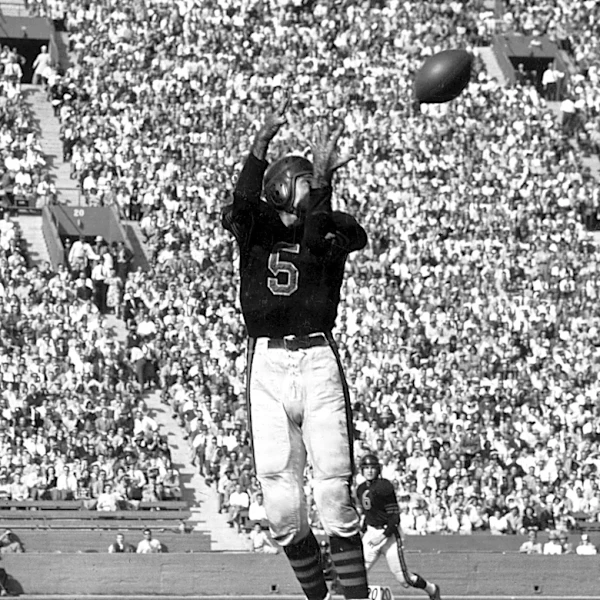
QB – Paddy Driscoll (Round 21): If we’re drafting a player’s skill level to translate to the modern age, I got the biggest steal of the draft by taking Hall of Famer Paddy Driscoll as
my quarterback in Round 21. He was an All-Pro in three of his four years with the Bears. I didn’t see a QB worth taking with the No. 3 pick once Caleb Williams went off the board. Once Sid Luckman, Jay Cutler, and Jim McMahon all came off the board before I had my second-round pick, I knew my best approach was to wait. It paid off.
RB – Red Grange (Round 7): One could argue that Red Grange was the NFL’s first superstar. The Hall of Famer was a first-team All-Pro in 1930 and 1931, and he led the league in scrimmage touchdowns in 1932. Cited for his speed, elusiveness, and incredible strength, the Galloping Ghost was an early Bears legend, and if his dominance from the 1920s and 1930s is guaranteed to translate to the modern day, I got myself a steal.
WR – Brandon Marshall (Round 2): Maybe I’m biased, but I think I have the best wide receiver room of any team in this fantasy draft. It starts with Brandon Marshall, who has the most receptions and receiving yards in a single season in Bears history. He tallied 3,524 receiving yards in three seasons in Chicago and was a two-time Pro Bowler and a 2012 first-team All-Pro in the process. The 6’5” Marshall was incredibly tough to stop, and for my money, he’s easily the most talented wide receiver in Bears history.
WR – DJ Moore (Round 10): DJ Moore’s 2023 season saw him tally 1,364 receiving yards, which is the fourth-most from a Bears wide receiver in a single season. His PFN WR Impact Score ranked No. 7 in the entire NFL that year. He holds two of the top-ten spots in single-season receptions in team history, and his 59.1 receiving yards per game mark the fifth-highest average in Chicago history. In an organization that doesn’t have a deep laundry list of great wide receivers, Moore fits that bill.
WR – Marty Booker (Round 16): Only 13 players in Bears history have surpassed 1,000 receiving yards in a single season. I’m the only team in this fantasy draft to have three of those players on the same roster. Marty B0oker’s initial five seasons with the Bears were tremendous, as he put together consecutive 1,000-yard seasons in 2001 and 2002, making the Pro Bowl in the latter year. He’s one of just four Bears players to ever reach the 1K mark in back-to-back years, with Marshall being another one of them.
TE – Desmond Clark (Round 18): I was thinking of taking Emery Moorehead here (who surprisingly went undrafted), but I took Desmond Clark because of his superior size and in-line blocking ability. I already have plenty of great pass-catching weapons, but with 99 starts in his eight seasons with the Bears, Clark proved to be a reliable receiving tight end, too.
LT – Joe Stydahar (Round 4): I had to get my blindside protector early, especially when he’s a Hall of Famer like Joe Stydahar. In nine seasons with the Bears, he was a five-time All-Pro, a four-time Pro Bowler, and a three-time NFL champion. That’ll do just fine.
LG – Josh Sitton (Round 13): Josh Sitton’s time with the Bears was brief, but he proved to be an impactful guard in his two years with the team. He most notably made the Pro Bowl in 2016 and played a huge role in Jordan Howard finished second in the NFL in rushing yards that year.
C – Jay Hilgenberg (Round 5): There wasn’t a single season in between 1985 and 1991 that Jay Hilgenberg didn’t get Pro Bowl recognition. He was also a four-time All-Pro, a Super Bowl champion, and he also played in all 16 games in eight of his 11 seasons with the Bears. I was going into Round 5 torn between Hilgenberg and Olin Kreutz with this pick, but once Jack Silverstein took Kreutz two picks before me, it was an easy choice for me to select the Hall of Famer.
RG – Tom Thayer (Round 14): With a handful of teams already having found both of their starting guards by this point, I’m still very happy with how my guard tandem turned out. Tom Thayer started 120 games for the Bears at right guard, beginning in their 1985 Super Bowl season. He missed just five games in his eight-year stint in Chicago, showing just how durable and reliable of a presence he was along the interior.
RT – Bob Wetoska (Round 17): Back in 2024, I wrote up a list of the ten best offensive tackles in Bears history. Bob Wetoska came in on that list at No. 9, and 12 offensive tackles got selected over him in this fantasy draft. Wetoska was an NFL champion in 1963, a second-team All-Pro in 1965, and he started in 92 games over his 10 seasons with the Bears.
I have the best group of offensive weapons in this fantasy draft, along with an offensive line that’s headlined by two Hall of Famers. Given the rules of the draft, Paddy Driscoll as a three-time All-Pro is the second-most accomplished Bears quarterback available, and I got him in Round 21. That makes him a better time-adjusted passer than Caleb Williams, Jay Cutler, and Jim McMahon, all of whom having gone long before me. To think I got an elite quarterback without having to reach for one….
The Jakester’s Evil Demons from Hell Defense
DE – Dan Hampton (Round 3): Good luck to anybody trying to stop the Danimal. Dan Hampton is a Hall of Famer, a four-time Pro Bowler, a five-time All-Pro, and his 82.0 sacks are the third-most in Bears history. I needed a tenacious pass rusher for my defense, and Hampton gave me exactly that.
DT – Akiem Hicks (Round 6): Perhaps underrated nationally during his time in Chicago, Bears fans knew just how talented Akiem Hicks was in his prime. From 2016 to 2018, he tallied 23.0 sacks, and 38 tackles for loss. That TFL measure ranked third among NFL defensive tackles in that span, and that sack tally ranked fifth. He was a Pro Bowler in 2018, and as Vic Fangio’s defenses started getting stronger as his time with the Bears went on, Hicks was a crucial part in building that unit up.
DT – Wally Chambers (Round 11): Injury shortened his 1977 season and sent him out of Chicago, but in those first four seasons of his career, Wally Chambers was unstoppable. He was a three-time All-Pro, a three-time Pro Bowler, the 1973 Defensive Rookie of the Year, and a two-time finisher in the top four of Defensive Player of the Year voting. He had an absurd 37.0 sacks over those four years pre-injury.
DT – Eddie Goldman (Round 22): Did I need a third defensive tackle? Not necessarily. However, with Akiem Hicks’ flexibility to kick outside, I thought the value of Eddie Goldman this late in the draft was far too good to pass up. He was a reliable starting nose tackle for the Bears for six seasons, finishing his time in Chicago with 73 starts and 175 tackles. He was a true run-stuffer who can plug up gaps and free up opportunities for his teammates.
DE – Willie Young (Round 19): I had to show respect to the fisherman. Willie Young joined the Bears in 2014, and though that season was a disaster for the team, he showed out with a career-high 10.0 sacks, surpassing his career total in four years with the Lions in that one season. When Chicago switched from a 4-3 to a 3-4 in 2015, Young was more than up for the task, finishing with 14.0 sacks over his 2015 and 2016 seasons with the team. He was a strong pass rusher and a key contributor whose time with the Bears may go overlooked because of the team’s poor play around him.
LB – Dick Butkus (Round 1): Walter Payton is the best player in Bears history, and he rightfully went before my No. 3 overall pick. To me, Dick Butkus is right behind him at No. 2. In nine seasons, he was an eight-time Pro Bowler and a six-time All-Pro. He finished in the top six in MVP voting three times as a linebacker, the most of any linebacker in NFL history. Butkus was a hard hitter, a relentless competitor, and a freak athlete who could cover just about any offensive player on the field. I’ll sign up for that in a heartbeat.
LB – Tremaine Edmunds (Round 24): He may have fallen in this draft due to the stigma of his recent release, but Tremaine Edmunds was still a good player for the Bears at linebacker. He reached at least 110 tackles in each of his three seasons with the team, and he had 9 interceptions with 24 pass deflections in that time. His elite length and athleticism make him a playmaker who would fare well working alongside Butkus in this case.
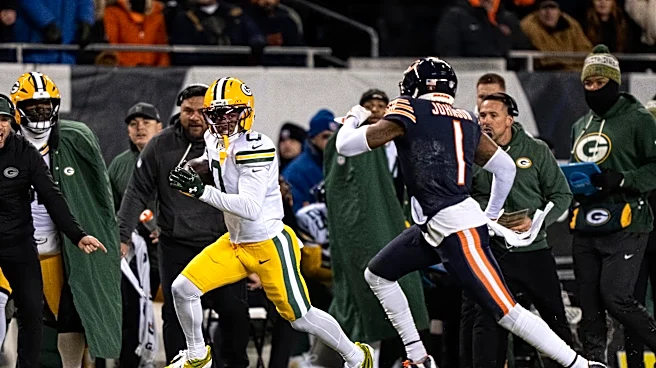
CB – Jaylon Johnson (Round 8): Going into his seventh season as a starting cornerback for the Bears, Jaylon Johnson has carved out one of the better careers for a cornerback that this franchise has seen so far. He’s a two-time Pro Bowler who was also an All-Pro in 2023, and he’s allowed a career targeted completion percentage of just 57.4% in coverage. I feel comfortable putting Johnson on any of the other wide receivers my colleagues selected in this draft (pause).
FS – Eddie Jackson (Round 9): In 2018, Eddie Jackson was the best safety in the NFL. I’m taking the overall body of work with Jackson, which is still pretty strong as a seven-year starter and a two-time Pro Bowler. He had a penchant for making big plays, scoring six defensive touchdowns during his time in Chicago. He ended his time with 15 interceptions, 45 pass deflections, and 10 forced fumbles.
SS – Kevin Byard (Round 15): Even as a traditional free safety, I felt the value of Kevin Byard this late coming off his stellar 2025 season was too good to pass up. He led the NFL with seven interceptions in 2025, earning Pro Bowl and first-team All-Pro recognition in the process. Byard’s elite coverage instincts and ball-tracking skills give me a fearsome ballhawking duo at safety behind him and Jackson.
CB – Nathan Vasher (Round 12): Injuries slowed his career down from 2007 onward, but Nathan Vasher’s first three seasons with the Bears were something special. He tallied an incredible 16 interceptions and 33 pass deflections in that span. Most notably, he was a Pro Bowler and a second-team All-Pro who finished sixth in Defensive Player of the Year voting in 2005.
My secondary has elite ball-hawking abilities that should be amplified by my front seven’s tenacity. My defensive line is scheme-versatile and filled with high-level contributors, and I have arguably the best defensive player in Bears history in Dick Butkus. When you have a front seven highlighted by Butkus, Dan Hampton, Akiem Hicks, and a prime Wally Chambers, you’re going to get a lot of pressure on the quarterback. With my strong secondary, I’ll be able to take advantage of the bad throws that come out of that pressure and create turnovers at a very high rate.
The Jakester’s Evil Demons from Hell Special Teams
K – Paul Edinger (Round 20): In my mind, there’s a clear top three kickers in Bears history in Robbie Gould, Kevin Butler, and Cairo Santos. I saw too good of value at offensive and defensive positions to take one of those kickers before they got picked, but once they came off the board, I didn’t want to get stuck with a bad kicker. Among the eight kickers in Chicago’s history with over 100 field goal attempts, Paul Edinger ranks third in field goal percentage, including over Butler. Edinger was automatic on PAT tries, having not missed a single one of his 133 attempts.
P – Tory Taylor (Round 23): To me, the Bears’ ranking of punters goes Brad Maynard, then everybody else. Bobby Joe Green came off the board right before me, but I was probably going to take Tory Taylor either way. The Aussie has arguably the strongest leg in team history, as his average of 47.8 yards per punt is currently the highest the Bears have ever had. His 38.7% percentage of punts downed inside the 20-yard line is the highest in Bears history, as well.
ST – Patrick Mannelly (Round 25): When I saw Devin Hester come off the board in Round 3, I knew there wasn’t another special teamer head and shoulders above the rest worth taking until very late in the draft. However, I did not expect Patrick Mannelly to fall to me all the way in the final round. I was the last drafter to pick a special teams contributor, and I got the best long snapper of all time out of the deal. Not too shabby.
Here’s a link to the Google document that has our entire draft.
Once all eight teams are announced, we’ll hold a tournament and ask you, the WCG readers, to pick the winner.