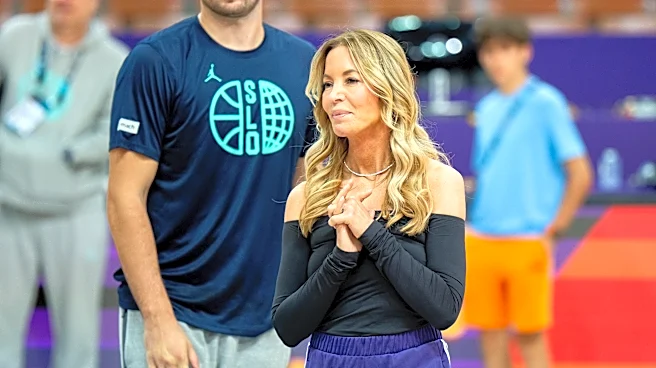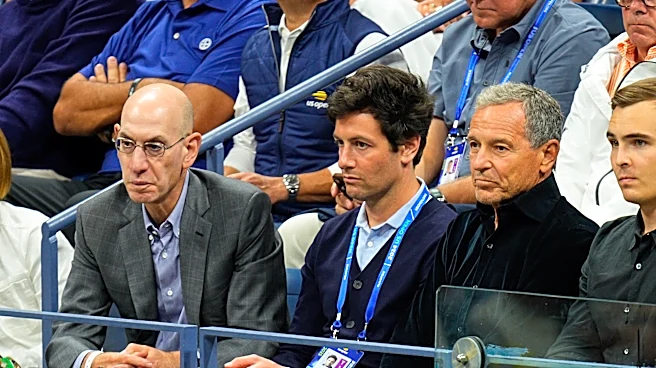



In June 2025, the Buss family agreed to sell majority ownership of the Lakers to Mark Walter at a valuation of roughly $10 billion. Less than one year after he was officially confirmed by the NBA’s board of governors, Walter sold his share of the Lakers to Bob Iger and Josh Kushner at a $12.5 billion valuation.
The sale raised plenty of questions at the time, some of which have since been answered. There was at least one outstanding question, though: Did the value of the Lakers really increase by
$2.5 billion in only one year?
As it turns out, the answer to that question indeed may be yes.
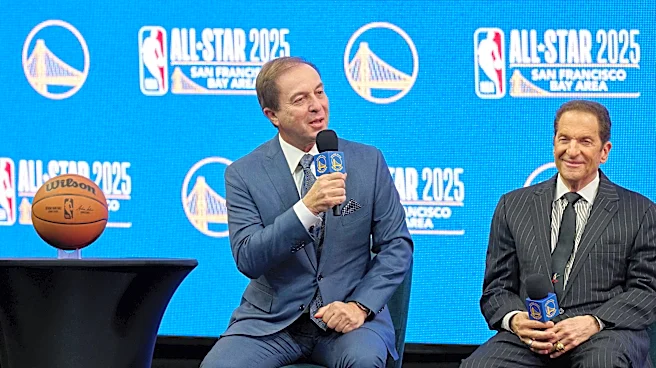
On Friday, Sportico put out its latest batch of NBA franchise valuations. The Lakers landed at exactly $12.5 billion, which put them behind only the Golden State Warriors ($14.5 billion) and New York Knicks ($12.8 billion). For now, those three are the only NBA teams worth at least $10 billion, although the upcoming Las Vegas expansion team figures to change that.
It might seem like a no-brainer that the Lakers are valued at $12.5 billion since they were just sold at a $12 billion valuation. But the notable takeaway from Sportico’s latest projections is how much valuations are on the rise across the entire NBA, not just L.A. Each of the 10 most valuable teams jumped by at least 20% year-over-year.
That’s particularly noteworthy given what happened amidst the Lakers’ latest sale. While Walter, Iger, Kushner and the Buss family have dominated the headlines, minority owner Patrick Soon-Shiong, who owns 4% of the team, isn’t going anywhere.
Chuck “Tiger” Kenworthy, the Soon-Shiong family attorney, told Bill Shaikin of the Los Angeles Times that Soon-Shiong believes “they are still undervalued.” To that point, Iger and Kushner have been telling prospective investors that the Lakers could be worth $30 billion within the next decade, according to Jessica Toonkel and Mark Maurer of the Wall Street Journal. That projection is built on the assumption that “TV and streaming rights double in value,” Toonkel and Maurer added.
Turmoil with regional sports networks has roiled the NBA’s financial ecosystem in recent years. The league is considering creating a “local League Pass subscription,” according to Mike Vorkunov of The Athletic, and ESPN chairman Jimmy Pitaro has already gone on record as being interested in that.
The question is whether the “Line Always Goes Up” strategy is sustainable moving forward, particularly with cost-of-living concerns rapidly increasing these days.
With cord-cutting on the rise and more streamers wanting a piece of the live-sports business, the NBA and other major sports have begun splitting their broadcast rights between more partners. That means more revenue for the league — the latest national TV deal tripled the value of the previous one — but it’s not exactly a consumer-friendly strategy, to say the least. (Unless, of course, you enjoy looking online and/or asking your AI agent to figure out where to watch your favorite team’s playoff games.)
How many ways can the NBA divvy up their broadcast rights before fans start tuning out? How many streaming services will fans have to subscribe to? What’s the limit?
Granted, those inside the industry don’t appear particularly concerned about whether franchise valuations are a multi-billion-dollar bubble.
“There’s nothing magical going on,” Zach Baran, the managing director of Arctos Partners (a private equity fund that purchases stakes in sports teams), told Sportico’s Kurt Badenhausen in September 2025. “It’s perfectly explainable by fundamentals and in the context of the rest of the financial market.”
Irwin Kishner, the co-chair of Herrick Feinstein LLP’s sports-law division, told Tania Ganguli of the New York Times earlier this year that he was “absolutely convinced that we have not reached anything close to a ceiling.” Live sports may be insulated from the impact of artificial intelligence, which could only further bolster the NBA’s financial standing. The NBA has also opened the door to sovereign wealth funds buying pieces of franchises, which in turn has driven valuations even higher.
So, while the $12.5 billion that Iger and Kushner ponied up was an eye-popping, record-breaking price, it might wind up being a steal of a deal in a few years… as long as we aren’t nearing the end of a franchise-valuation bubble after all.
Unless otherwise noted, all stats via NBA.com, PBPStats, Cleaning the Glass or Basketball Reference. All salary information via Spotrac and salary-cap information via RealGM.
Follow Bryan on Bluesky.