
The Wild Card Series came and went this year without much intrigue. The Yankees blew the Red Sox out of the water, the White Sox stuck the final stake into the dying heart of the Astros, and the Padres embarrassed the Cubs. None of those series were competitive, but there was one that at least reached a Game 3: the divisional battle between the Braves and Phillies.
For one side, it was a mental block that had to be erased. The Braves hadn’t won a playoff series since winning the World Series in 2021,
and had lost to the Phillies in consecutive NLDS in 2022 and 2023 to springboard their latest contention window. It’s a win-now core, and even though they had a lot of issues, they weren’t a team that can accept a loss this early.
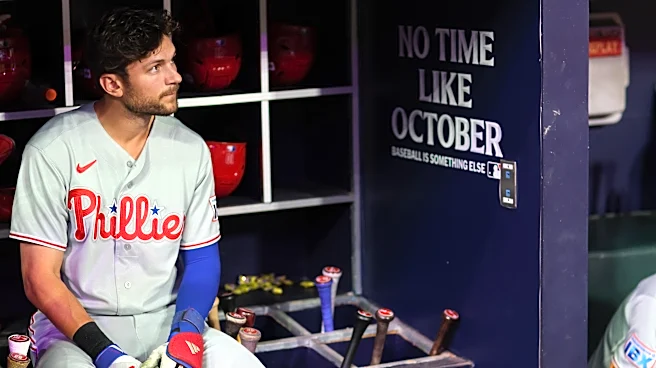
The other side couldn’t really accept that either: the Phillies had been eliminated earlier and earlier since a heartbreaking loss in the 2022 World Series. Their core was much older, with much less young talent to supplement it. They had stumbled into the playoffs with a disastrous final week that messed up their pitching. They had reached the point where most teams are at the end of their contention window. If you don’t show reason to believe in this core, it’s going to be dismantled.
The Braves won that grudge match in Game 3, sending the Phillies home with another disastrous season and ensuring no October baseball in the City of Brotherly Love for the first time in five years. It’s a sobering defeat for a team whose best players are past their prime, which has an interim manager, and which faces an extremely bleak outlook. Such a bleak outlook is solely because of one man and his ideas of roster construction: Dave Dombrowski.
At the same time that the Phillies and their brass were openly wondering what was next for the franchise, the Yankees were preparing to play Game 1 of the ALDS at Tropicana Field, which they lost last night in St. Petersburg. It came in the team’s 34th consecutive winning season and their ninth playoff appearance in the last 10 years.
Despite having a core of older veterans who do have a gradually closing window, like the Phillies, the Yankees found a lifeline in the development of two little-known prospects into the likely AL Cy Young and a slugging first baseman/DH who will get down-ballot MVP votes in his second full season. The much-maligned architect of this entire core, and several before it, is Brian Cashman.
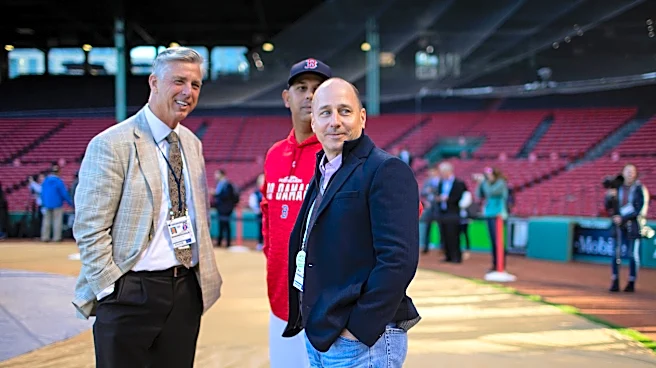
Cashman and Dombrowski have spent a long time as adversaries. While he was no longer in charge, a roster full of players acquired under Dombrowski beat the dynasty Yankees in the 2003 World Series. His next team, the Tigers, beat the Yankees in the postseason in 2006, 2011, and 2012. His Red Sox took out the Yankees in 2018 en route to a World Series. You’d think the guy who has won all these head-to-head battles would be heads and shoulders above, but then you must wonder why he’s had to bounce around so much.
Here, what we really get is two entirely different executives with entirely different philosophies about how to build a contender. Neither has much experience overseeing failure, so the large part of their careers has been defined by their climb toward the top of the mountain.
With Cashman, as we’ve seen for essentially three decades, it’s an approach that is more focused on long-term sustainability. He’s been blessed with the power of working with one of the league’s deepest pockets in the biggest market in baseball, which usually allows him the bandwidth to fill crippling holes. His approach in the offseason is predicated on getting high-end talent on big deals in free agency to flex their financial muscle, but also making shrewd, under-the-radar trades to fill much of the roster.
While he’s willing to shell out for big contracts both via trade and in free agency and absorb the financial risk that he knows ownership can deal with, he’s more measured when it comes to truly taking that next step. You’ll see him balk at an additional year in a free-agent deal or hold onto a top prospect in trade discussions for a top-level talent. There are times this works, but there are also times he’s left at the altar and burned for it. Yoshinobu Yamamoto’s free agency and trade discussions for Gerrit Cole in the winter of 2017 ring a bell for that.
That restraint is based on his belief in long-term sustainability. The Yankees rarely have a great farm system, but if they can produce an era-defining superstar (hello, Aaron Judge), it makes everything drastically different for roster construction. By that note, he’ll always leave holes on the roster to allow for a cheap, homegrown player to fill them. From here, it can go two ways. You can get a Judge and some great complementary pieces on rookie contracts like Gleyber Torres and Gary Sánchez, but you can also get burned by hoarding a prospect in trade talks (Chance Adams, Clint Frazier, Deivi Garcia).
This mentality is completely different than the one you’ll see Dombrowski employ. His approach to roster building, while similarly predicated on a very generous owner with deep pockets, is more based on taking risks in both free agency and the trade market, pursuing as much proven talent as possible. This approach narrows a contention window, but it’s something he’s able to work off of. It’s a lot easier to do your job when you identify a five-year window to win and disregard anything that comes after it.
Looking at how he’s managed this throughout his tenure, he made some gigantic trades and signings to turn Detroit into a perennial AL contender, acquiring Miguel Cabrera from his old stomping grounds in Miami in 2007 and David Price in 2014, while also inking Prince Fielder to a ridiculous nine-year contract. In Boston, he made blockbuster signings in Price and J.D. Martinez while swinging a franchise-altering deal for White Sox ace Chris Sale. In Philly, he’s been more muted, but gave a massive 11-year deal to Trea Turner to solidify the shortstop position. You’re never bored in an offseason under Dombrowski.
This approach is predicated on doing whatever it takes to climb to the mountaintop, looking to increase the team’s chances of raising the Commissioner’s Trophy at least one time by enough that it offsets the losses that will come down the road. It’s risky in a sport that has so much randomness in the postseason, but if it pays off, it’s genius. Just ask the 2018 Red Sox, who proceeded to bottom out in the ensuing two seasons and only make one playoff appearance over the next six seasons, if they’d trade that title for more wins in those lost seasons.
When it doesn’t work? It leads to a lot of resentment. The Tigers won a pair of pennants in 2006 and 2012, but in an extended, decade-long run with the same core of Cabrera and Verlander at the forefront, the Tigers imploded, missing the playoffs in four consecutive years between those pennants and ultimately wound up spending over a billion and burning up the farm system for no World Series. After Dombrowski was dismissed after a terrible 2015 season, the Tigers wouldn’t make the playoffs again until 2024.
The Phillies hired him to be their President of Baseball Operations in 2020, and he did what he does best. He got Turner; he got Kyle Schwarber; he extended Zack Wheeler and Aaron Nola. In lieu of blockbusters, he elected to slowly chip away at the farm depth by making a mountain of smaller moves every winter and summer. It was, honestly, his least all-in job as an executive since he was in Miami, but it’s still leading to the same place as Detroit. He was hailed as a savior in 2022 when the Phils won the pennant, but is now on the verge of being driven out of town as they stare down an unbelievably bleak future without a title to show for it.
The strengths and weaknesses of Cashman and Dombrowski are directly opposite of each other. They show the two ways you can run a perpetual contender. Cashman’s philosophy allows him to keep his job for decades and decades, while Dombrowski often gets canned after the contention window slams shut. You might think Cashman’s job security is a byproduct of organizational complacency, but there’s a reason he’s universally revered for his work in baseball circles.
The two rarely go head-to-head for big signings or trades, but you can imagine how they would go. Dombrowski might give a guy an extra year or two in a deal that Cashman is apprehensive about doing. It could either end up like Yamamoto, where his prime wins you multiple championships, or like Turner, who’s turning into one of the worst contracts in the sport just four years in. In the trade market, Cashman might balk at the asking price for a big-time player, while Dombrowski would go for it. That could lead to a massive success like Sale, or a massive failure like what the Mets did with PCA.
If Dombrowski ran the Yankees over the last 15 years, do we see a World Series? I’m not sure. I’d imagine he’d be much more interested in that mega-deal the Braves proposed in 2014 that would’ve sent Luis Severino, Sanchez, and Judge to Atlanta for a box full of proven talent. He’d also be much more likely to pull the trigger on a Kyle Tucker trade that included Ben Rice in the winter of 2024 or a Eugenio Suarez/Merrill Kelly deal with the D-Backs that would’ve sent Cam Schlittler to the desert.
All in all, as the Phillies enter an offseason where they must consider firmly shutting their contention window, the Yankees not only still have a chance to win this year, but seem to have enough young talent left over to win down the road when Judge and Gerrit Cole hang up their cleats. It’s the latest chapter evolving in the several decades that Dombrowski and Cashman have spent as two of the league’s most famous executives, a chess match to truly decide which is the better style of building a contender.