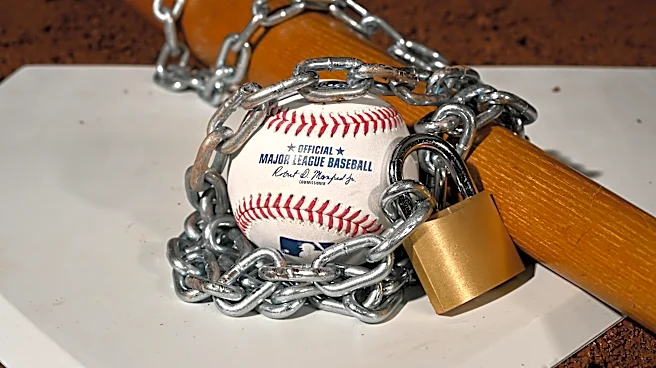

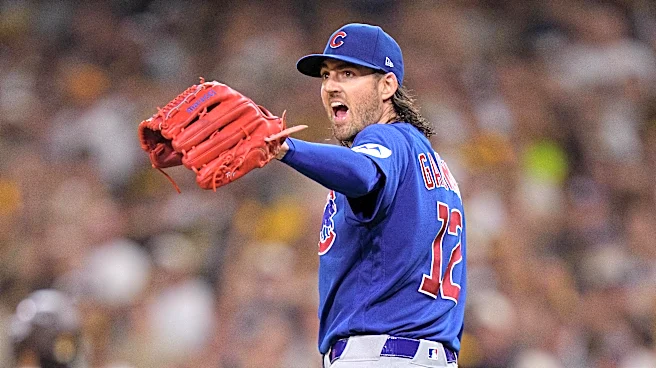
In the days leading up to the expiration of the previous collective bargaining agreement (CBA), teams rushed to sign players before the owners froze the sport in a lockout. Almost $2 billion in contracts were guaranteed in the days and hours before the clock struck midnight on December 2, 2021, including an astonishing $1.4 billion committed on December 1st alone. The Rangers inked Corey Seager and Marcus Semien to a collective half-billion dollars while Max Scherzer, Robbie Ray, and Kevin Gausman
all signed nine-figure deals at the buzzer.
That winter, there was not the specter of a battle over a salary cap looming over the game. Certainly, the owners wanted to limit what the highest-spending teams could shell out through punitive measures. And so we got the “Steve Cohen Tax,” adding a fourth threshold on payroll expenditures, one that would allow them to levy a 110-percent tax on overages and creating a new tier of competitive balance tax (CBT) offenders.
This winter is a different story. Seduced by the skyrocketing franchise valuations and sale prices in salary-capped leagues like the NFL and NBA, the owners appear to be presenting a unified front, digging in their heels with declarations that games will not be played until they get the cap they desire. The union on the other hand looks ready to fight and die at the altar of the salary cap, determined not to forget the sacrifices of Curt Flood and other such trailblazers by limiting their earning potential when no such restriction exists for the owners under the proposed cap-floor model.
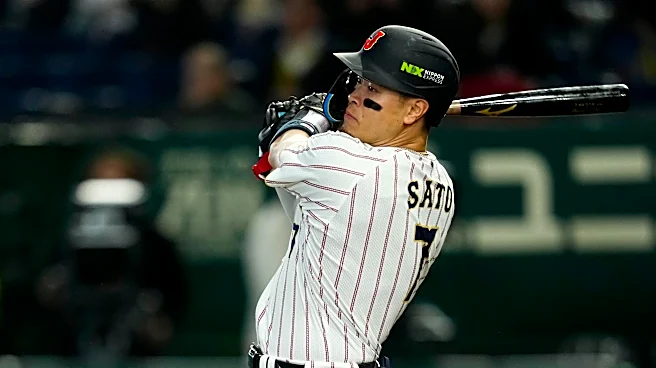
So far, the early days of this winter’s free agency appear to mirror the scramble we saw five years ago. Tarik Skubal headlined this otherwise thin class of free agents, and once the domino of his nine-year, $450 million deal with the Mets fell, the floodgates opened. At the time of writing, the total expenditure on the open market is already approaching $2 billion with still a little over 72 hours before the current CBA expires at 11:59 pm ET on Dec. 1. In addition to Skubal, Freddy Peralta, Trevor Rogers, and Teruaki Sato have signed for well over $100 million each while Adrian Morejon just signed the biggest deal for a reliever in history at five years and $115 million with the Blue Jays. The Mets alone have exceeded three-quarters of a billion guaranteed in just the last week between the Skubal mega-deal, extensions for homegrown outfielders Carson Benge and A.J. Ewing, and a three-year deal for lefty reliever Alex Vesia.
The question is whether this mad dash of activity can provide us any clues into both sides’ thinking as we approach the lockout and the likelihood of a cap-floor system going into place. The latest offer from the owners would see a $258.2 million cap and $180.2 million floor instituted for the 2028 season, with external free agents limited to signing a five-year deal and homegrown players a six-year deal on the open market. Tied to this cap and floor would be a number of concessions to the players, including an increase in the minimum salary to $1 million, 50-50 revenue split between players and owners, free agency after five years of team control for players over 30, an increase in pre-arbitration bonus pool money, and abolishment of the qualifying offer. The two sides have already agreed to a pair of provisions — equal media revenue sharing across all 30 teams and the owners dropping their proposal to escrow player salary in scenarios of revenue split imbalance.
At the top end you’ve got the Mets spending like drunken sailors. The Cubs have committed just shy of a quarter-billion to Rogers and Sato, leaving themselves less than $50 million below the proposed cap to fill the other three-fifths of their starting rotation. Look even at a team like the Braves, whose $105 million outlay on Tyler Mahle, Evan Phillips, and Mauricio Dubón represents the most they’ve ever spent in a single free agent period — $20 million a year for an oft-injured starter (a mid-rotation guy on his best days), $12 million a year for a middle reliever, and $10 million a year for a utility infielder.
This does not appear to be the behavior of owners worried about the imposition of a cap given both New York and Atlanta sit above the $258.2 million figure after these investments. At the very least, it hints at a mechanism for prospective cap offenders to worm beneath the threshold. There have been rumors of a future ability to grandfather in contracts signed under the previous (current) CBA, to amnesty existing contracts, or even implement a system like the NBA’s Bird Rights where certain qualifying contracts would not count or count less toward the final payroll figure. The three mentioned teams seem confident that the contracts signed would not cause them to fall afoul of a cap if implemented.
On the other end of the spectrum sit the teams that would violate the requirement to spend above a salary floor. The perennially skinflint Guardians guaranteed a franchise record for a free agent starter at $48 million over three years for 31-year-old Foster Griffin (another No. 3/4 type) and a further $17.5 million a year for the injury-prone Kris Bubic. The anachronistic Rockies shelled out $30 million per year combined for borderline starters David Peterson and Patrick Sandoval and absorbed the entirety of the $24 million still owed to the seemingly washed Luis Castillo via trade (in order to roll the dice on modest breakout arm Davis Martin). The White Sox handed out $22 million and $17.5 million a year, respectively, to journeyman starters Nick Martinez and Dustin May. This smells like a trio of teams paying considerably more than they would in years past for players of a certain caliber out of fear of breaching the rules surrounding a potential floor.
Add it all up and you get some conflicting signals. On one end are a number of teams who are spending like there won’t be a salary cap. On the other end, you’ve got several clubs who certainly appear motivated to raise their payrolls to a level closer to the proposed floor. Unfortunately, we therefore cannot draw any definite conclusions about whether the players or owners will win in the battle over a cap/floor system. It’s a game of chicken being played with the national pastime and the fans are the only guaranteed losers the longer this fight gets drawn out.