




In baseball, there is the game that’s played on the field, and then there are the games within the game. One of those games has to do with handedness. While only about 10% of the general public is left-handed, about 25% of big league innings are tossed by lefties.
This presents an interesting reality: batters perform better against the opposite-handed pitcher–and vice-versa–the vast majority of the time. When you see a player’s batting or pitching line, then, you can think of it as being split between
right- and left-handed opponents. Differences in performance versus same and opposite-handed opponents are so common and often so stark that it really should be at the top of our minds more often than it is.
So what is the reason why this is the case? There are a slew of them. But surely big leaguers would agree why they perform worse against opposite-handed players, right?
“I think it’s mostly angle,” Michael Massey told me about why righties are easier to hit for him.
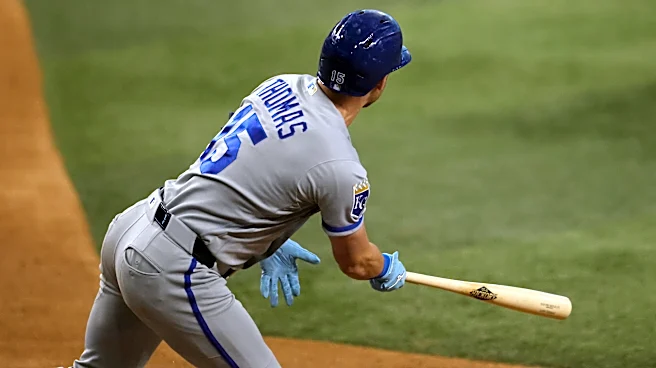
“I don’t know if I have an explanation,” Lane Thomas replied when asked why he hits lefties better.
“It’s just reps and it’s also kind of mental for me,” Carter Jensen said about doing better against righties.
Hm. Well. Maybe it’s a little more complicated.
Different release points, different angles
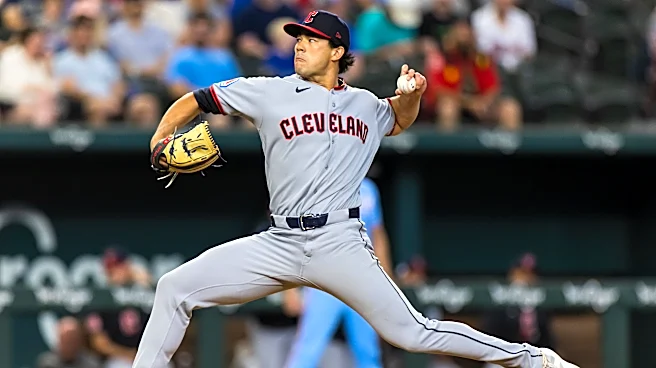
The most obvious difference between right-handed pitchers and left-handed pitchers is where the baseball leaves their hand. Since our arms are on the side of the body and human throwing motion is not perfectly overhand, the average release point between different-handed pitchers can be pretty stark.
Thanks to Statcast, we can see this relatively easily. Pitcher release angles vary widely, but generally speaking there’s about a four-foot distance between the release point of the average right-hander and the average left hander. That’s a pretty big difference.
Isaac Collins is one of the few remaining switch hitters in the league, and he’s the only switch hitter on the active Royals roster. He says the angles of pitches coming to the plate are the primary reason he’s a switch hitter.
“Since I was about 13, 14, I’ve only hit right-handed off lefties and I’ve only hit left-handed off righties,” Collins said. “It’s really just the angle of balls coming in. You see the ball better…It’s just kind of like a visual thing.”
Do lefties and righties have different arm angles compared to each other? While the sidearming lefty reliever may come to mind, the reality is that fewer left-handers throw at extremely low arm angles than righties. Across both lefties and righties, the median arm angle is 39.1 degrees. But while 45.5% of lefties throw at an arm angle below 39.1 degrees, 51.2% of righties do.
There is another factor here, Carter Jensen mentioned: release-point distance. The difference is small, but you have a little more time against opposite-handed pitchers. “[With] left on left heaters, you’re going to have less time against the [lefty] than you would have right on left here just because of the angle and the extension,” Jensen said. “[The] left-handed extension from a guy throwing a heater is a lot closer than a right-handed.”
Pitch movement
Arm angles and release points are important, but when you combine angles with pitch movement, you start to get to some interesting combinations. Identifying pitch types can be tricky for even seasoned baseball fans, but one of the key differentiators is horizontal movement. Pitches have either arm-side movement or glove-side movement. These can be called “run” or “cut” or “sweep,” but keeping to arm or glove movement is clean (and it’s what Statcast does).
While some pitchers throw funky pitches that don’t follow the standard movement, in general you can categorize types of pitches this way:
- Arm-side break pitches: Four-seam fastball, changeup, sinker, splitter
- Glove-side break pitches: Curveball, cutter, slider, sweeper
Of course, “arm-side” and “glove-side” mean opposite things to the batter’s perspective depending on which side of the plate you stand. Against same-handed pitchers, arm-side movement breaks towards you and glove-side movement breaks away from you. But against opposite-handed pitchers, arm-side movement breaks away from you and glove-side pitches break towards you.
Can arm-side pitches like a changeup or sinker move a lot horizontally? Sure. But it’s the glove-side pitch types that are the ones with a lot of horizontal movement. Lane Thomas identified that as the biggest reason why it’s more comfortable to face opposite-handed pitchers.
“I just think you don’t have anything breaking away from you [against opposite-handed pitchers],” Thomas said. “Everything starts away and it’s coming into you…a lot of the breaking balls just start right at you to be a good pitch to hit.”
And for Michael Massey, the vertical movement is another factor to consider.
“For me, at least lefties that kind of have the ‘X’ game and make it sink and sweep, make it a little bit tougher because they can really stretch the plate,” Massey said. “The lefties that are more foreseeable are where nothing’s coming in, probably a little bit easier of a matchup for a same-side guy, just because you don’t have to worry about anything coming into you.”
Practice, practice, practice
There are certainly some very real impacts on platoon hitting, but just about the only consistent thing mentioned was the impact of experience on hitting same-handed pitching. The more you do it, the better you get.
“Part of playing this game right is physical mechanics and the swing and all that stuff, but the other part is your decision making and your decision making is built through the reps,” Massey said. “Every time you see a right-hander that throws from this angle with this type of spin, it goes into your database. And the next time you see that, you’re a little bit more familiar with it. And so I think obviously when you don’t get as many reps at doing something, you just don’t build that database as much and that database isn’t as advanced, which makes it tougher to be able to lay off certain pitches or see certain pitches because your mind hasn’t seen it enough.”
Jensen agreed. “I think I see the ball perfectly fine with both sides,” he said. “I think that against righties it’s just easier because I have so many more reps against righties.”
“I haven’t really gotten as many at-bats off righties,” Thomas said. “So it’s obviously harder to do something I haven’t done consistently. But that just seems to be the trend in the game or splits wouldn’t even be a thing.”
There’s something to be said here that players shouldn’t be shoved into a platoon-only role too early as pros, because that just reinforces the issues at play with getting enough reps. However, there are only so many plate appearances you can get against left-handed pitching in particular. Left-handers are over-represented in the pitching world, but when only 10% of the population is left-handed, opportunities to face them regularly are inherently limited.
At the end of the day, there are so many factors in play that the mental side of things is nearly as important. “I think it’s just a tricky subject,” Jensen said. “I feel like it’s different for everybody. Or for me, it’s just reps and also kind of mental.”
“I don’t dislike hitting lefties…at the end of the day hitting righty or lefty, if I stick to my plan, I’m in a good spot.”