




Global viewership, cultural impact, and revenues — by every measurable metric, the World Cup is the biggest sporting event in the world. So what happens when you take a spectacle viewed by over five billion people and put it in North America? It gets bigger, and better.
The 2026 World Cup broke a 32-year-old record on June 16 after a total of 281,223 fans attended four group-stage matches. Impressive. But just six days later, that historic milestone wasn’t just beaten — it was shattered. 288,007 fans,
packed shoulder-to-shoulder across four stadiums in the United States. Insanity.
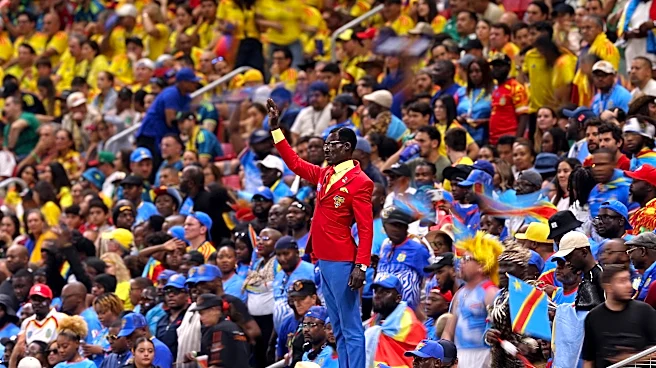
But, tournaments aren’t just measured in stadiums, they’re measured in the streets. And needless to say, the streets of the United States, Canada, and Mexico have transformed from grey, humdrum avenues synonymous with traffic, impatience, and rage, into living, breathing, city-wide carnivals. Official FIFA metrics confirmed that Fan Festivals after the first round of the World Cup surpassed the staggering two million visitor mark.
The best part? It’s not just the fans who are showing up for their nations. Players and nations are producing a footballing buffet for the ever-hungry eyes of fans to feast upon. High-intensity pressing, patient, positional control, electric wing-play, defensive tenacity, low-blocks. Pick your poison — the 2026 FIFA World Cup has it all!
FIFA’s 48-team gamble paid off

FIFA’s decision to expand the World Cup from the traditional 32 teams to 48 teams in 2017 was met with extreme scepticism. A lack of quality, a cop-out route to the knockout stages, player burnout, and a clear money-making farce intended to line pockets — these were all valid concerns coming into the first-ever 48-team edition of the World Cup, but so far, only one has been proven true.
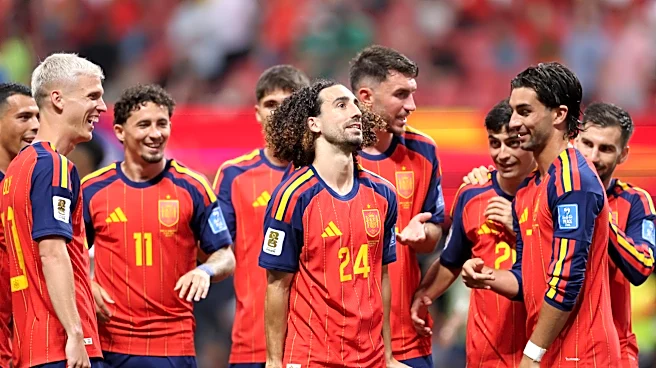
Cabo Verde, ranked 67th in the world according to FIFA’s rankings, came into the World Cup as nothing more than cannon fodder. Fast-forward two weeks and the island nation has produced two of the most stunning results in World Cup history. First, the Blue Sharks produced a resolute defensive display to hold tournament favorites Spain to a goalless draw — earning 40-year-old goalkeeper Vozinha worldwide fan-favorite status in the process. The result shook the footballing world, but many wrote it off as a one-hit wonder. Well, just one week later, Cabo Verde proved they didn’t just prevent goals but scored them too, putting two past two-time World Cup winners Uruguay for a thrilling 2-2 draw.
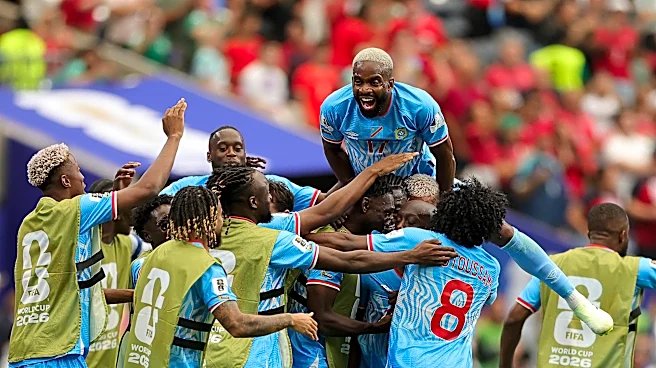
If Cabo Verde’s spirited performances weren’t enough to convince you, then what about Australia’s shock 2-0 masterclass, or Paraguay’s 1-0 nail-biter against Turkey? Perhaps DR Congo’s 1-1 draw against Cristiano Ronaldo’s Portugal? How about New Zealand, the lowest-ranked side in the tournament, coming back twice against Iran to snatch a 2-2 draw? The list goes on and on. The craziest part? The group stage isn’t even over yet!
Given the surprise performance of so many underdog nations, one of three things is going to happen with the best third-place teams:
- Scenario A: The underdog nations continue to impress, snatching a second-place spot and leaving nations with more pedigree to duke it out for the third-place lifelines.
- Scenario B: The underdogs buckle slightly but do just enough to earn one of those best third-place spots, advancing to the knockout stages.
- Scenario C: The underdogs finally live up to original expectations and fail to carve their fairy-tale path to the next round.
So, do we get surprise-package underdogs exceeding expectations, or teams with greater footballing pedigree hungry to prove themselves in spite of underwhelming performances? Either way, I don’t see any cop-outs there.
As for player burnout, the World Cup is still in its early stages. While the heat and humidity in some games certainly don’t help the cause, the ever-present hydration breaks and longer rest windows between games, thanks to the expanded format, will certainly aid recovery.
The World Cup is bigger and better than ever.
The Masters of the World


Naturally, the world’s biggest sporting event brings with it the world’s biggest sporting stars. What it also brings is the expectation of an entire nation on their shoulders, and the pressure to perform with millions of judging eyes ready to criticize their every move. And therein lies the crux of what separates the good, great, or even world-class players from the world’s best. The world’s best don’t crack under the weight of expectation and pressure — they bask in it, and that’s exactly what they are doing in this World Cup.
Lionel Messi, Cristiano Ronaldo, Kylian Mbappé, Erling Haaland, Harry Kane, Vinícius Júnior, Lamine Yamal, Michael Olise — spanning generations and nations, these footballing titans are showing their pedigree on the world’s greatest stage. Some started flawlessly, while others had to fight back. But all of them have used this tournament to remind the world just why they are as special as they are.
The Strong Starters
What’s the difference between Kylian Mbappé‘s, Erling Haaland’s, and Harry Kane’s starts to the World Cup?
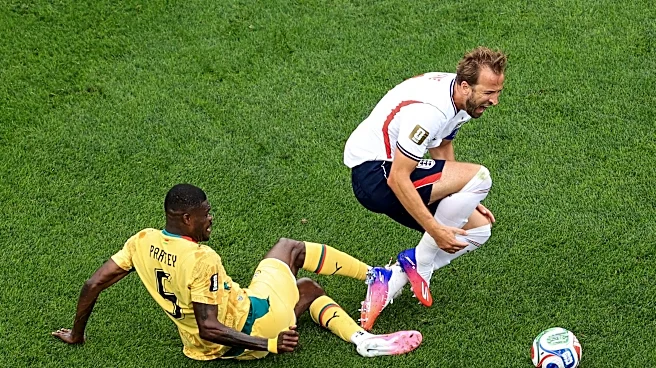
Well, not much, because they all bagged a brace in their opening fixtures. While Kane struggled to find the net during England’s goalless draw against Ghana, Mbappé and Haaland picked up right where they left off, scoring another two goals each in their respective victories against Iraq and Senegal.
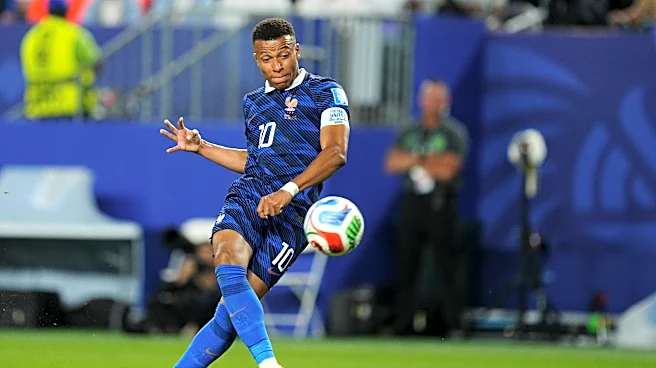
Meanwhile, Olise hasn’t found the scoresheet yet but has arguably been France’s best player, serving as Les Bleus’ attacking lynchpin. Entire articles could be written on each of them, but whether for club or country, they are simply freaks of nature — and there is more to come, guaranteed.
The Comeback Kings
Cristiano Ronaldo and Lamine Yamal have made two very different types of comebacks in this World Cup.
Ronaldo was the victim of relentless slander following Portugal’s 1-1 draw to DR Congo. Roberto Martínez’s Portugal as a whole were extremely poor; nonetheless, Ronaldo bore the brunt of the blame. To make matters worse, the 41-year-old was caught up in a social media storm, nearly sparking a civil war within the Portuguese camp.
So, how did Ronaldo respond?
He bagged a brace. Sure, it was against a modest Uzbekistan side who came into the game as overwhelming underdogs, but it was Ronaldo’s typical response that made it so special: back him into a corner all you want, he’ll prove you wrong.
Lamine Yamal, on the other hand, came into the World Cup on the back of a fresh injury setback. There were serious fears that the 19-year-old was going to miss the tournament altogether. However, after a sharp but ineffective substitute appearance against Cabo Verde, he is back and firing on all cylinders after scoring in Spain’s 4-0 victory over Saudi Arabia.
The youngster’s ability to perform at this level, at his age right on the back of a serious injury proves just why he is one of the world’s best.
The Pressure of a Nation
Brazil comes into every World Cup with massive expectations, and this edition was no different.
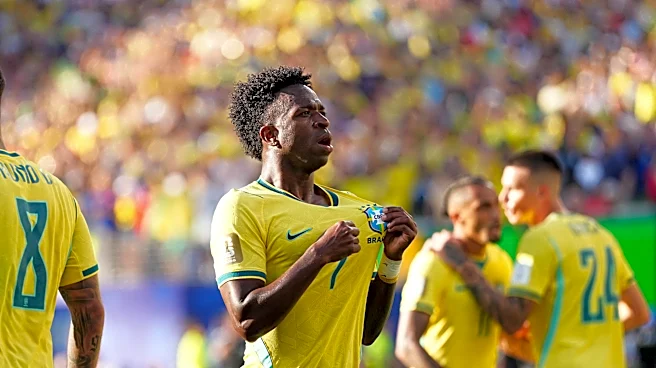
The Seleção fans may have been deeply disappointed with their opening 1-1 draw against Morocco. But despite Carlo Ancelotti completely fluffing his tactical setup, Vinícius Júnior took all the responsibility, stepped up when it mattered most and scored to salvage a vital point. The Madrid winger then picked up right where he left off against Haiti, scoring another while bagging a clinical assist.
Despite having the pressure of the world’s most passionate footballing nation on his shoulders, Vini shook it off like water on a duck’s back.
The Outlier
Lionel Messi.
18 and counting: Messi defies logic, and age

It’s fitting that the biggest World Cup of all time would also feature the greatest player of all time.
Coming into the tournament, just the sentiment of Messi running around and touching the ball a few times in his sixth and final World Cup would have been enough to satisfy most fans — but impossibly, The Little Magician has somehow gotten even better.
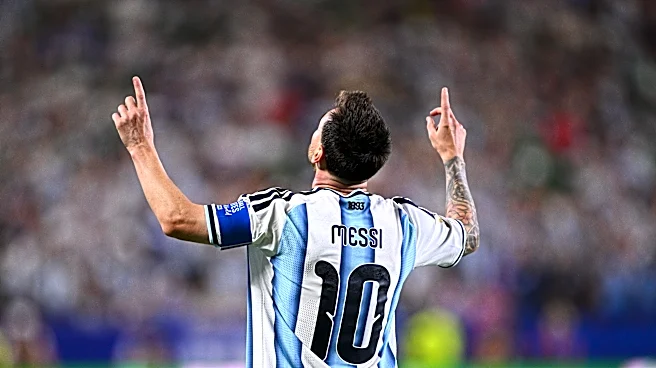
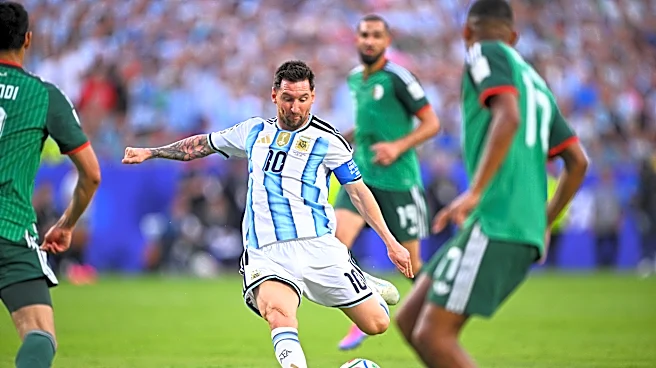
Messi started off his 2026 World Cup campaign with a sensational hat-trick against Algeria. Just five days later, La Pulga snatched a brace against a well-drilled Austria side. Five goals in two games. An immaculate start, but to Messi, those numbers are ordinary. Until you remember that this is a 39-year-old Messi who is often teased for not being able to run any more. Yet, he is still performing at the top of his game on the world’s biggest stage.
Messi has now been involved in 12 goals in his last six World Cup matches, scoring ten and assisting two. He has scored goals in six consecutive World Cup games, matching the record held by France’s Just Fontaine and Brazil’s Jairzinho. He has scored 11% of Argentina’s World Cup goals. But most importantly, he is now the top scorer in World Cup history with 18 goals.
The fact that Messi has adapted his game to become even better while still acting as the heartbeat of Lionel Scaloni’s Argentina side all at the tender age of 39 defies all logic.
History is unfolding right in front of our eyes. But I warn you, it’s fleeting. The days of watching the greatest player to ever play the beautiful game are numbered. So I urge you: soak it up, and take it all in.
We are truly blessed to be alive to witness Messi’s magisterial reign over the footballing world.
Hydration Breaks: Fabricated Thirst

FIFA have been the most controversial aspect of the World Cup. They have altered the format of the competition, changed the rules of the game, and have been involved in a shameless ticketing scandal. But the most controversial addition to the World Cup has undoubtedly been the mandatory television commercial cash grab hydration breaks.
Sure, a hydration break makes sense when the climate and conditions call for it.
Take the tournament opener in Monterrey. The thermometer hit a brutal 100.4°F (38°C), but inside the stadium’s bowl design, trapped humidity cooked the pitch to a staggering 110°F (43°C). In a furnace like that, a hydration break isn’t just sensible — it’s mandatory player welfare. But how does FIFA justify the exact same protocol for a late-evening kickoff in Vancouver, where the air sits at a crisp 62°F (17°C)? It is entirely absurd. These are elite, peak-fitness athletes competing on the world’s grandest stage, not a group of weekend joggers needing a breather every twenty minutes.
But the biggest issue with the hydration breaks isn’t FIFA’s blatant cash grab disguised as a farce advocating for player protection. By now, FIFA’s money-making antics are expected. The hydration break’s biggest issue is that it destroys what makes football the best game in the world: flow.
Football can be fast-paced and electric, but the game often takes time to grow into. This is true for players and fans. Players need time to get their touch in, and feel their opponents out, while fans need time to settle into the narrative, map the tactical chess match, and let the atmosphere consume them. There is no determinate time this takes, but the hydration break often cuts into this process, leaving players and fans frustrated at having to start all over again.
It’s clear to see the mandatory hydration breaks for what they truly are: a shameless $250m ploy.
Does that make it any less frustrating?
Absolutely not.
If FIFA possessed even a shred of sporting integrity, hydration breaks would be strictly conditional—triggered only when the climate breaches a genuine danger threshold. Otherwise, the beautiful game should be left to do what it does best: flow uninterrupted.
Football Brings the World Together

There is a transcendent power behind sport to unite people, and Nelson Mandela captured it best: “Sport has the power to change the world. It has the power to inspire. It has the power to unite people in a way that little else does.” In a world increasingly fractured by division, this World Cup has quietly evolved past a mere tournament on a pitch into a mirror of global harmony.
Look no further than the viral videos currently dominating our social feeds — foreign fans navigating the sprawling, hyper-scaled reality of North American culture for the first time. On the surface, these clips are delightfully bizarre, funny, and wildly entertaining. But look closer, and there is a profound, hidden beauty. People of every age, nationality, race, and creed are converging in the host cities, trading cultural curiosity rather than conflict. They are celebrating what makes the United States, Canada, and Mexico unique, while proudly wearing their own heritages. It is a silly internet trend slowly transforming into a beautiful, vital lesson that a fractured world is desperate to hear.
Amidst the corporate noise and political turmoil, fans have proved Mandela”s words true 26-years later. And it’s all thanks to the beautiful game.
Bonus storyline: The Trionda May be Causing More Problems Than Anticipated
This content creator pointed out a valid observation made by former Manchester City goalkeeper Joe Hart.
Hart details just why long-shots have made a welcome return to football after teams previously prioritized possession.
Turns out, the ball may be the reason why.
The Trionda clearly isn’t anywhere near as unpredictable as the legendary Jabulani, but learning to utilize it may be a small advantage that means the difference between victory and defeat.
Join the conversation!
Sign up for a user account and get:
- New, improved notifications system!
- Fewer ads
- Create community posts
- Comment on articles, community posts
- Rec comments, community posts