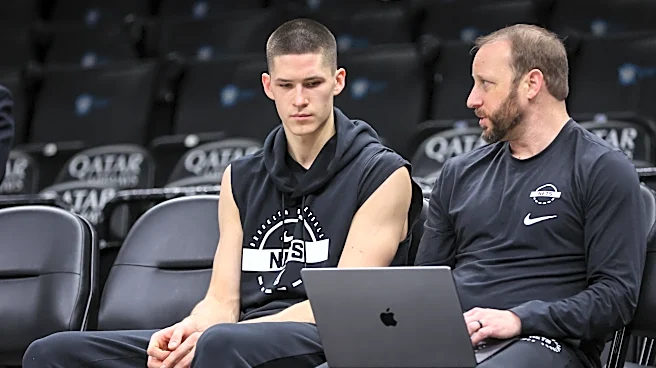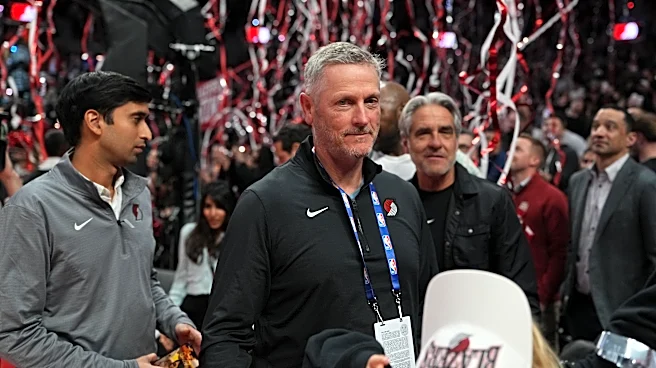









Yesterday the Portland Trail Blazers laid off 70 members of the organization, an efficiency and cost-cutting measure occasioned by the transfer of ownership from the Paul Allen Estate to Tom Dundon’s ownership group in March. Predictably, the news caused plenty of angst. The event itself was by the numbers: management calls a meeting, HR presides, people find out the news and plans change. This is repeated in corporate America multiple times a month. But the news hit home for Blazers fans, triggering
a tidal wave of emotion, a few accusations, and plenty of bickering in our comments section.
With a night’s sleep to process these things under our belts, let’s take a look at the situation. Honestly, we need a little processing before we can go on together among ourselves and with the organization.
Here’s the bottom line: there are levels to this story. How you view it depends, in part, on which level you’re operating from. Unfortunately, Blazers fans are being forced to ride the elevator, confronting forces that they’re all too familiar with in real life but aren’t accustomed to infecting their sports enjoyment. That change in elevation at the hands of Powers That Be is causing plenty of friction.
Here’s how.
Ground Level
To me, the most appropriate place to start this discussion is at the ground level, standing side-by-side with fellow human beings. Real people got fired yesterday. Lives got changed. We may not know all their names, but we can identify with the people who lost their jobs. It’s sad. It hurts. I wish it didn’t happen. Hopefully so do you.
No matter what else we say about this situation, that’s where our attention needs to start and end on this matter. We mourn with the people who were affected. We affirm that they have worth beyond just employment utility. We empathize with their fear, sadness, and pain. We want them to land on their feet and find renewal, professionally and personally.
For their sake, if nothing else, I’m comfortable saying this was a negative thing. Even if we argue that negative things are sometimes justified to make way for greater goodness, that doesn’t make them not-negative. Sometimes sadness and loss just need to be sadness and loss.
That’s why, at a basic, human level, the central thing we should say about this is, “I’m sorry.” End of story.
50,000-foot View
Having affirmed the ground level as our central perspective, let’s zoom out to the ultra-high-level view, above sports and the NBA franchise we’re discussing.
We live in a society defined by a dividing line. People on the top side of that line are attaining escape velocity, breaking free of the middle-ground and sailing into wealth previously-unknown. Folks on the bottom side of that line are finding it increasingly difficult to maintain a standard of living that was once considered normal. Gas, food, rent or mortgage…these things are taking a higher and higher percentage of income. A simple vacation has become a major expense, approaching unaffordable. A medical emergency is a financial disaster for many Americans.
From the underneath view, billionaires and people whose wealth is increasing seem not to care about the hardship others are experiencing. Some of them probably don’t realize it, as they haven’t shopped for their own groceries in years and no longer have to make financial decisions comprising 100% of their accumulated wealth. Others do realize, but cover themselves with the polite (and seductive) fiction that they work harder, that they’re smarter than everyone else, or that this generation is lazy, incompetent, or distracted. Whatever the excuses, when we’re doing well we find ways not to care about others who aren’t.
Public leadership—traditionally our connection to the larger community and our protection from abuse—seems not to mind this encroaching crisis as long as they end up on the right side of the divide. We made a mistake which will probably be judged harshly in historical context: we equated wealth with success and then elected “successful” people to represent us publicly. The wealthy were aided by their ability to manipulate a communications market increasingly susceptible to financial investment, less reliant on interpersonal knowledge and relationships. Most of us hardly know our candidates beyond the TV ads and lawn signs we see during election season. Those who buy the most tend to win the most.
As we’re finding out, when rich people take the reins of power they, somewhat unsurprisingly, make decisions that benefit the rich. That’s literally how they got that way in the first place.
We now have public figures claiming openly that the needs of the average person don’t matter compared to their aims. We could be forgiven for a healthy suspicion that the closer common people are to indentured, debt-laden servitude to a small group of wealthy oligarchs, the better those oligarchs will like it. This is not a comfortable position if you’re outside of that privileged circle.
In this environment, a story that equates to, “Billionaire Fires Local Workers Who Make Less Than 1% of His Annual Income to Save Money” is going to hit like a porcupine dropped into a preschool. The unavoidable, interpersonal sadness of neighbors losing their jobs meets uncontrollable, un-addressable fear from the atmosphere. Questions arise like, “Should there even be billionaires? Is it possible to be ethical and wealthy in this environment? And, by the way, how am I going to eat or afford my house in ten years at this rate?” These aren’t just theoretical anymore. They’re societal-crisis baking soda meeting the vinegar of our personal loss and empathy. And we can’t do a damn thing about either.
Boom.
The Middle Ground
Having covered the low and high end of this equation, it’s time to face another reality. The people who DO make these decisions aren’t operating at either of the levels we just talked about. They’re at an elevation between them. That doesn’t mean compromise. This isn’t a “middle ground” where everyone comes together. Rather it’s a place set apart, higher than the personal, lower than the societal, where businesses and corporations live.
A treatise on the American corporation would be far too long to cover here. Let’s summarize like this.
In a legal sense, corporations are considered as “people”. This is why you see wealthy folks forming LLC’s as soon as they first start getting money. It’s like making a shadow self. If you get sued, or if your business has to fold, those things happen to the Corporation-Person. That person is distinct from you, personally. Yes, they’re intertwined. Your money is going into that corporation. The money it makes eventually filters to you. But there’s a level of protection, of separation. For old-school D&D players, it’s like casting a Mirror Image spell. Attacks against you actually hit the duplicate. You get to protect your own hit points without putting them at risk.
This pretty much summarizes the difference between people above the economic dividing line and below it, by the way. Through corporations (and investments in same), wealthy people can play with their money, expand it, even risk it sometimes. They might lose it all! But “all” is relative here. If your corporation goes belly up, you still have your personal house. You still get to eat tonight. You still get to send your kids to college. For people who don’t operate on that level, their job is everything. If their employment goes away and they don’t get income, they don’t get to keep their house, eat, or give their family a decent life.
You can see the difference clearly. One set of people is strategizing with, and through, the corporate entity. Another set of people is basing their whole lives on it. Who has more skin in the game depends on your perspective. If you measure just amount of dollars, it’s the rich owners and investors. If you measure percentages and dependence, it’s the workers by a mile.
Here’s the key point: the increasing lack of dependence on the system (occasioned by great wealth) allows rich people to change the rules of the game in ways that deeply-dependent workers can’t. Corporate owners and investors can lose or gain $7 million and treat it like a number on a spreadsheet somewhere. For the people working in the trenches, that would either be completely life-changing money or a disaster so epic that they couldn’t dig out of it in their lifetimes. The people above have choices, the people below don’t. They simply bear the effect of those choices.
The point of business has always been to make money. That’s been true from the first mom-and-pop stores, sawmills, and factories that popped up across this land. But once upon a time, making money was a by-product of your business. You created or sold a good product. On the strength of that product, you developed a relationship with customers. When that relationship blossomed and sustained, they gave you money. This allowed you to eat, buy a house, and perhaps to expand your business.
Somewhere along the line, the rules got changed by the people who owned and invested in corporations. The purpose of a corporation became to make money for its founders and investors. That was the center, the highest ideal, the measure of success. The actual product became secondary, a means to that end.
You can see the effects of this change all around you. In the older model, quality of product was everything. Businesses wanted to provide the best merchandise to attract and keep the most buyers. You gave a lot, hoping customers would give a lot in return. After the rule change, everything flip-flopped. To make money, you actually want to give the cheapest product that a customer will reasonably buy for X amount of dollars, thus generating the most profit. The gap between expenses and revenue—or Return on Investment—became deified. Instead of getting the best hamburger (because you’re most likely to pay for that) you’re going to get the best ratio of cost to revenue (because the business will profit most from that).
Remember those Corporation-People? Once upon a time they were fairly gracious and giving, trying to sell you good stuff because they had the capacity to create it and because they had to deal with you one-on-one and deliver on their product. Now those corporations are far closer to grifters, trying to extract as much money from you as they can manage with each exchange. Like politicians in their campaigns in the paragraph above, businesses take advantage of depersonalized communication to throw their net wide, knowing that attracting a small percentage of a million people is more profitable than attracting 100% of a thousand people. Once they have you, they package, streamline, upsell…whatever it takes to get the most repeatable transactions with the maximum profit per interchange.
It’s completely non-surprising that corporation-people function like this, because the people behind the corporations—the owners and investors—are, for the most part, doing the exact same things to the corporations that the corporations are doing to consumers: extracting money from them.
The Portland Trail Blazers have had three owners in their history. The first was a real estate mogul investing in a start-up franchise in the infancy of the modern NBA…pre-modern, even. The team was both an experiment and a long-term investment. The second was a semi-retired tech billionaire with a love for the sport who bought the team as a hobby and a passion project. In both cases, the investment centered around NBA Basketball.
The third owner is a businessman, a corporation head, a different type of billionaire in a different era. I’m not saying the passion is lacking. We don’t know that. I’m not saying he’s a bad person. We don’t know that either. We do know that this owner comes from a corporate world among a coalition of corporate investors. We can also posit that under corporate leadership, the franchise will become heir to the assumptions and conceits of that background. That includes everything we just talked about: viewing this investment as a means to make a profit, centralizing that profit as the purpose of the franchise, emphasizing streamlining and efficiency, cost-cutting and revenue-maxing, care about customer experience and perception over the actual quality of the product, and detachment from the ancillary investments of others (emotional investment, tradition, needs of labor, interpersonal relationships, or whatever) outside of those corporate terms. That’s not a bad thing. That’s a normal and necessary thing from a corporate point of view.
It’s also a hell of a culture shock to Blazers fans who have grown with this franchise under different owners with vastly different priorities: establishing a community identity, fighting for basketball excellence, expressing passion, over-investing to achieve more despite the cost, and so on. This is a new world, Blazers fans. Everything you learned about your investment in this team has one of two fates: become a lever to keep you investing or get thrown aside.
If this was a family (as the team resembled in the 1970’s) or a lifelong passion (as it was in Paul Allen’s heyday) it would make total sense to retain a larger local staff and emphasize their devotion to the organization. If this is a business, retaining that extra cost makes zero sense. It’s a liability, just dumb from a corporate point of view.
And that’s how friends and neighbors who have worked for the franchise for decades get fired while the business gets more efficient and the societal angst of Blazers fans gets triggered big time…all in a situation where, ironically, everybody is right from their own point of view.
Summation
Several things can be true in any given situation. Tom Dundon is probably a smart businessman. The Blazers are definitely a corporation. That corporation has also traded on tradition and small-town, family feeling. Billionaires in general and corporations specifically are detached from that relational glue nowadays, viewing it at best as a means to an end instead of a valuable attribute in itself. These layoffs might make total sense. They also suck big-time, especially for the people who are undergoing them. Blazers fans are in for a definite change with this new set of owners, and not just on the court. In some ways, that’s going to suck too. These things are out of the hands of 99% of us. The 1% who do have some agency also got to that position following completely different priorities than the rest.
What can we do about this? Not a thing. It is what it is. But it is helpful to realize a couple things.
First, the chances that anyone is truly “evil” in this situation are small. The employees who got fired were neither lazy nor bad at their jobs. They didn’t deserve what they got in exchange for their loyalty, labor, and dreams. Blazers ownership is more culpable, but not inherently terrible for following corporate aims in a corporate situation. Fans are not bad for mourning and objecting. Nor is understanding and/or excusing the firings a terrible thing from a certain point of view.
Second, if there is an enemy here, it’s the detachment that keeps us from seeing each other. We’ve all been participating in economic, political, and social systems which increasingly divide us. Every bit of that division contributes to the conditions that led us here. Bridging the divide is the major work this generation of humanity is tasked with.
I understand that some of us—usually the empowered—are invested in not having that happen. But for the rest of us, just getting angry about that, even with wholly righteous anger, is not a complete solution. When you go to the doctor, you’re looking for two things: first truth, then healing. Getting the first without the second isn’t a satisfying solution, but a terrible trauma. However we do it in our individual and communal lives, we need to find ways to change the systems that make hurting and ignoring each other make sense. That may include how we approach discussions in comments sections of sites like this one.
Hopefully there’s a chance that all of us—franchise ownership, people on the ground, and fans muddling between—can be united by the actual product we gather around: really good basketball. The door isn’t shut on the changes this ownership group will make, nor on the shock of the surrounding community that’s used to having it different. But the door isn’t shut on co-creating an experience we can all be proud of either. Human experiences are like that. When we get beyond ourselves, investing in the space between us, beautiful things happen. That’s a goal we can all aspire to. Secretly some of us will be thinking, “This is making me money,” and others, “This is keeping me employed,” still others, “This is the team I’ve loved since my youth.” What’s happening in the back of our heads doesn’t have to be as important as what’s happening in front of and between us. Maybe, if we’re lucky, we’ll all be free to celebrate that instead of getting thrust into the muck of our preconceptions and burdens…or flaunting our personal privilege to rise above them.