





One thing I have always said is that the best ideas for content are stolen, and I am not above going ahead and stealing other people’s ideas and ultimately making them my own.
I admire the work Sean McIndoe, better known on the internet as Down Goes Brown, puts out. One of my favorite recurring themes from him are the “best rosters” you can build under certain parameters. It might be the “best snubs” or “which number yields the best lineup” or “best roster of players who never played together”. He’s
really good at finding a specific set of qualifiers, pumping out 3000 words, and letting people in the comments try to come up with their own.
A few weeks ago, he put out an article on each team’s best lineup of players who never won the Stanley Cup with them. For the Devils, it’s an interesting challenge since most of the greatest players in franchise history won at least one championship with the Devils.
Here are the ground rules he established.
• We want a six-man roster featuring three forwards, two defensemen and a goalie. Beyond that, position doesn’t matter. Active players are allowed as long as they’re not still playing in this year’s playoffs (since all those guys could win the Cup in a few weeks).
• For teams that have moved, we’ll count the entire franchise history across different markets, with the obvious exception that the Jets are the Jets.
• A team gets credit for whatever a player did on that team, but not elsewhere. The Blues can’t do the Martin Brodeur/Wayne Gretzky shortcut here. Ideally, we want both a strong peak and some longevity.
• To be clear, “no Cup” means a player was never part of a Cup-winning playoff run. Think rings, not necessarily suiting up in the deciding game. It’s fine if a player won the Cup elsewhere, as long as they didn’t do it on this team.
Sean’s Devils lineup was as follows.
Forwards: Kirk Muller, Jack Hughes, Aaron Broten
Defense: Joe Cirella, Andy Greene
Goalie: Cory Schneider
I’d agree with those choices. However, there are two things I am that Sean might not be. I am a completionist, and I am sick in the head.
So why stop there with a six man lineup? Let’s build a full 23 man roster, include healthy scratches, as well as a head coach and general manager.
Here is the best Devils team to never win a Stanley Cup with them. Which is not to be mistaken with “the best Devils team to not win the Stanley Cup”, as the 2000-2001 Devils (arguably the greatest Devils team ever assembled) has that title on lockdown.
Unlike Sean, I will at least attempt to consider a player’s handedness and what position he primarily played when coming up with lines and pairings, although I’ll take liberties where I need to since this is my team at the end of the day. I’ll try to make the lines make sense on paper in terms of who could play with who, although that might get tricky the further down the lineup we get. I will also at least attempt to come up with players who can play in all situations, so there will be some players on my fake team who can kill penalties or can play a passable fourth line role.
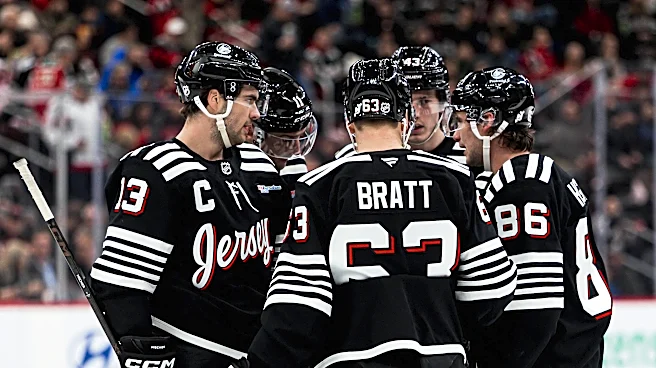
First Line | Ilya Kovalchuk – Jack Hughes – Jesper Bratt
Kovalchuk stats with NJD: 222 games, 89 goals, 112 assists, 201 points
Hughes: 429 games, 168 goals, 260 assists, 428 points
Bratt: 634 games, 172 goals, 346 assists, 518 points
You knew Hughes and Bratt would appear somewhere on this fake team as they represent the modern era of Devils hockey. Hopefully, they are still around the next time the Devils win the Stanley Cup, if for no other reason than somebody can take this article and call me a big dumb idiot for saying they never won the Cup in New Jersey.
One of the recurring themes of Jack Hughes’s time in New Jersey has been finding the scoring winger who can pump in goals and finish all of those brilliant feeds that either he or Bratt set them up with. We have seen plenty of Ondrej Palat over the last few years not be able to do that, and while Connor Brown has certainly held his own playing with Hughes and Bratt, I feel like we can do better.
Where better to turn to than one of the great goal scorers of his era in Ilya Kovalchuk?
Kovalchuk didn’t spend a ton of time in New Jersey as he “retired” after the 2012-13 season. But he did put the puck in the back of the net as well as anyone outside of Alexander Ovechkin from his era. His 443 goals in 926 NHL games is a remarkable feat, and one can’t help but wonder “what might have been” if he didn’t leave for the KHL for five seasons while he was still in the middle of his prime. We’d be talking about a guy who is probably a first-ballot Hockey Hall of Famer.
Of the three players, Kovalchuk came the closest to winning the Stanley Cup as a key member of the Devils team in 2011-12 that fell to the Los Angeles Kings in six games in the Cup Final. Kovalchuk was sensational during that run with 8 goals and 11 assists in 23 playoff games. To this day, he still has arguably the most beautiful power play goal in Devils history in Game Six of the 2012 Eastern Conference Final. Unfortunately, a back injury he sustained in the playoffs caught up with him once the Cup Final rolled around and the Devils were unable to finish the job.
Second Line | Kirk Muller – Nico Hischier – Zach Parise
Muller stats with NJD: 556 games, 185 goals, 335 assists, 520 points
Hischier: 609 games, 199 goals, 289 assists, 488 points
Parise stats with NJD: 502 games, 194 goals, 216 assists, 410 points
We can go ahead and call this one the captain’s line, as all three men served as Devils captain at some point.
Parise came the closest of the three to winning a Stanley Cup with the Devils as he captained the aforementioned 2012 team before departing in free agency that summer. Meanwhile, Muller is the only one of the three who has actually won the Stanley Cup. Unfortunately, he did it as a member of the 1992-93 Montreal Canadiens and none of these men know what it’s like to celebrate in the parking lot of the Meadowlands or with a parade through downtown Newark or whatever the Devils will wind up doing the next time they win a championship. It’s not exactly clear what their plan would be.
At least Muller was part of the trade that brought Stephane Richer and Tom Chorske to New Jersey. Both of those players wound up being part of the first Devils team that ultimately brought the Stanley Cup to the Garden State in 1995.
Third Line | Taylor Hall – Travis Zajac – Pat Verbeek
Hall stats with NJD: 211 games, 76 goals, 132 assists, 208 points
Zajac stats with NJD: 1024 games, 202 goals, 348 assists, 550 points
Verbeek stats with NJD: 463 games, 170 goals, 150 assists, 320 points
This third line has a little bit of everything. Speed, skill, defensive prowess, and physicality. Not to mention Verbeek having one of the great nicknames in NHL history with him being “the little ball of hate”
Hall’s time in NJ was short as he only spent 3.5 seasons here. But he authored arguably the greatest season by an individual player in Devils history with his Hart Trophy campaign in 2017-18, almost single-handedly carrying an otherwise mediocre Devils squad to the playoffs. The Devils would fall in five games to a more experienced Tampa Bay Lightning team in the first round. Hall is currently playing in the Stanley Cup Final with the Carolina Hurricanes, so it remains to be seen if he can get his name etched on the Cup this year.
Zajac nearly spent his entire career in New Jersey before a late-career trade that sent him and Kyle Palmieri to the Islanders for one last run at the Stanley Cup. It didn’t work out for Zajac with the Islanders, and having been drafted in 2004, he missed out on being a part of the Devils teams in the late 90s and early 00s that did win. Zajac is another member of the 2012 team that came close but came up short, and while his offensive stats were a bit underwhelming, he carved out a good career as a defensively responsible, two-way forward who can play in all situations.
Meanwhile, Verbeek was a fixture on the 80s Devils teams that introduced the Garden State to the NHL. He, like Muller and a few other names on this list, were members of the 1988 team that made the playoffs for the first time in franchise history and ultimately went on a run to the Conference Final before losing in seven games to the Bruins. Verbeek was the Devils franchise leader in goals scored when he was traded in 1989 to the Hartford Whalers, and he ultimately went on to win a Stanley Cup late in his career as a player with the Dallas Stars in 1999.
Fourth Line | Aaron Broten – Adam Henrique – Dainius Zubrus
Broten stats with Rockies/Devils: 641 games, 162 goals, 307 assists, 469 points
Henrique stats with NJD: 455 games, 122 goals, 135 assists, 257 points
Zubrus stats with NJD: 554 games, 87 goals, 137 assists, 224 points
Aaron Broten, the only forward from this team who also spent time with the Colorado Rockies prior to the move to New Jersey, is still among the franchise leaders in assists and points, sitting at 10th in both categories. His inclusion on the roster is mandatory, and while he never won the Cup in his playing career, at least his brother Neal Broten did as a member of the 1994-95 Devils.
Henrique and Zubrus both came close with the Devils in 2012. Henrique finished third in the Calder voting that season with a still-career high 51 points, and much like Zajac, he carved out a solid career as a defensively responsible center who can play in all situations. Henrique has also come close to winning a Stanley Cup the last few years with the Edmonton Oilers, but those teams ultimately came up short against the eventual champion Florida Panthers.
Zubrus might not be as flashy offensively as many of the other names on this fake roster, but I did want to add a little more size, sandpaper, puck possession and versatility to this roster. After coming over in free agency prior to the 2007-08 season, Zubrus was a fixture in the Devils lineup through the end of the 2014-15 season.
Extra Forwards | Patrik Sundstrom – Dave Andreychuk
Sundstrom stats with NJD: 305 games, 86 goals, 160 assists, 246 points
Andreychuk stats with NJD: 224 games, 64 goals, 86 assists, 150 points
Sundstrom, who came over to the Devils in 1987 via trade, authored arguably the greatest single-game performance in Devils history with three goals and five assists in the Devils 10-4 win over the Washington Capitals in Game 3 of the Patrick Division Final in 1988. That feat broke Wayne Gretzky’s playoff record of seven points, which he did three times, and has only been matched once since by Mario Lemieux the following season.
Meanwhile, Andreychuk has the dubious distinction of being on the Devils rosters between their championship runs in 1995 and 2000. At least the Hockey Hall of Famer picked up a championship late in his career as a member of the 2004 Tampa Bay Lightning.
First Defensive Pairing | Andy Greene – Dougie Hamilton
Greene stats with NJD: 923 games, 49 goals, 197 assists, 246 points
Hamilton stats with NJD: 305 games, 57 goals, 142 assists, 199 points
Andy Greene worked his way from being undrafted and just looking to get a chance in the NHL to becoming a top-pairing defensive defenseman and captain of the Devils. He was a minutes-munching, shot blocking defender who often had the hardest matchups on any given night. He was never much of an offensive defenseman, but he was capable of chipping in the occasional goal here and there. Greene is another member of the 2012 team that came up short.
Meanwhile, Hamilton is the compliment who would generate offensively on this pairing. He sits seventh among Devils defensemen in franchise history in points despite playing by far the fewest games, and with two years remaining on his contract, he has a chance to eventually pass Greene and Damon Severson if he isn’t traded at some point between now and then. Much like the rest of the modern-era Devils, the closest Hamilton has come to a Stanley Cup in New Jersey was their second round defeat to the Carolina Hurricanes in 2023.
Second Defensive Pairing | Paul Martin – Joe Cirella
Martin stats with NJD: 400 games, 26 goals, 137 assists, 163 points
Cirella stats with NJD: 503 games, 50 goals, 159 assists, 209 points
Martin may be the only player on this roster who was technically part of the organization when they won the Stanley Cup. He was drafted in 2000, but didn’t debut with the Devils until the 2003-04 season….after they won their third and final championship.
In a lot of ways, Martin represented the archetype of what most NHL teams want from their blueline these days. He was a smooth skater who made smart decisions with the puck to help his team break out of the defensive zone. He was reliable. He was capable of playing tough minutes. And for the Devils, he was a fixture on their blueline for the late 00s teams before departing in free agency in 2010. Unfortunately for Martin, he also missed out on the Penguins Stanley Cup championship squads as well.
Cirella, a former 5th overall pick by the Colorado Rockies in 1981, came with the team to New Jersey when they relocated in 1982. He played eight seasons in New Jersey and was part of the 1988 roster that reached the conference final. Cirella was traded to the Quebec Nordiques and also played for the Rangers, Panthers, and Senators before retiring in 1996.
Third Defensive Pairing | Bryce Salvador – Damon Severson
Salvador stats with NJD: 339 games, 8 goals, 39 assists, 47 points
Severson stats with NJD: 647 games, 58 goals, 205 assists, 263 points
Salvador came to the Devils in 2007 via a trade with the Blues that sent Cam Janssen the other way. At his peak, he was a reliable defensive defenseman, and for a brief stretch in 2012 that I still don’t comprehend, he was an offensive force in the 2012 playoff run with 4 goals and 10 assists in 24 playoff games. He was named Devils captain after Zach Parise departed in free agency. Unfortunately, injuries slowed him down in his later years and he retired at the end of the 2014-15 season. He has been a part of the MSG Devils broadcasts ever since.
Severson debuted with the Devils in 2014-15 and was a fixture as their top pairing RHD for most of the nine seasons he played in Newark. He was part of the Devils playoff teams in 2018 and 2023 before ultimately leaving the franchise as part of a sign-and-trade with the Columbus Blue Jackets that summer.
Extra Defenseman | Luke Hughes
Hughes stats: 223 games, 23 goals, 105 assists, 128 points
It might feel premature to put Luke Hughes on this roster, as he has only played three full NHL seasons.
That said, he’s already 13th among Devils defensemen in franchise history in terms of career points, and every player in front of him on the list either won a championship with the Devils somewhere along the way or they’re already on this roster, so the inclusion of the youngest Hughes brother is justifiable.
Taking Luke Hughes over players who have played more games like Jonas Siegenthaler, Adam Larsson, Lyle Odelein, or Randy Velischek might be future-proofing the roster a little bit, but Luke is signed for the foreseeable future. Barring injuries, he should be in the Top 10 of games played and Top 5 for points among defensemen by the time his contract is up.
Goaltenders | Cory Schneider – Mackenzie Blackwood
Schneider stats with NJD: 115-113-50 record, .915 save percentage, 2.50 GAA
Blackwood stats with NJD: 65-57-18 record, .906 save percentage, 2.97 GAA
Cory Schneider, who joined the Devils via trade in 2013, holds both the dubious distinction of trying to replace a legend in Martin Brodeur and being the lone bright spot on some dreadful hockey teams in the mid 2010s. I’ve often said Schneider is the right goaltender for the wrong era, as I wish the Devils had some sort of time machine where they could pluck him out of 2013 and drop him onto the modern day roster.
Schneider is right there with Chris Terreri in either 2nd or 3rd place in every major statistical category behind Brodeur in franchise history, but since Terreri was on the 1995 team, that makes him ineligible for this exercise. Schneider is 3rd in wins, 3rd in losses, 4th in goals against, 2nd in shots against, 2nd in saves, 1st in save percentage, 3rd in goals against average, 2nd in shutouts, and 2nd in minutes. Schneider was a member of the 2018 team that made the playoffs, and the closest he came to winning a Stanley Cup championship was with the Vancouver Canucks in 2011 when they fell in Game 7 to the Boston Bruins.
I considered going with Chico Resch as the backup, but his stats as a Devil pale in comparison to Blackwood, even considering the different eras both players played in. Blackwood was drafted in 2015, debuted in the 2018-19 season, and played parts of five years in New Jersey. After a strong couple seasons, his stats and performance gradually decreased thanks in part to injuries. He was part of the 2022-23 Devils roster that made the playoffs but his inconsistencies led to him being benched in favor of Vitek Vanecek and Akira Schmid for that run. He was sent to San Jose via trade and has since landed in Colorado where he is part of the tandem with another former Devils goaltender Scott Wedgewood. Colorado fell short in their quest to hoist the Cup this year, but there’s always next year.
General Manager | Ray Shero
Win Loss Record with NJD: 171-168-38
Your general manager options with the Devils are extremely limited, which is to be expected when Lou Lamoriello held the post for 28 seasons. Bill MacMillan, Max McNab, and the Rockies GMs all predate me, and Sunny Mehta was literally just named to the position, so as far as I’m concerned, it’s between Shero and Tom Fitzgerald.
Fitzgerald held the position longer, and technically had more success since his Devils got farther than Shero’s did. But I gave Shero the edge for a few reasons. The Devils typically drafted better under Shero than they did under Fitzgerald. That might be skewed a little bit as the Devils had two #1 overall picks under Shero but other draft successes like Jesper Bratt, Yegor Sharangovich, and Arseny Gritsyuk are on Shero’s record.
But I also generally thought that Shero’s trades were better than Fitzgerald’s. Trading picks for Kyle Palmieri and Marcus Johansson. Trading Adam Larsson for Taylor Hall. Adding Patrick Maroon at the deadline in 2018. Selling high on Lee Stempniak after bringing him in as a PTO. In a vacuum, I liked Shero’s moves more than Fitzgerald’s.
Shero never could figure out how to build a blueline, which ultimately was his undoing in New Jersey. But given the limited options, I think he’s the easy choice here.
Head Coach | Peter DeBoer
Win Loss Record with NJD: 114-93-41
The Devils have had a lot of head coaches in their history. Thirty one to be exact, counting interims and counting the interim coaching cerberus of Lou Lamoriello, Adam Oates, and Scott Stevens in 2015 as one under the label of “NJD Bench”.
Lamoriello had a tendency to have an itchy trigger finger and make a change behind the bench if he didn’t like what he was seeing from his team, which partially explains so many short tenures of one or two seasons. So lets roll with one of the longer tenured head coaches who didn’t win a Cup with the Devils in Pete DeBoer.
Hired in 2012, DeBoer immediately helped lead the Devils to the Stanley Cup Final that season before falling to the LA Kings. Unfortunately for DeBoer, he oversaw a Devils team that was effectively at the end of their competitive cycle afterwards. Zach Parise and Ilya Kovalchuk left in consecutive offseasons with the Devils getting nothing in return for either player. The final links to the dynasty years in Patrik Elias and Martin Brodeur were aging. Years of trading futures combined with poor draft picks left the prospect cupboard bare. DeBoer did what he could to keep the Devils competitive, but the wheels finally fell off in 2015. DeBoer was fired, and the Devils began an inevitable rebuild from scratch.
DeBoer has gone on to a successful coaching career with San Jose, Vegas, and Dallas, and he did reach the Stanley Cup Final once again in 2016, but a Stanley Cup championship has remained elusive for him. The Islanders hired him late last season to replace Patrick Roy, so time will tell if DeBoer once again lead a franchise to the precipice of a title.
Final Thoughts
After writing roughly 3500 words on the matter, my one main takeaway from this exercise is that there’s definitely a bit of a modern slant to this list, but I think that’s also to be expected.
The Devils relocated to New Jersey in 1982 and won their first title in 1995. There was a span of four and two seasons between their three championship runs, and there have been 22 seasons since their last championship. Even if I count the Colorado Rockies/Kansas City Scouts era, there’s more runway on the backend than there is on the frontend in terms of a title drought. And with all due respect to the Rockies/Scouts era teams, I’m ill equipped to talk extensively about dreadful hockey teams and the players on them when they primarily played before I was born.
I don’t know that there’s really any glaring omissions though I’m sure if there are, you’ll let me know in the comments. I considered Kyle Palmieri but I didn’t think it made sense to include him over some of the other players from his era. I considered Brendan Shanahan but he was only here for five years and wasn’t very productive for two of them. I would guess Hall and/or Kovalchuk might be the most controversial selections, but Hall did win an MVP here and Kovalchuk was a key member of a team that came close to winning a championship, so I felt they needed to be included.
The one player that might be considered to be a glaring omission is Slava Fetisov. He did not win a championship with the Devils as a player, as he was traded midway through the 1994-95 season and just missed out on that first Devils championship team. The reason why I omitted him was because he was an assistant coach with the 2000 team, so he technically was a part of a Devils championship team, making him ineligible. And as far as I’m concerned, there’s enough of a difference between that and Paul Martin technically being in the organization but not on the team to include the latter, but not the former.
At the end of the day, it’s my list. Make your own if you feel so inclined in the comments. I’m not going to stop you.
Thanks for reading.