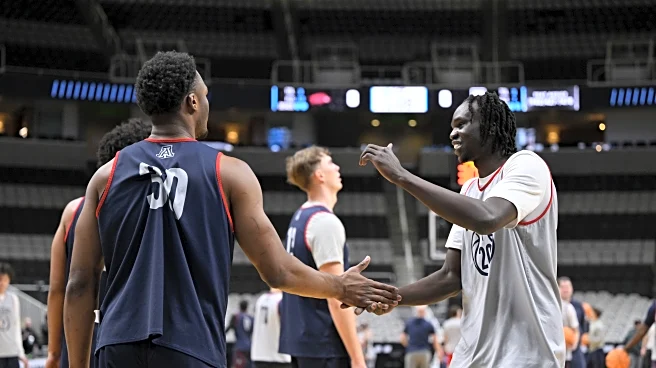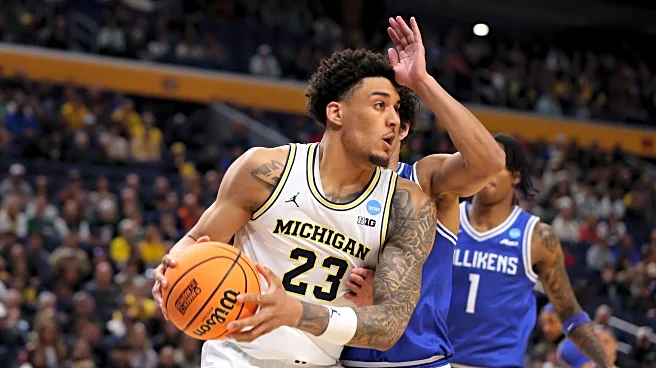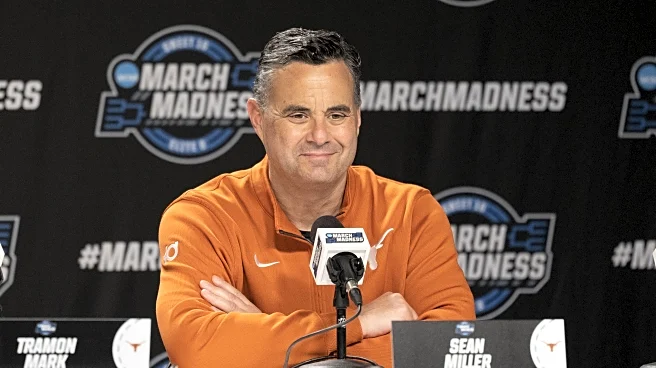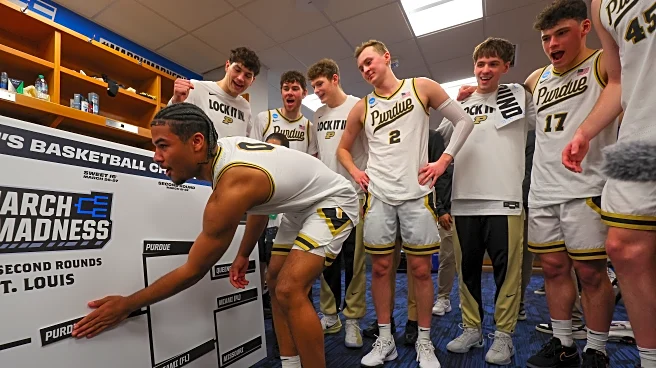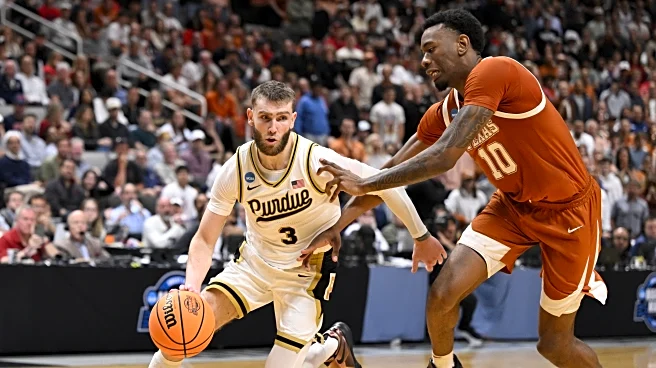




San Jose, CA — As the Purdue Boilermakers took their spot in the Final Four in a tightrope 79-77 win over Texas, there’s something a little funny, almost poetic, about the fact that the West Regional at the SAP Center feels less like a celebration of West Coast basketball and more like a frequent flyer convention.
As the madness rolls on, let’s take a lighter look and roll call of the “Western Regional.”
- Arizona Wildcats — about 830 miles traveled
- Texas Longhorns — about 1,712 miles
- Arkansas Razorbacks — about 1,873 miles
- Purdue Boilermakers — about 2,207 miles
That’s not a very regional. That’s a migration pattern.
And if you’re sitting in SAP Center this
weekend, like this writer, you’re not watching “the West.” You’re watching a curated showcase of programs that had to cross deserts, plains, and multiple time zones just to get here.
Which raises a deceptively simple question:
Why does the West Regional so often feel…not very West?
The Geography Illusion
On paper, this is supposed to be a home-field advantage situation, especially for Arizona.
But once you zoom out and actually look at the rosters, something becomes clear.
These aren’t regional teams. They’re national and even global assemblies of talent.
Yes, the Wildcats are the closest thing to a “local” team here, but their roster reads more like a passport with players from a few continents.
Where are the West Coast players?
This is where things get interesting for those of us who follow the Mountain West closely.
You’d think a region that includes California, arguably the most talent-rich basketball state in the country, would be heavily represented in a West Regional.
But instead, the pipelines look like this:
- Midwest → Purdue
- South → Arkansas
- Texas → Texas (obviously)
- Global → Arizona
California? Present, sure, but not dominant.
And that’s not an accident.
The Culture Question
The lighter, but real, thought experiment: Is basketball just easier to commit to in places that have fewer distractions?
In California, especially Northern California:
- Year-round good weather
- Multiple sports ecosystems (surf, soccer, baseball, etc.)
- Tech culture, academics, lifestyle diversity
Basketball is one option among many; especially for landbound transfers coming into sunny Cali.
Now compare that to:
- Indiana (Purdue) → basketball is religion
- Arkansas → football country, but basketball is a clear #2
- Texas → massive sports culture, but centralized development pipelines
In those environments, players often:
- Specialize earlier
- Train more consistently
- Grow within structured systems
It’s not about talent. it’s about focus density.
The Development Pipeline Gap
Another factor: where elite players go once they’re identified.
A top California prospect doesn’t always stay in California.
They:
- Join national prep programs
- Transfer to basketball-focused academies
- Get recruited out of state
By the time they reach college, they’re no longer “West Coast players” in a developmental sense.
They’re part of the same national pipeline feeding the Power schools.
So when those teams arrive in San Jose, they’re not outsiders. They’re carrying pieces of California talent with them; just redistributed.
Meanwhile, in the Mountain West…
Programs in this league actually do lean more regional:
- Utah State → regional + transfer-heavy
- New Mexico → hybrid (regional + international + portal)
- San Diego State → Southern California roots + development
But the catch?
Being regional doesn’t necessarily scale to Elite Eight success in the modern game.
Because once you get here, you’re facing: deeper rosters, higher-end talent at the top and players who’ve already proven themselves at the highest levels
So What Is the “West” Anymore?
Maybe that’s the real takeaway from this weekend in San Jose.
The idea of regional basketball, at least at this level is fading.
What we’re watching instead is a national (and global) sport that just happens to be played in different zip codes.
The “West Regional” isn’t about West Coast identity anymore.
It’s about which programs best navigated the portal, who found value internationally and who retained or acquired top-end talent
Final Thought (With a Smile)
So yes, four teams traveled anywhere from 800 to over 2,200 miles to get here.
And yes, it’s a little ironic that the road to the Final Four in the “West” required a cross-country journey for everyone involved.
But maybe that’s the charm of it.
Because in today’s college basketball world: geography gets you to the arena and roster construction gets you to the Elite Eight.
And this weekend in San Jose?
It’s proof that the “West” is no longer a place.
It’s just a destination.