
The 2025 NFL Combine kicks off in the final week of February, and we are exploring each position group ahead of the big event. In this article, we wrap up our examination of the offense by examining the interior offensive line prospects (guards and centers) that should be on general manager Brad Holmes’ radar.
In case you’ve missed any of this series, so far, we have already previewed:
Note: Offensive line prospects participating in on-field drills will take the field on Sunday, March 1.
Team need
All three of
the Lions’ starting interior offensive linemen and five depth players are under contract in 2026. However, things are not as settled as they may appear.
While right guard Tate Ratledge showed a lot of promise as a rookie, left guard Christian Mahogany took a step back in year 2 and dealt with injuries, while center Graham Glasgow will turn 34 during training camp and is contemplating retirement. Beyond the starters, the Lions have several developmental players on the roster, including Miles Frazier (who has flashed starter potential), center Michael Niece, T/G Colby Sorsdal, T/G Mason Miller, and recently signed center Seth McLaughlin.
The Lions’ interior offensive line struggled in various ways in 2025, and Detroit could be looking to upgrade. The biggest question for this group is: Who will start at center?
It’s unclear whether Glasgow will return or keep his starting job, and while the coaching staff has hinted that they are considering shifting Ratledge at pivot, would they want to mess with the only reliable position from last season? They could also make a move in free agency to shore up the position, as this class only has a handful of plug-and-play starters, and likely none amongst the center prospects. That leaves the Lions with some tough decisions if they want to address the interior offensive line through the draft.
What skills to watch for during on-field drills
The Lions prefer their offensive linemen to be athletic, big, and strong, with a high level of intelligence and exposure to both gap and zone run-blocking schemes.
During on-field drills, keep an eye on the following traits:
- Balance through their hips
- Knee bend—ideally not waist bending
- Lateral movement skills
- Drills like the kick slide and lateral shuffle will help expose stiffness
- Pull and drive drills will illustrate a player’s athleticism
- Reactionary time in all drills
Setting the table
This class of interior offensive linemen is a bit shallower than most offseasons. If the Lions want to address the IOL with either their first-round (No. 17) or second-round (No. 50) pick, there are only three players I believe will meet their criteria (listed in the following section).
There are some prospects who will end up pushing for a third-round grade—Keylan Rutledge (Georgia Tech), Gennings Dunker (Iowa), Billy Schrauth (Notre Dame), and Jalen Farmer (Kentucky), to name a few—but with the Lions not having a third-round pick, they won’t be included in this watchlist. Instead, we focused the entire second section on the top five pure center prospects in this class, and then looked at a few prospects that may shift to center in the NFL in the third section.
Plug-and-play guards
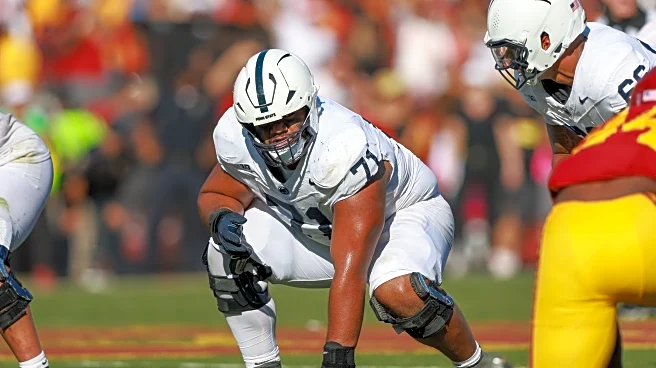
Vega Ioane, LG, Penn State (6-foot-4, 335 pounds)
Ioane has an NFL-ready frame, tremendous core strength, a workman-like toughness, high-level technique, will dominate for long stretches of time, and is the only blue-chip interior offensive lineman worthy of a first-round pick in this year’s class.
As a pass protector, Ioane is a quick-footed knee bender with vise-grip hands that lock onto defenders, allowing him to redirect them. He has a firm anchor, swiveling his hips under defenders and controlling them with leverage. At times, he seems immune to contact, especially against pass rushers who try to use power moves against him. His one weakness is that he can struggle with quick-moving speed rushers who cross his face and force him to adjust laterally quickly, but overall, he is very aware of his surroundings and doesn’t fall for defensive line stunts.
As a run blocker, he is powerful, explosive, and a finisher. His feet constantly grind, and he will latch-and-drive defenders, leveraging them out of rushing lanes. His limited lateral movement comes into play here as well, as he’s only an average mover, but is still effective when pulling or climbing to the second level.
Chase Bisontis, LG, Texas A&M (6-foot-5, 315)
While Ioane is the best IOL in this class, there’s an argument to be made that Bisontis is a better schematic fit for the Lions’ scheme and may be available when Detroit is on the clock in the second round. With a thick frame, Bisontis is a well-rounded athlete who is strong, aggressive, tough, and technically sound.
In pass protection, Bisontis has a fast first step, quick feet, and a smooth kick slide. He properly bends at the knees, sets a solid anchor, and absorbs contact with powerful hand strikes that land inside and work independently. His lack of length can show up against speed pass rushers, as he can get caught lunging at his target. At times, speed rushers can also catch him rushing to his pass set markers, where he will overset and expose a shoulder.
As a run blocker, Bisontis is powerful, understands leverage, and regularly relocates defenders by latching on and driving them out of lanes. He atheltic enough to smoothly reach the second level, adapts well in space, and has the skills to be a force pulling laterally.
Emmanuel Pregnon, LG, Oregon (6-foot-5, 320)
Pregnon is a durable, well-built guard with power in core, firecracker hands, and a nasty finishing demeanor.
A fast-setting pass protector with a broad-based anchor, Pregnon uses leverage to his advantage, executes strong hand technique, and recovers with length and hand usage. He works well with his teammates, passing off stunts, but his average athleticism can cause him to lose angles when moving, and savvy defenders will use aggression against him.
In the run game, Pregnon is a reliable people-mover who latches and drives downhill with a finisher’s mentality. He consistently gets inside hands and is a technical puller, but average foot quickness leads to average lateral movement overall.
Who’s the top center in this class?
Sam Hecht, C, Kansas State (6-foot-4, 297)
Hecht has a light-weighted frame and limited length, but is technique-sound with solid core strength, and is in contention to be the first true center selected because he enters this draft with a high floor and room to develop.
As a pass protector, Hecht consistently keeps his hand inside, and while he lacks a powerful pop, it’s tough for defenders to shake him loose once he gets a hold of them. He’s conscious of the moving part around him and works well with others, sifting through the mess. Power-based two-gappers can overwhelm when they line up directly over him.
In the run game, Hecht’s active footwork helps him maintain his balance, and his athleticism in space shows up when he smoothly pulls or climbs to the second level. He needs a bit more patience when locating his targets in space, as he can get too far out ahead at times.
Jake Slaughter, C, Florida (6-foot-4 1/2, 305)
Slaughter is also firmly in the race to be the top center selected in this draft, as he possesses a solid and reliable skill set, functional athleticism, and plus leadership as a two-time captain.
In pass protection, Slaughter understands positioning, closes angles quickly with solid movement, and while his play strength is just adequate, his recovery skills are above-average and will grind it out through the entire play. He works in unison with the guards, demonstrating strong communication skills.
In the run game, he is comfortable executing double teams with guards, is a clean mover in space, showing natural ability to climb to the second level, pull, and get out on screens. His lack of power limits his ability to close out blocks at times.
Connor Lew, C, Auburn (6-foot-3, 300)
Lew entered the 2025 season considered the top center in the class, but an October ACL injury has hurt his stock, and he will not be able to participate in drills at the Combine, which could further ding his stock.
Overall, Lew is a dependable all-around talent, but lacks elite skills. With 3 years of starting experience, he is familiar with gap and zone blocking concepts, and offers upside for a team patient enough to wait for him to recover.
As a pass protector, Lew works on time, with good technique and short-area quickness, staying active with feet and hands. He initiates contact with his punch, allowing him to gain control early, and while he flashes power, he needs more strength to anchor. He has quick recognition skills, and his hands allow him to recover when beaten.
In the run game, Lew is an athletic mover with average power, making him more of a block sustainer/shover than a center who can relocate defenders. He is an above-average combo blocker, and his wrestling background shows up when making transitions on the move. He’s solid on screens, but can get off his mark when working in space in other situations.
Logan Jones, C, Iowa (6-foot-2 1/2, 300)
Jones is a terrific athlete, checked in as the No. 7 player on The Athletic’s Bruce Feldman’s Freaks list, won the 2025 Rimington Award for college football’s best center, anchored a Joe Moore Award-winning offensive line, and only surrendered one sack in the past two combined seasons (per PFF). While the trophy case and resume have led some analysts to put him at the top of their center rankings, Jones will have to overcome a lack of play strength and arm length at the NFL level.
In pass protection, Jones has a great first step, quick feet, and works through the whistle. He can sustain his anchor, but his average strength leaves him lacking drive power. He uses jump sets to change angles and adjusts well to defensive line stunts and switches, but bull rushers can get the best of him.
Jones is a plus run blocker and is especially strong as an outside zone mover, but again, he ends up being more of a sustainer than a mover. He always looks to initiate contact, and when on the move, closes space in a hurry, but he needs to stay under control and not miss due to his limited length.
Pat Coogan, C, Indiana (6-foot-5, 310)
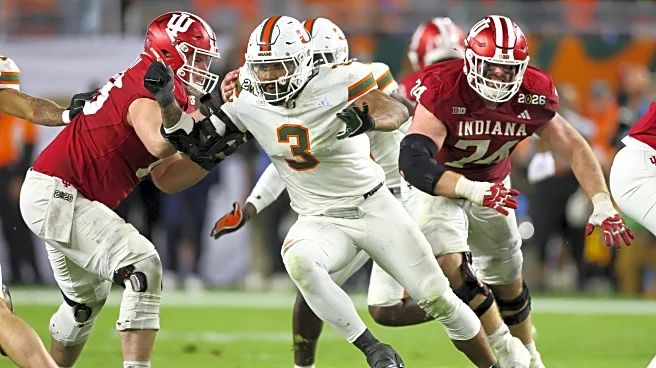
Coogan anchored Indiana’s National Championship team, earning a Rose Bowl MVP along the way. Per PFF, he didn’t give up a sack or quarterback hit in 2025 and was only credited with one sack in the previous season while at Notre Dame. His leadership is highly regarded and considered his top asset.
Only an average athlete, Coogan is a good pass-protecting technician with above-average strike-first pop in his hands. He lacks explosion, but has a sustainable anchor, takes proper angles, and demonstrates good timing. Coogan sees the field well and knows how to help his teammates, but he has a tough time recovering when beaten.
In the run game, Coogan is a sustainer, not a driver, but his familiarity with Gap and Outside Zone schemes will be appealing. He is an above-average puller who can also climb to the second level, but needs to maintain better body control in space.
Center converts
Trey Zuhn III, LT, Texas A&M (6-foot-6, 309)
Zuhn is a five-position athlete with average strength and projects to be at his best inside at the next level. He plays through the whistle, has very high character, and is a two-time captain at A&M.
As a pass protector, he has a fast first step, consistently finds his mark, but mirroring versus speed rushers was an issue at tackle. He has a solid anchor, understands leverage, and accurately strikes with inside hands, but his feet let him down versus speed, and he only has average recovery skills when beaten.
In the run game, Zuhn is an average but efficient mover who does a good job of locating targets and running to contact. Unfortunately, his technique can waver when on the move.
Brian Parker, RT, Duke (6-foot-5, 306)
Parker has sound technique but only average measurables (specifically length), which will likely push him inside at the NFL level. That being said, he brings position-flexible athleticism, toughness, and an aggressive will to compete every snap.
In pass protection, Parker is quick to get into his stance, staying square, balanced, and under control with his mirror. He does a nice job of keeping his hands inside and has solid grip strength, but his struggles with length mean he needs to do a better job of timing his movements versus speed rushers.
In the run game, Parker stays under control with a good burst when on the move, and can consistently hit his landmarks in zone run blocking schemes. While his power in his hands can be an asset, he is more of a sustainer than a driver when engaged, though he does keep his feet churning, demonstrating his consistent effort to win.