

Things aren’t pretty in Brooklyn right now, not even close.
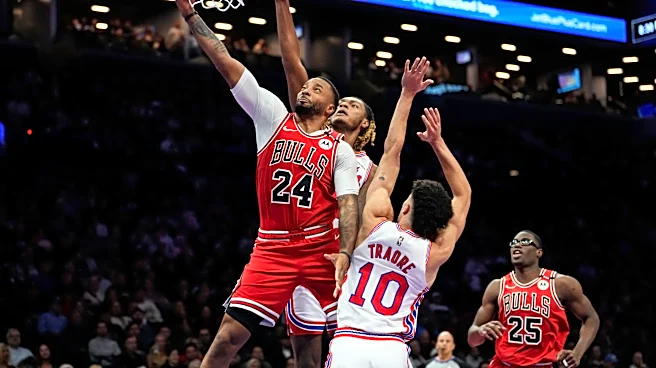
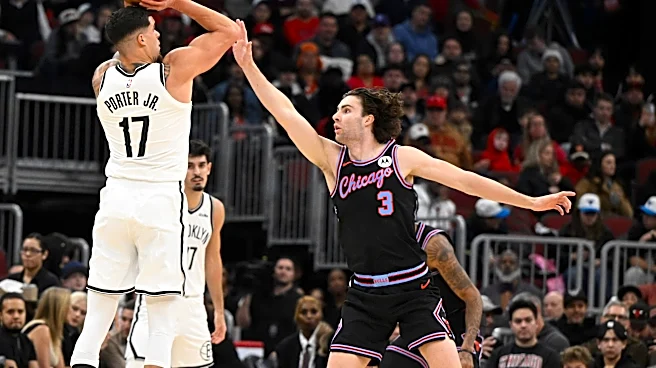
The Nets are 3-11, and even though the record looks bad, the way they keep losing adds to the frustration. Brooklyn is coming off an embarrassing 137-107 loss to a Chicago Bulls team that entered the game with just two wins.
Beyond that, the team has now lost five games by at least 15 points this season, the most in the NBA. It doesn’t stop there, either. The Nets have allowed 135+ points in back-to-back games for the first time since April
1969!
So, yeah, optimism is pretty hard to come by these days. That’s to put it mildly, of course.
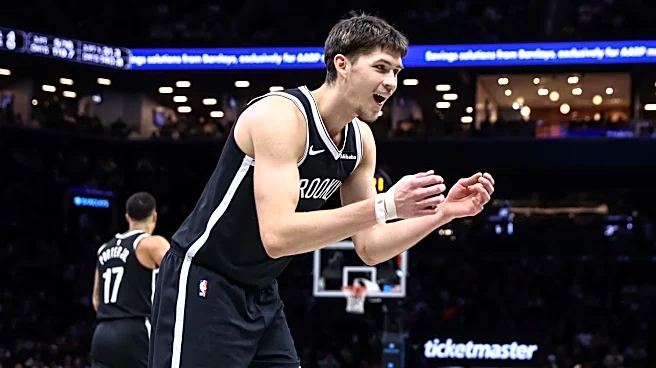
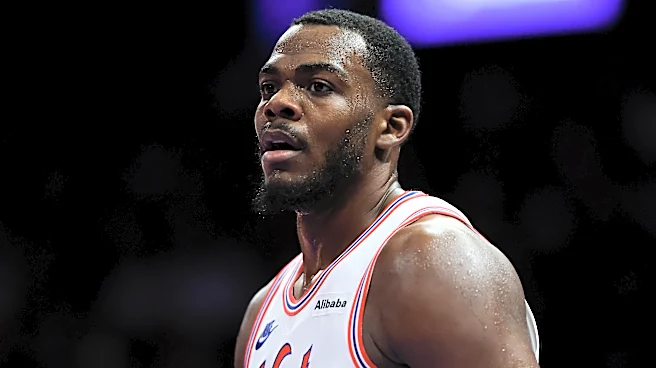
But for the fearless, ride-or-die fans out there anxiously searching for something, just anything, to feel good about, there is a bright spot worth discussing. That bright spot goes by the name Day’Ron Sharpe.
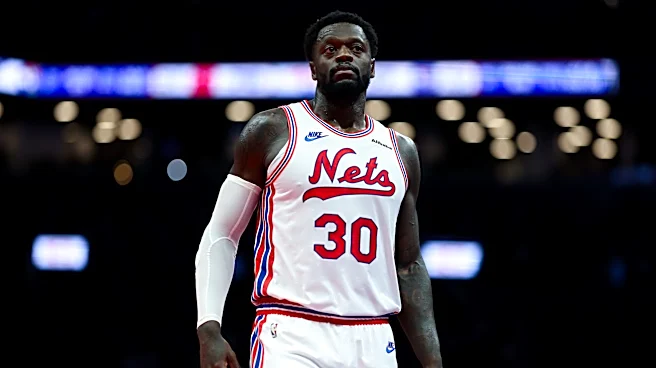
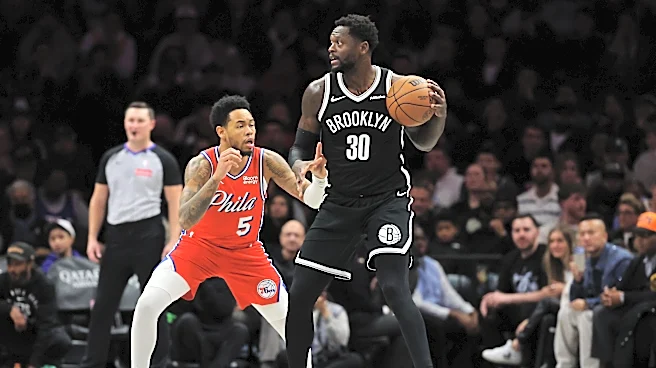
Sharpe, 25, is the longest-tenured player currently on Brooklyn’s roster, in his sixth season with the organization. After the team dealt Nic Claxton to Chicago over the summer in a three-team deal with the Minnesota Timberwolves to bring in Julius Randle, this is Sharpe’s first year as the Nets’ full-time starting center.
Throughout his career, analytics have always loved Sharpe, particularly for his offensive rebounding. Entering this season, though, the question was more about whether that efficiency would translate to a larger sample size.
And so far, it has continued, and then some. According to Cleaning the Glass, the Nets have been 18.4 points per 100 possessions better with Sharpe on the floor than without him, placing him in the 93rd percentile among all forwards and bigs who have played a minute this season.
While rebounding has always been his big calling card, the biggest difference in Sharpe’s on/off numbers seems to come on offense. The Nets have scored 13.0 more points per 100 possessions with the North Carolina product on the court, which ranks in the 95th percentile. It’s also the seventh-biggest discrepancy among forwards and bigs.
For perspective, his overall on/off differential currently ranks ahead of notable names like Nikola Jokić (+15.5) and Alperen Şengün (+15.5). He’s also just one percentile beyond Karl-Anthony Towns. All three of those players are averaging over 30 minutes per game, compared to Sharpe’s 23.6, but that certainly doesn’t make it something to scoff at.
Sharpe is no stranger to ranking high in efficiency categories, but the most encouraging part is that he’s doing it with an expanded workload so far. Through 14 games, he is averaging over 23 minutes per night. His career high in a single season before this was last year, when he averaged 18.7 in 62 games. So, the big man has never averaged over 20 minutes per night before this season. He’s also started all 14 games for Brooklyn this year, already shattering his previous career-high in starts per season, which was just eight in his rookie campaign.
Overall, Sharpe, who re-signed on a two-year, $20 million contract this offseason, has averaged 8.4 points, 7.1 rebounds (including 3.3 offensive boards), and 4.0 assists on 52.9% shooting.
Another encouraging number is the 4.0 assists per game. With Claxton out of the picture, Sharpe has taken on a much bigger role as the offensive facilitator. He’s done a really solid job of embracing the responsibility that comes with being an offensive hub. It’s a role Claxton anchored for years in Brooklyn.
That’s especially important for a Nets team that still seems to be searching for an identity and consistency on offense. The passing isn’t necessarily new, either. Sharpe had flashed that in smaller doses throughout his career. Now that he is getting the opportunites, it’s becoming even more obvious.
Against the Atlanta Hawks on November 7, he dropped 13 assists and his first career triple-double. The 13 assists were the most in a single game by a Nets center in franchise history.
For me, the biggest concern regarding Brooklyn’s squad entering the year was their lack of rim protection after dealing Claxton. That left a big void, and the Nets didn’t do much over the summer to fix it. They added Mo Wagner, but as fans have seen, he is much more of an offensive player and that’s being kind. That’s not to downplay his impact; his offensive ability is certainly important, but he has limitations down low.
It’s never been a strength of Sharpe’s either. As a result, the team is currently allowing 48.7 paint points per game, the ninth-most in the NBA. For a team like Brooklyn that lacks elite-level firepower and just plain athleticism, it’s difficult to win consistently when you’re allowing nearly 50 points per game in the paint.
By no means does all of that responsibility fall on Sharpe, though. Sean Marks deserves criticism for structuring the roster that way, and his frontcourt teammates also haven’t necessarily helped turn the tide in that facet.
Ultimately, his start to the year has been very promising. Digging deeper than the sheer numbers, the continued efficiency and success while playing at a career-high rate is exactly why fans should be excited moving forward.
There are still 68 games to play, but so far, Sharpe is making the most of his extended role.