


In Hebrew, the verb חָנַן means to have grace, compassion, or mercy. It’s difficult to capture the pronunciation in English because for the first sound, the best we have for it is ch, but it’s not like chat or child. It’s that throat-clearing thing like in chutzpah. So the transliteration of חָנַן is chanan, even though having an h in there isn’t quite right.
Unsurprisingly, given the meaning, the verb was quickly turned into a name, יְהוֹחָנָן (or Yehochanan) and, as these things do, it was developed
into different versions across a plethora of languages spoken by peoples of Judeo-Christian lineage. Versions you probably recognize include Jan in Dutch, Hans in German, Sean in Irish, and, notably for our purposes, Juan in Spanish and John in English.
Importantly, John is actually separate from Jonathan and its nickname Jon. Jonathan derives from יְהוֹנָתָן (or Yehonatan), meaning “Yahweh has given” or “God’s gift.”
But of all the variants on Yehochanan, the name John—if our Deputy Managing Editor will forgive my candor—is the most nonsensical because it adds a silent h that nobody asked for. Hold that thought.
As to Juan, this has been the Spanish derivation for centuries, and it continues to be a popular name in Spain and Latin America. For example, the Mets have a famous player named Juan who was born in the Dominican Republic.
In recent decades, however, Latin American culture has also adopted a trend of using English, or, more accurately to the cultural context, American names, but often with their own twist. For instance, at third base in Kansas City, you’ll see Maikel Garcia, not Miguel Garcia. Another example is the modern Spanish invention Jhon, Jhonny, or Jhonathan (even though they derive from different American names). This last trio is particularly popular in Colombia and Venezuela.
And while there may be some class connotations to this practice, in the Jhon/Jhonny/Jhonathan case, it’s tough for chauvinists to argue that the h is in the “wrong” place because the h doesn’t belong in the American John either. It’s just as unnecessary in John as it is in Jhon. Neither really makes perfect sense. Not that names have to.
Separately, there’s a distinct history behind the letter J in Latin America. Right around the time that Spain was colonizing the Americas, the Spanish language was shifting from pronouncing the letter as a fricative not far off from how English speakers pronounce J, to a softer glottal sound: it became more like the H in hot that you’d use when starting the name Juan.
So Latin Americans were already working with a J that sounds like an H by the time they were hispanicizing American names. Hence, when you think about it from the Spanish perspective, given the way each of the four letters sounds, if there’s going to be a silent h somewhere in there, it actually makes much more sense after the J than after the o. Even though Jhon is pronounced like John rather than like Juan, the h is closer to the sound it would make redundant.
All told, while Jhon has ancient roots as a name, the spelling is an entirely recent invention without a deep historical or etymological basis; you won’t see the jh letter sequence in any other word written in the Roman alphabet. But it does make perfect sense in Jhon given the modern Latin American context.
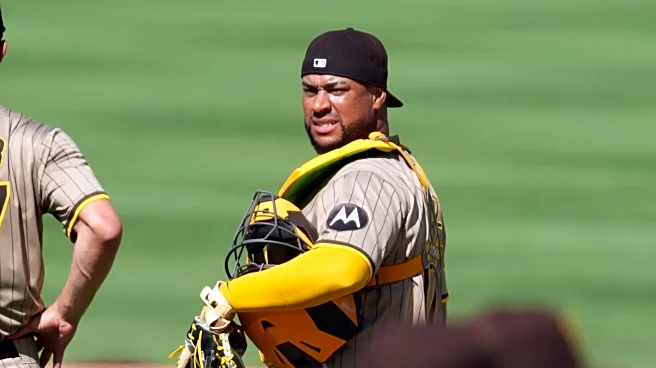
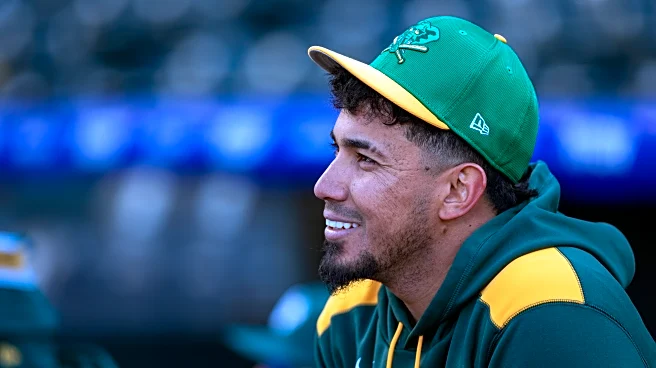
Anyway, Jhonny Pereda is a Venezuelan catcher who is about to be 30 years old and has 118 MLB plate appearances to his name. The most notable thing he’s done in professional baseball is when he came in as the position-player pitcher during a blowout and managed to strike out Shohei Ohtani. The Mariners got him from the Twins for cash considerations after he was DFA’ed for the second time in his career (following three earlier outright releases), and if we see him in Seattle at any point this year, there’s a good chance something has gone horribly wrong. But at least you’ll know how to spell his name.