
The era of free agency in Major League Baseball began in full in 1976, which came after a December 1975 decision from arbitrator Peter Seitz in favor of players Andy Messersmith and Dave McNally, effectively
ending the “reserve clause” that had been the law of the land for decades.
However, many point to something that happened the year before as the unofficial start of the era. Following a 10-year career with the Kansas City and then-Oakland Athletics, where he won a Cy Young Award and multiple World Series titles, James “Catfish” Hunter filed a suit that alleged that A’s owner had breached the contract he had with the team. An arbitrator, who happened to also be Peter Seitz, agreed with Hunter, voiding his contract and officially making him a free agent.
The Yankees ended up being the beneficiaries of that, as while Hunter was never as good as his dominant, Cy Young-winning previous self after a fantastic opening salvo in ’75, he ended up being a big part of two World Series-winning Bombers teams. Technically, Hunter falls just outside our 50-year window, and technically, he was a free agent before the beginning of modern free agency, but any series on Yankees free agent retrospective would be lacking if it didn’t delve into the story of the Yankees catching Catfish.
Catfish Hunter
Signing Date: December 31, 1974
Contract: Five year, $3.25 million
Born in 1946 in North Carolina, Hunter was signed right out of high school to a $75,000 signing bonus in 1964. The dollar amount made him a “bonus baby,” in the dying days of that rule, meaning that Hunter had to go straight to the big leagues wit the then Kansas City A’s. He made his debut in 1965, and, as you might expect for a 19-year old right out of high school, the early going wasn’t always smooth.
While the young pitcher did make the AL All-Star team in 1966 and ‘67, he was up and down throughout his early years. However, once the 1970s came around and the A’s as a team starting to develop into a powerhouse, so did Hunter. By 1972, he was the clear ace of an Athletics’ team that won three World Series titles from ‘72-74. Over his final three seasons in Oakland, Hunter finished in the top five of AL Cy Young voting three times — finally taking home the honor in 1974 — and put up 14.4 rWAR. He also posted a 2.24 ERA in the A’s three winning postseason runs from ‘72-74. He was the winning pitcher in the decisive Game 7 in 1972, and then pitched a gem in Game 6 in ‘73 to keep the series alive with the A’s down 3-2 to the Mets.
Ahead of the 1974 season, Hunter agreed to a contract with owner Charlie Finley and the A’s that would pay him $100,000 a year. Part of the deal stated that half of the salary would be paid into a life insurance annuity. As it came time for that to happen, Finley continued to not pay that part, apparently balking at the fact that he then had to pay $25,000 in taxes immediately upon paying the annuity. Hunter’s representatives sent word to the A’s that they considered this breach of contract and would be attempting to have him released from the deal at the end of the season. The hearing came around that November and shortly after that, with Seitz as the deciding vote, it was ruled that Finley and the A’s had in fact breached the deal.
With the novelty of one of the best pitchers in baseball being available just for money on the market, nearly every team got in on the sweepstakes for Hunter. In the end, Hunter turned down bigger deals from several other teams before signing with the Yankees, looking to live somewhat closer to his North Carolina home. It would soon become common place, but George Steinbrenner made his desire to win known, as he gave Hunter a five-year deal for over $3 million, which was quite a bit at the time.
Hunter hit the ground running in New York, putting up — at least according to rWAR — the best season of his career with 8.1. Now, part of that was due to manager Bill Verdon and Billy Martin riding the Yankees’ new ace hard. Hunter threw a league-leading 328 innings in 1975, throwing 30 complete games. He finished second in AL Cy Young voting, as the Yankees won 83 games and continued to show signs of hope after the doldrums of the late ‘60s and early ‘70s.
Hunter never quite matched those highs in New York again, but he was named an All-Star the following season, as he helped the Yankees to the 1976 World Series, their first since 1964 (though the Reds swept them). Injuries and a diabetes diagnosis limited him to just 261.1 innings in 1977 and ‘78—especially when you compare that to his ‘75 total—but he pitched 17.1 frames in the two World Series against the Dodgers as the Yankees retuned to the top of the mountain. One of Hunter’s favorite memories in pinstripes came in what turned out to be his last playoff start: the 1978 World Series Game 6 clincher, when the veteran spun seven innings of two-run ball to get the win.
In 1979, Hunter both struggled on the mound, and dealt with several deaths of those close to him — one of which was teammate Thurman Munson. While Hunter had always claimed that he would retire at the end of his Yankees’ deal, that season almost certainly took an emotional toll on him and the pitcher did hang up his spikes at the end of the year.
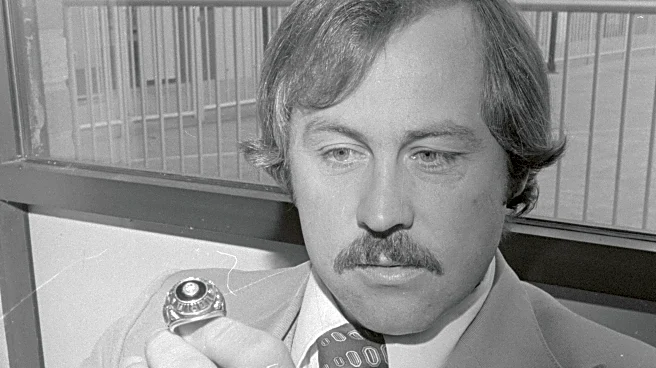
While Hunter wasn’t at his best when the Yankees finally did win their championships in 1977 and ‘78, people around that team still give him an immense amount of credit. George Steinbrenner himself told Hunter that he believed the pitcher helped “teach the Yankees how to win.” The Yankees held a “Catfish Hunter Day” in September of 1979, to celebrate their retiring pitcher. In 1987, he was inducted into the Baseball Hall of Fame, receiving 76.3 percent of the vote in his third year on the ballot. Although Hunter’s greatest success clearly came in Oakland, he was so fond of his time in New York that he chose to wear a blank cap on his plaque in Cooperstown, rather than choosing between the Yankees and A’s.
Sadly, Hunter ended up being another notable Yankee who would be diagnosed with ALS, and eventually passed away due to complications from the disease in 1999. He was only 53. His wife, Helen, has still been a regular at Old-Timers’ Day, as part of a group of Yankee wives that attend in honor of their late husbands.
In terms of pure play and “value,” no, Catfish Hunter is not the Yankees’ best ever free agent signing. However, he was the first, and if anyone from the 1970s teams that got the Yankees back to glory, he was a very important one.

Sources