



Adding the ABS challenge system generated a lot of buzz early on for MLB, and I think it is a good addition for the most part. Teams have been taking different approaches when it comes to challenging, so looking at the data a few weeks in to see what the Royals are doing relative to their peers seemed like something that might be instructive.
Going into this, I had some general, broad ideas of what teams should do with respect to challenging. You want to challenge fairly often, meaning your team should almost
never have a game with zero challenges unless it is a 12-1 blowout. This will almost certainly lead to new unwritten rules about challenging when ahead by too much. There is no downside to challenging in a lot of situations, especially while you still have two challenges remaining. But there is a balance, Travis Sawchik had a good piece at MLB.com about using ABS in different counts and leverage situations. Talking about leverage and count complicates things though, and you don’t want your hitters spending mental effort at the plate thinking about the value of challenging in a given situation. So, you want the team’s process to be relatively simple, moderately aggressive, and not put too much value on losing a challenge so that players become reticent to pull the trigger.
So far, 54% of challenges have overturned the original call according to Baseball Savant. There have only been 15 challenges by a pitcher, and no pitcher has challenged more than once. Catchers are right around a 60% success rate, the highest rate of success, perhaps because they have the best view, which may explain why pitchers are not challenging as much. That does not mean you should only ever let your catchers challenge, sometimes batters in key positions are still going to benefit enough from a challenge to keep that ability as an option even if they will fail at a slightly higher rate. Let’s go look at what everybody is doing and then maybe speculate more about how it should look.
Minnesota has been by far the most aggressive challenging team. They have the most batting challenges with 23 and second in total fielding team challenges with 24, totaling 47 challenges in 13 games, or 3.6 challenges each game. They are also leading the league in overturned calls at 29. Again, I think being aggressive is the way to go. You miss 100% of the challenges you don’t take, or something to that effect. The Royals have been less aggressive with the batter challenges, tied for 18th in the league, and only slightly more so on the catching side ranking in a tie for 8th in the league. They have had 14 calls overturned with a 56% success rate, so I do not think the team is being aggressive enough.
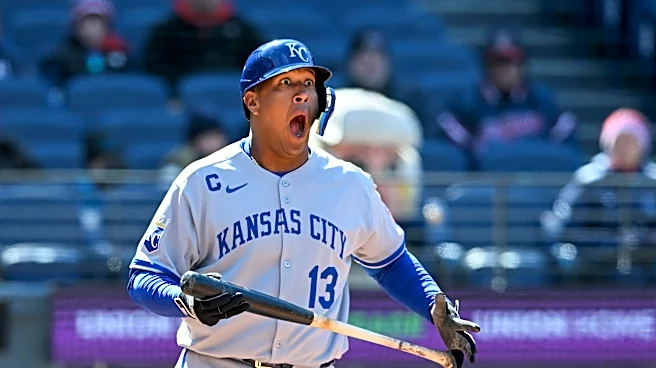
Salvador Perez had three overturns immediately to start the year, and that made it seem like he was going to be particularly good and maybe also a frequent challenger. He has cooled off both in terms of success and rate since then. He is tied for fourth among catchers in total challenges with 13, but seven of those came in his first four games behind the plate. His 62% success rate is in line with the overall success rate. Jensen is one-for-two so far and no Royals pitchers have challenged yet.
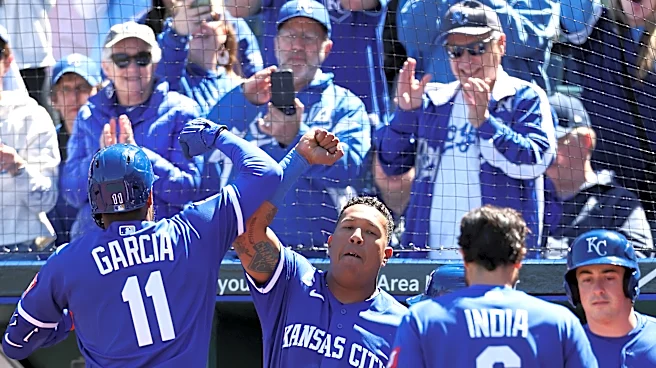
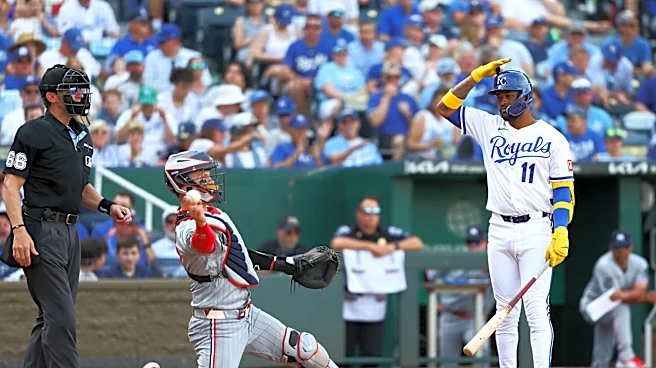
On the hitting side, only six Royals have tapped the helmet so far. Bobby Witt has twice and been right both times. Jac Caglianone and Maikel Garcia have both gone one for two while the last two-attempt batter, Isaac Collins, has yet to be successful. Lane Thomas and Salvy have both challenged one with line getting the ball call and Salvy still getting the original strike. There is not enough here yet to say much of anything, other than my opinion that they should challenge more as a team.
Three hitters lead the league in challenges with five – Kyle Schwarber, Josh Bell, and Ronald Acuña Jr. Schwarber has won four challenges, Bell has won three, and Acuña has only won two. In the early going there might be a bias toward allowing veterans to challenge? Maybe later in the year I will do some statistical analysis on that.
I really wish they had data on how many challenges remaining each team had by game somewhere, but if that exists I can’t find it. Other things I would be interested in seeing are challenges by inning and score break downs. Overall, I expect teams to challenge more frequently going forward. This initial period there is still too much hesitancy to pull the trigger, especially in late and close situations. We should start to see more challenges where they will almost certainly lose because the situation demands that even a small chance of overturning the call is worth chasing. Those sorts of things will not be obvious at first to most players and I do not know how quickly the managers and the statistics folks can explain when and how to do such things optimally. Once players are more comfortable, some of that will be easier to do without it being cognitively demanding in the moment.
The Royals are in the middle of the pack, which is better than teams like the Rangers and Nationals who have issued very few challenges of any kind. I am also glad to see them issuing challenges at batter and catcher, just to figure them both out if nothing else. Some teams seem to be focusing on letting catchers challenge and only very sparingly having batters issue any. The Marlins, Dodgers, and Brewers are issuing way more catcher challenges and are at the very bottom offensively. Miami is number one in fielding challenges and only two teams have had fewer from their lineup.
This is going to be an interesting new rule to follow, and so far, I would give Kansas City a solid B grade on how they are handling the rollout.