


Welcome to Volume I of our “Choose Your Own Adventure” starter series, where we explore the Milwaukee Bucks’ options at each position. Read along, make your choice, and share your pick in the comments—if you dare!
As we all know, the Bucks are stacked—overflowing—with guards, but don’t necessarily have many point guards, which could be an issue for a bunch of guys who have no continuity with each other. This group in particular—with it being so young and new—will sorely need guys who can control the pace,
get the team into the right sets, and not turn it over. There are interesting cases to be made both for and against basically all of the candidates in terms of how well they will be able to perform not only the role of a guard, but a point guard.
Then again, you can make a case that the classic “point guard” is a position that either doesn’t exist or isn’t valued anymore, and that actually, it is better to have an abundance of combo guards who can pass-dribble-shoot; you know, the jack-of-all-trades type of guys. For this exercise, though, I will narrow this down to who I believe can perform “point guard duties” the best.
Go on to OPTION 1.
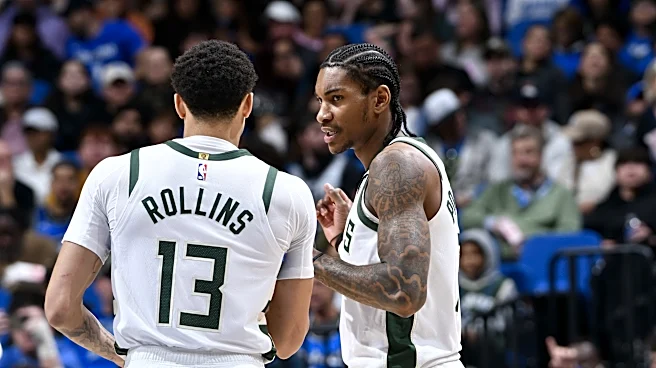
1. The ice man: Ryan Rollins
Rollins would be most people’s first choice for who should be the Bucks’ starting point guard on opening night—dude’s just a baller, man. While he definitely profiles as more of a combo guard, there is a certain equilibrium of competence in all facets of the game that I feel a player has to reach for them to start—he’s reached that and then some. To my earlier point, Rollins really typifies what the modern point guard has become in the NBA as a guy who, first and foremost, is a threat to shoot and score, which then opens up his ability to pass.
Of course, the argument against Rollins starting at point guard is that he turns it over too much—2.6 per contest last season—but I think that comes with the territory considering how much of an offensive load he had/has to undertake. Like, don’t get me wrong, he has to clean it up, but if that’s his sole focus, it could inadvertently zap the rest of his game. And finally, you at least have to consider that if the Bucks want Rollins—who is surely going to opt out of his player option next summer and become a free agent—to stick around, I’m not sure bringing him off the bench sends the greatest message.
If you need someone with a steady hand, choose Rollins. If not, turn to OPTION 2.
2. The Boy Wonder: Tyler Herro
Herro is, of course, the other guard who most folks would presume starts alongside Rollins. And like Rollins, he too is certainly no traditional point guard. To me, while Herro can handle the ball and be a primary option, he possesses fewer point guard attributes than Rollins. Now, Herro did turn it over less than Rollins last year (1.9 to 2.7), so that’s a feather in his cap, but he also recorded fewer assists (4.1 to 5.6), while both had virtually the same usage (right around 25%).
But for the sake of this exercise, let’s say the Bucks do trade Rollins in a deal for Peyton Watson—which I’m not advocating for, to be clear—and you wanted to make Herro the starting point guard, then you’d have to really simplify the offence and remove layers. If not, I think Herro is clearly behind Rollins in the pecking order, and he can be a scoring guard, which seems like the role that suits him best anyway.
If you can take a punch, choose Herro. If not, turn to OPTION 3.
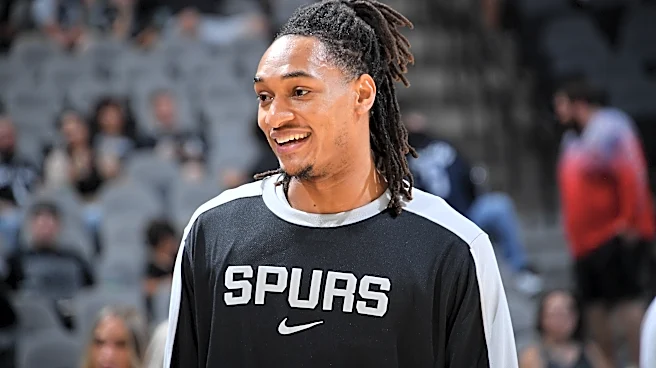
3. The divisive one: Kevin Porter Jr.
Assuming Kevin Porter Jr. is actually on the team by the time camp starts, he looms as a smoky to start at PG. You see, KPJ is much more of a natural passer than Rollins and Herro. I alluded to neither of those aforementioned players being “wired to pass” and make instinctive reads; well, Porter can make those reads. He can come off a pick-and-roll, draw the low man as his big rolls to the rim, and hit the opposite corner. He can eyebrow fake to the corner and hit the roller. I mean, 7.4 assists to 2.9 turnovers per game last year isn’t nothing.
Now, none of this means KPJ is a more valuable player than those two. He is way less lineup-malleable because of his shooting concerns—both from an efficiency standpoint and a “that was a really dumb shot” standpoint. He also is way worse at controlling pace and tempo. Overall, his game needs to be catered to for it to sing, and that is why I’d still bet against him starting.
There is no fence with Porter, so if you’re on his side, pick him. If not, turn to OPTION 4.
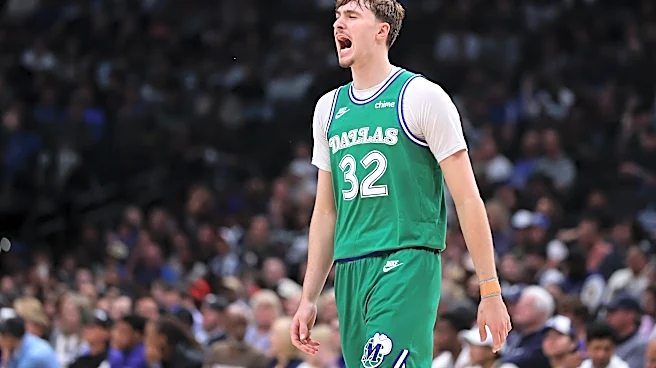
4. The haggle point: Kasparas Jakucionis
OK, coming off a really poor Summer League outing, Jakucionis is clearly the rank outsider in this race. I mean, the 20-year-old first needs to prove he can play consistent minutes and find his niche as an NBA player. But from what he showed in college and from what you hear, I would bet on him finding that niche in the near future. And think about it: when stacking Jakucionis’ game—or the idealised version of it—up against these other three names, is there not a pretty realistic chance that he actually has the best chance to thrive as a point guard out of all of them?
Maybe not this season, but it’s not out of the realm of possibility that in a year or two, Jakucionis is locked in as the point guard of the future. Sure, he lacks explosion, but he showed advanced passing chops at Illinois. On top of that, he’s got a nice stroke and great size, which should allow him to hold up on defence. The template of a productive starting point guard is there; he just doesn’t have the runs on the board as of yet.
If you refuse to leave without getting what you want, choose Jakucionis.
QUICK! Make a decision, you’re near the end! If you don’t like these options and have a point to prove to the contrary, pull a rabbit out of your hat and tell us who it is in the comments.
THE END